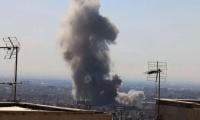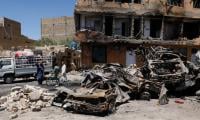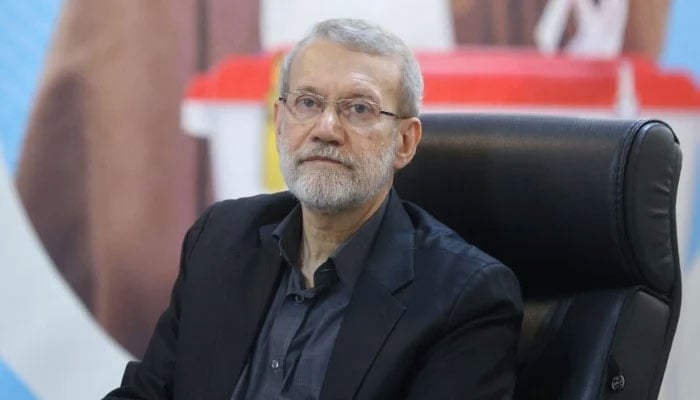
The killing of Iran’s supreme national security council chief Dr Ali Larijani and the commander of the Basij paramilitary force, Gholamreza Soleimani, in US-Israeli strikes does not bode well for anyone hoping for a resolution to this war started by Israel and the US. Larijani, 67, was assassinated in a US-Israeli air attack while visiting his daughter. He had last been seen publicly at an Al-Quds Day rally in Tehran, standing alongside other Iranian leaders in support of Palestinians. His death comes barely weeks after the martyrdom of Ayatollah Ali Khamenei on February 28. These are evidently not merely tactical strikes but rather strategic decapitations designed to reshape the balance of power within Iran and across the wider Middle East. Pakistan has condoled the martyrdom and also indicated its readiness to play a mediatory role in de-escalating tensions. Larijani was widely regarded as a linchpin of Iranian politics and one of the most powerful individuals in the Islamic Republic. Often described as an architect of Iran’s security policy, he had overseen nuclear negotiations with the West and played a key role in managing Tehran’s complex regional ties. Observers have frequently noted his pragmatic instincts and his advocacy for a more ‘cautionary approach’. It is precisely this reputation that makes his assassination particularly consequential. Analysts suggest that targeting Larijani was a deliberate move by Israel, given that he could have emerged as a central interlocutor in securing a ceasefire with the US if and when President Donald Trump sought an exit from the war. By removing one of the few influential figures capable of bridging hardline positions and diplomatic engagement, the strike may have narrowed the already limited pathways to de-escalation.
But, while Israel may believe it has delivered a devastating blow by eliminating a key political and security strategist during wartime, the longer-term effect may be the opposite of what it intends. Larijani’s death risks accelerating the rise of a more radicalised leadership within Iran. With Khamenei’s son Mojtaba reportedly assuming the role of Supreme Leader and Larijani’s successor likely to be determined by the Islamic Revolutionary Guards Corps, the balance within Iran’s power structure may tilt further towards hardliners. The loss is also strategic in another sense. Reports indicate that Larijani had maintained channels with both China and Russia – relationships that could have proved crucial in shaping diplomatic off-ramps or coordinating international responses. His assassination evokes memories of the US killing of IRGC commander Qassem Suleimani in Baghdad in January 2020. At a broader geopolitical level, the conflict shows signs of widening. Gulf Arab states did not seek war with Iran, yet Washington has been pressing them to align with the US-Israeli campaign. Reluctance among GCC capitals persists, but the potential closure of the Strait of Hormuz and continued Iranian missile attacks could eventually compel deeper involvement.
There are also signs of strain within the US itself. Media reports that the USS Gerald R Ford aircraft carrier is withdrawing after a fire incident may be symbolically minor, but politically telling in a context where questions about the sustainability of the war effort are mounting. More significant is the resignation of Joseph Kent, director of the US National Counterterrorism Centre, who is said to have protested the war and argued that Iran posed no imminent threat to the US. His claim that the conflict was initiated under pressure from Israel and its domestic lobby also points to growing divisions within the American security establishment. Taken together, these developments suggest the war is entering a more dangerous phase. In such circumstances, calls for restraint, dialogue and diplomacy are necessary. If pragmatism is indeed being sidelined in favour of maximalist positions, the consequences will not be confined to Iran or Israel. They will reverberate across global energy markets, international alliances and the fragile security architecture of an already volatile region. Washington needs to step back before the conflict spirals into a prolonged confrontation with disastrous consequences for the entire world.