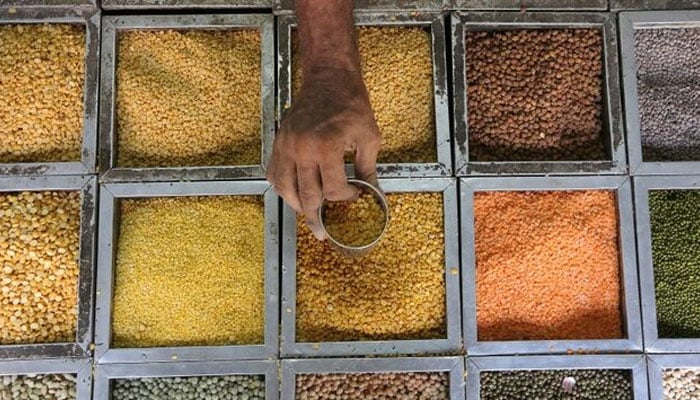
Islamabad:Pakistan’s growing reliance on pulses import is costing nearly $1 billion annually, which is a stark reflection of declining domestic production and widening food and protein crises, experts warned at a seminar.
The seminar on “Developing competitive and inclusive value chains of pulses in Pakistan” was organised by Sustainable Development Policy Institute (SDPI) in collaboration with Australian Centre for International Agricultural Research (ACIAR) here Tuesday.
Dr Azam Khan, Chairperson, Department of Horticulture, University of Arid Agriculture, said Pakistan’s heavy dependence on pulses import represents a major drain on foreign exchange, particularly at a time when the country is facing acute economic pressures. He noted that pulses are a key source of affordable nutrition for low-income populations, yet farmers are shifting to more profitable crops due to low margins in pulse cultivation. He called upon the government to bring about urgent policy reforms and value chain development to revive pulses’ production and strengthen the country’s food system.
SDPI’s Deputy Executive Director Qasim Shah, highlighted that pulses’ role in ensuring food and nutrition security is critical particularly at a time when Pakistan is grappling with rising poverty and food affordability issues. Citing statistics, he said the cost of a basic diet in Pakistan stands at around $3.9 per person per day, while average daily wages remain lower, making balanced nutrition inaccessible for many. He said that 40 per cent of households in the country suffer from protein deficiency, while over 24 per cent population faces moderate to severe food insecurity.
Dr Munawar Raza Kazmi, Country Manager, ACIAR, said that Australia is the world’s largest producer and exporter of pulses, while Pakistan remains an important importer. Furthermore, he referred to the field research conducted in Rawalpindi, Chakwal and Bhakkar engaging local farmers to test improved practices. However, he maintained that one of the missing links had been connecting research findings with policymakers. “If we generate quality evidence but fail to communicate it effectively to policymakers, it is our flaw,” he remarked
Dr Shahid Riaz Malik, a pulses expert, said Pakistan’s total cropped area is about 22.51 million hectares but pulses cover only 1.16 million hectares which is just 05 per cent of the total crop area. Major pulses grown in the country include lentils, chickpeas, mung beans, mash and kidney beans but, he said, production trends remain concerning.
Dr Burhan Ahmed, Project Lead, and Dr Arshad Bashir, Director, Social Sciences Research Institute at PARC, also addressed the gathering.