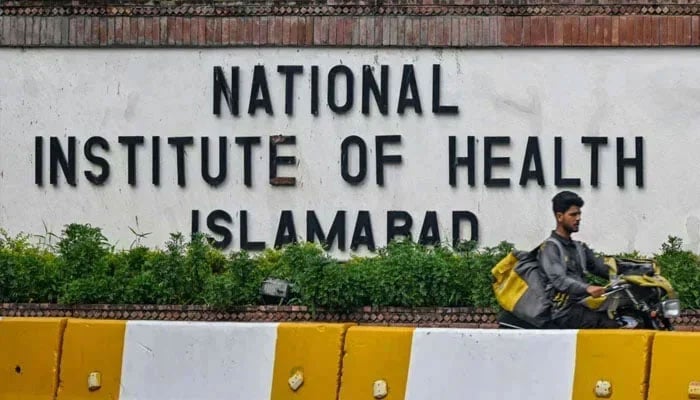
Islamabad : As HIV cases continue to rise in the federal capital, both the District Health Office (DHO) Islamabad and the National Institute of Health (NIH) have sought detailed patient data, technical support and urgent intervention from the Common Management Unit (CMU) for AIDS, TB and Malaria, warning that the absence of timely and disaggregated information is undermining efforts to contain the spread of the virus.
In an official communication dated April 20, 2026, the DHO Islamabad highlighted that the increasing number of HIV infections reflects ongoing transmission and requires an immediate, coordinated response, but stressed that effective surveillance and intervention planning are not possible without access to accurate and comprehensive data.
According to official figures, at least 618 HIV cases have been reported in Islamabad over the past 15 months, with around 41 new infections being detected on average every month. Health authorities say the trend underscores the need for targeted, data-driven interventions.
In its letter to the CMU, the DHO Islamabad formally requested provision of real-time, detailed and disaggregated HIV data to identify transmission patterns, geographic clusters and high-risk populations. Officials maintained that without such data, surveillance remains weak and response measures risk missing the actual drivers of the outbreak.
The DHO also sought immediate provision of rapid diagnostic kits, technical assistance to establish an integrated surveillance and data management system, and deployment of trained personnel for field-level screening, testing and counselling.
In addition, district health authorities requested expert guidance from the national programme to design targeted prevention strategies aligned with Islamabad’s evolving epidemiological profile.
Officials at the NIH have raised similar concerns, saying the lack of data sharing from federal and provincial programmes is limiting their ability to analyse trends, distinguish between local and imported infections, and guide policy and response at the national level.
Health officials say that despite being the country’s premier public health institute, the NIH is also not receiving complete, timely and disaggregated HIV data, creating gaps in surveillance and weakening coordination between federal and district authorities.
In parallel communications, the DHO Islamabad approached the Islamabad Healthcare Regulatory Authority (IHRA), major public hospitals including the Pakistan Institute of Medical Sciences (PIMS), and private healthcare providers, directing them to strictly enforce infection prevention and control measures and ensure timely reporting of HIV cases.
Healthcare facilities have been instructed to ensure single-use of syringes and needles, proper sterilisation of instruments, mandatory screening of blood and blood products, and immediate reporting of suspected and confirmed HIV cases through designated surveillance systems.
The DHO also asked PIMS to share updated anonymised patient data with locality-wise breakdowns to support epidemiological mapping and identification of transmission hotspots within the capital.
Health experts say these measures are critical in a city where major hospitals serve patients from across the country, making it essential to differentiate between locally transmitted and imported HIV cases.
Public health officials warn that unsafe injection practices, reuse of syringes, poor infection control and gaps in blood screening remain key drivers of HIV transmission in Pakistan, reinforcing the need for robust surveillance backed by reliable data.
Officials caution that without consistent data sharing and operational support from the CMU and other national programmes, both the NIH and district health authorities will continue to struggle in mounting an effective response.
“HIV cannot be controlled without clear visibility of the epidemic,” a senior health official said. “We need real-time data, trends and coordination. Without that, both national and district responses remain constrained.”