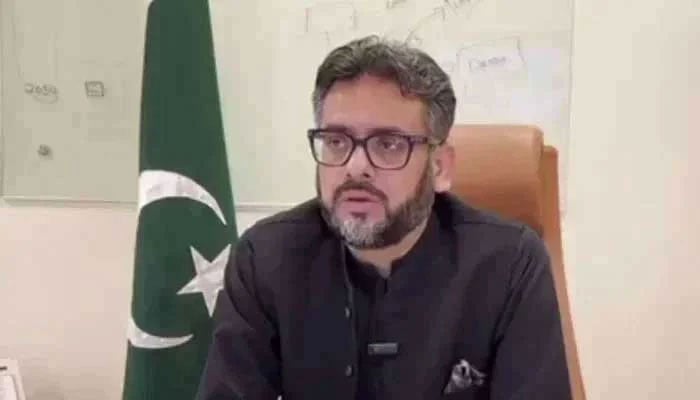
PESHAWAR: Adviser to KP Chief Minister on Finance Muzzammil Aslam said on Wednesday Khyber Pakhtunkhwa is not lagging behind any province in implementing governance reforms.
“Under the leadership of the chief minister, good governance is being advanced as a structured reform agenda, supported by institutional transformation, digital innovation, and fiscal discipline,” he said while addressing the Pakistan Governance Forum.
The adviser said that it was an honor for him to participate in the Pakistan Governance Forum 2026, a platform that brings together our collective commitment to strengthening governance across Pakistan.
Muzzammil Aslam said that KP completed its five-year digitization plan in less than one year. “Around 170 public services were identified for digitization, out of which 56 have been fully digitized, while electronic payment facilities are now available in 73 services,” he explained. He said that the province has made clear progress toward a cashless public finance system. “In January 2025 alone, salaries of 251,214 government employees and pensions of 115,648 pensioners were disbursed through a micro payment gateway, making the transactions fully digital and traceable,” added the adviser.
Muzzammil Aslam stated that a major reform includes the establishment of a Debt Management Fund, the first initiative of its kind at the provincial level in Pakistan.“Alongside this, provincial fiscal autonomy is being strengthened through revenue reforms of the Khyber Pakhtunkhwa Revenue Authority, including GIS-based property taxation, real-time digital monitoring, and analytics-driven enforcement. These reforms have expanded the tax base without increasing tax rates. As a result, Khyber Pakhtunkhwa’s own revenue has doubled in two years, rising from Rs65 billion to Rs129 billion,” he pointed out.
The adviser said the province is also reshaping governance and regulatory oversight. “The Peshawar Safe City Project, nearing completion in March 2026, along with ANPR and RFID-based automated vehicle identification systems, is shifting policing toward a proactive and intelligence-based model,” the adviser elaborated.
Muzzammil Aslam stated that out of 8,179 Madaris in Khyber Pakhtunkhwa, more than 1,300 have been registered, marking an important step toward institutional integration and transparent oversight in the education system.
Similarly, he added, the mapping and profiling of non-custom paid (NCP) vehicles across the province has been completed, and they are now being brought into a documented and regulated framework through formal registration.
The adviser added that the number of out-of-school children in the province has declined by 50 percent. He said: “The outsourcing process of 1,500 underperforming schools has been initiated, while a monitoring system has ensured 90 percent teacher attendance”. As many as 250 health facilities have been upgraded to provide 24/7 maternity services, and 54 hospitals are being transitioned to improved management models, he said while giving the details.
Muzzammil Aslam emphasized that Digital Governance, Digital Khyber Pakhtunkhwa , is the central pillar of reform. “The expansion of online public services, strengthening of e-office systems, and implementation of e-procurement across departments are ongoing,” he went on to add. The adviser said that the Khyber Pakhtunkhwa Excise Department has introduced several key initiatives for regulatory and administrative modernization, including the issuance of vehicle smart cards, computerization of property tax records, and the successful recovery of Infrastructure Development Cess) through open auction, generating Rs1.16 billion in revenue.