Despite possessing numerous tangible and intangible resources, a rich culture, and abundant natural and man-made assets, Pakistan has been drawn into a state in which it is unable to pursue prosperity.
The misery of unfair allocation, misuse and improper utilisation has resulted in insubstantial gains. Weak policymaking processes have directly contributed to severe outcomes. These consequences have left no one unaffected.
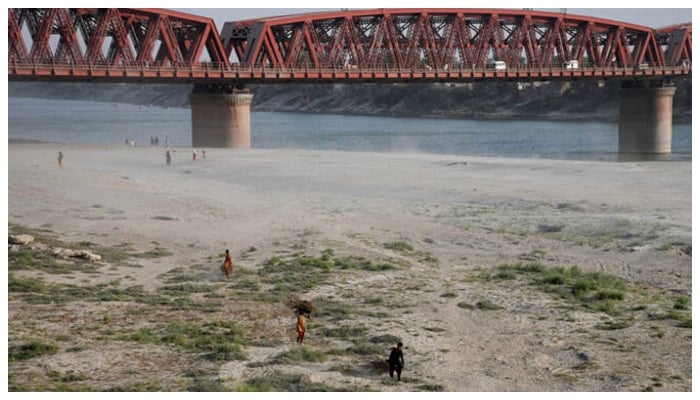
Who will care about the persistent drying of the Indus River, sea intrusion, and land degradation along Sindh’s coastal belt (Thatta, Sujawal and Badin)? Who will address environmental poverty and the psychosocial impacts in flood-affected districts of Sindh? Beyond this, the continued, vulnerability-expanding and resource-diminishing impacts of climate change at the national level have gripped everyone, largely due to the non-seriousness of policy actors in Pakistan.
Unfortunately, one indication of policy-level direction and intent appears in the World Bank’s Country Climate and Development Report, released on November 10, 2023. The report clearly points to the government’s incapacity to fully adopt and implement policies. It also reveals that, although Pakistan developed its National Climate Change Policy (NCCP) in 2012, it has had a very limited impact on sectoral programmes. Pakistan remains stuck with only “a handful of very limited commitments” to mitigation and adaptation. One is compelled to ask whether policymakers genuinely consider climate change a policy problem.
For common understanding, whatever a government chooses to do or not to do constitutes public policy. However, Pakistan significantly lags in developing procedurally sound, public-oriented policies. Policies developed to date often appear intended to inflate figures to serve political interests. Many now lie unused in cupboards, occasionally polished for display on official websites.
One of the most challenging tasks in policymaking is defining the problem. A policy problem must concern the public at large, not an individual, a single community, or a limited institutional segment. Providing a clear and well-defined problem statement is among the most critical tasks for policymakers. Did Pakistan clearly define the climate change problem in its NCCP 2012 in a manner that guarantees meaningful intervention? In my view, it did not.
Moreover, defining a policy problem requires meaningful input from all stakeholders, including academia, women, youth, disadvantaged groups, all genders, minorities, small vendors, businesspersons, teachers and researchers. Yet has Pakistan ever truly followed such an inclusive approach to policy development, even once?
To avoid continued policy failure and to fulfil commitments made at national and international levels, the government must empirically examine the policy frameworks adopted by developed countries, including the US, UK, Germany, Sweden, Finland and Norway.
Policies in these countries, intentionally designed to benefit the public, revolve around social equity and environmental sustainability; comprehensive, creative, and competent educational institutions; skilled faculty producing low unemployment and highly trained labour; and taxation tools that ensure the sustainable use of non-renewable natural resources, thereby securing long-term wealth. Why is Pakistan not pursuing policies aimed at building sustainable, tangible and intangible wealth? Pakistan needs planning to succeed, not to fail.
Unfortunately, Pakistan’s trajectory of misfortune continues, as successive governments have failed to develop a holistic policymaking mechanism. The reasons for policy failure are many, but the most pressing include corruption, misuse of authority, misleading autonomy and power structures, insufficient financial resources and poor allocation, untrained human resources, lack of vision, weak monitoring and evaluation systems, poor policy outcome assessment and inadequate capacity building.
At the federal level, the executive branch is responsible for policymaking. Following the 18th Amendment, policymaking powers were devolved to the provinces. While this devolution was intended to strengthen governance, what has Sindh achieved to date in meeting the objectives of policies designed for its poverty-stricken and climate–prone population?
Pakistan must learn from the actions and inactions of past governments. In many cases, incremental approaches need to be abandoned. First, the government must establish a holistic, inclusive policymaking mechanism that ensures that no segment of society is excluded from contributing.
Second, a dedicated public policy laboratory should be established at both the federal and provincial levels. These institutions must be autonomous, as universities are, and be mandated to advise governments at all administrative levels on innovative policy design and implementation. Their primary role should be to develop creative, evidence-based policy concepts grounded in scientific approaches.
Third, for Pakistan’s future well-being, multidisciplinary groups of researchers, engineers, technologists, climate change experts, disaster mitigation and management specialists, water and energy professionals, food security experts, health practitioners, infrastructure planners and entrepreneurship trainers should be formed to actively support government action.
Fourth, international donors that have long supported Pakistan’s development must assist in devising innovative, creative, and holistic policymaking mechanisms, particularly in policy implementation. Fifth, to ensure the safety and security of citizens, institutions must step forward and fulfil their roles as catalysts. Undoubtedly, if institutions in Pakistan fulfil their primary responsibilities, many existing problems can be resolved.
Ultimately, sustainable solutions to Pakistan’s challenges are expected to emerge from policy actors with authority and autonomy in resource mobilisation, fair allocation and effective utilisation, supported by sound governance.
The writer is an expert in public policy analysis and sustainable development. He can be reached at: [email protected]