At its core, social justice is the promise that no citizen is left behind. Yet for millions of Pakistanis, this promise remains unfulfilled. The roots of these persistent inequalities lie in imbalanced development, faulty policymaking and skewed resource prioritisation.
Political instability, climate change, patronage politics, corruption and sharp regional economic disparities have combined to produce unequal access to resources and opportunities, turning social justice from a constitutional guarantee into a distant aspiration.
As the largest province, Punjab wields disproportionate influence over policymaking, resource allocation and infrastructure development. Historically, Pakistan’s national framework has drawn heavily on upper Punjab for bureaucratic and military leadership, thereby granting the province outsized influence over the country’s development trajectory. As a result, Punjab diversified its economy across agriculture, industry and services, built comparatively robust infrastructure, and achieved the highest literacy rate among the provinces at around 65 per cent. Yet even within Punjab, social justice remains uneven, with the southern districts trapped in cycles of poverty and deprivation.
Balochistan, despite its vast natural wealth in gold, coal, gas and copper, remains chronically underdeveloped. This paradox of resource abundance and human poverty constitutes Pakistan’s most glaring failure of social justice. Resource extraction largely benefits the federal government or private companies, while local communities receive little return. Poverty rates of 40 to 45 per cent far exceed the national average of 25.3 per cent. Weak governance, climate vulnerability, corruption, poor infrastructure and low literacy – around 40 per cent overall and only 25 per cent among women – have entrenched deprivation and fuelled grievance and conflict.
Khyber Pakhtunkhwa experienced steady poverty reduction until 2019, but progress reversed after 2020 due to Covid-19, floods and ongoing insecurity. Social justice requires resilience and the ability to absorb shocks without falling into destitution. By this measure, KP has repeatedly failed. Poverty rates of 30-35 per cent remain higher than Punjab’s but lower than Balochistan’s.
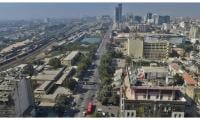
Karachi has struggled to alleviate poverty across Sindh, which continues to lag behind Punjab in poverty reduction and service delivery. Sindh’s average poverty rate hovers between 30 and 32 per cent, with its rural, agriculture-based economy highly susceptible to climate-induced shocks, particularly floods and droughts. These provincial disparities show that social justice in Pakistan cannot be achieved through homogeneous policies. Each province requires tailored interventions addressing its unique vulnerabilities and socioeconomic realities.
Development gaps among provinces compound the challenges and further erode the spirit of social justice. The 18th Amendment was regarded as a landmark step towards provincial empowerment and the reduction of regional economic disparities, granting provinces greater financial autonomy and control over natural resources within their territories. A larger share of financial revenue and control over natural resources within their territories. However, weak local governance, persistent conflict, climate change and corruption continue to obstruct realization of social justice.
Though Punjab dominates industrial output and serves as the country’s food basket, significant internal disparities persist. Southern Punjab, despite its agricultural productivity, face chronic food insecurity. According to a 2023 study by the World Food Programme (WFP) and the Food and Agriculture Organisation (FAO), much of the Saraiki belt continues to experience persistent food insecurity driven by a complex interplay of economic deprivation, social inequality, and climate impacts. These vulnerabilities mirror those of rural Sindh and Balochistan.
A similar disparity defines Sindh. Poverty in interior Sindh averages between 45 and 50 per cent, nearly four times higher than Karachi’s 12-15 per cent. Karachi’s diversified economy provides broader employment opportunities. In contrast, other parts of Sindh remain trapped in cycles of vulnerability caused by recurrent floods that devastate agriculture and periodic droughts that deepen insecurity. Limited industrial activity and weak job diversification further marginalise the region.
World Bank studies indicate that Balochistan’s underdevelopment is institutional rather than resource-based. Residents lack access to essential services such as education and healthcare, and the province has the lowest literacy rates in the country. Internet penetration remains minimal, while frequent shutdowns further restrict access to modern economic opportunities.
Balochistan is also highly vulnerable to droughts and floods. A joint FAO–WFP assessment estimates that nearly 29 per cent of the population faces high levels of food insecurity, with 6.0 per cent suffering from severe malnutrition. Despite its natural wealth, poor development outcomes have intensified grievances and reinforced perceptions of exploitation.
Development in KP is similarly uneven. Poverty rates remain relatively low in urban centres but rise to nearly 40 per cent in rural districts like Kohistan and former tribal areas. Urban resilience contrasts sharply with the climate, geographic, and security vulnerabilities of peripheral regions.
Together, these patterns reveal that Pakistan’s regional inequalities are multidimensional. Intra- and inter-provincial disparities continue to fuel deprivation, isolation, and political marginalisation.
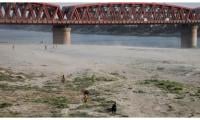
Climate change has transformed from an environmental challenge into a social justice emergency. Pakistan contributes less than 1.0 per cent of total greenhouse gas emissions, yet it ranks among the countries most affected by climate change. Climate disasters disproportionately impact marginalised rural areas, exacerbating inequality. The 2022 floods caused an estimated $30 billion in damage, displaced eight million people and destroyed thousands of acres of crops.
Sindh also bore the brunt of the disaster, while nearly 4.4 million acres of crop including cotton, sugarcane, and vegetables destroyed. The flood affected 14 million people, ravaged infrastructure, such as schools, hospitals and roads and submerged vast areas for months, plunging communities into poverty and worsening food insecurity. Similarly, rural KP, parts of Balochistan and southern Punjab experienced comparable devastation. The 2022 floods also exposed deep-seated weaknesses in governance and infrastructure.
Corruption is the systematic subversion of social Justice. Ranked 135th out of 180 countries on Transparency International’s Corruption Perceptions Index, Pakistan faces a struggle with corruption that erodes governance, hinders economic growth and corrodes public trust. According to Transparency International’s 2023 report, corruption is most prevalent at the local government level, the very tier responsible for delivering basic services such as clean water, sanitation and roads.
Many development projects are perceived as vulnerable to corruption. Large project initiatives face systematic delays and cost overruns, often awarded to politically connected contractors, rather than on merit, fostering inefficiency and substandard work. Projects announced for peripheral areas frequently see funds diverted to major urban centres, leaving rural regions marginalised.
Local governments are the institutional architecture of social justice. Robust local governance bridges the gap between citizens, ensuring communities have a voice in decision-making. Such systems can resolve local conflicts and promote tailored polices required by the community. By adopting participatory approaches and engaging communities to identify needs, local governance becomes instrumental in achieving social justice and harmony among provinces.
Frequent disruptions to the democratic process have weakened institutions, and even when representatives return to parliament, governance often remains centralised. By deliberately avoiding constitutionally mandated local government elections, political parties deny citizens the right to shape their own development. Silencing grassroots voices and concentrating power among a few elites further erodes social justice. When local elections are eventually held under public or judicial pressure, they are typically conducted with limited financial autonomy and persistent interference from provincial authorities.
Strong local governance ensures equitable service delivery and reduces public grievances. It empowers communities through sustainable development initiatives and fosters inclusive development by addressing systemic inequalities.
Climate change is a reality. There is an urgent need for the government to embed climate change considerations in all polices and projects. Infrastructure must be treated as climate-sensitive and existing assets should be retrofitted as necessary to enhance Pakistan’s climate resilience.
Without reforming accountability institutions, social justice will remain elusive. Corruption not only erodes public trust but also weakens the foundations of good governance, which are essential for inclusive growth and prosperity. It is imperative that the NFC Award be implemented transparently, ensuring fair distribution of national resources across all provinces, with particular attention to historically disadvantaged and climate-vulnerable regions. Federal investments must prioritise lagging provinces and areas such as Balochistan, rural Sindh, southern Punjab and the former tribal districts to bridge structural gaps and promote inclusive development.
Advancing equitable resource allocation, targeted investment and good governance will directly contribute to social justice by dismantling entrenched development inequalities. This balanced approach not only addresses historical neglect but also fosters inclusivity, strengthens national cohesion and upholds the principle of equal dignity and participation in the country’s progress.
The principle of social justice cannot be realised without collective responsibility. Government, civil society and international partners must work together to reduce disparities and ensure fairness across all segments of society.
The writer is a campaign coordinator at the Sustainable Development Policy Institute (SDPI).