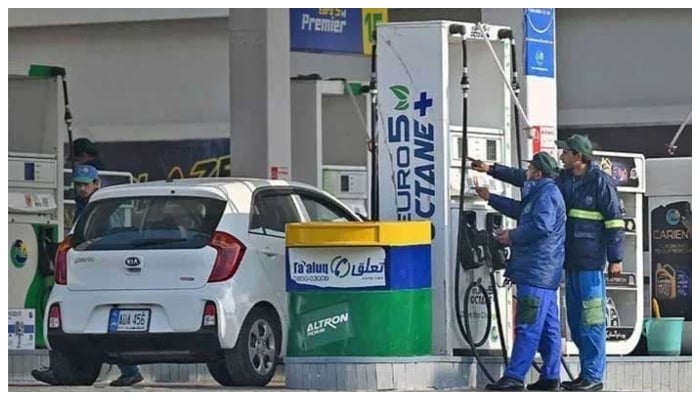
Global oil prices remain one of the most powerful external forces shaping Pakistan’s macroeconomic outcomes. As a net oil-importing country with limited short-run substitution options, Pakistan’s trade balance, inflation trajectory, exchange rate stability and fiscal position are deeply intertwined with developments in international energy markets.
With oil price dynamics now influenced not only by traditional supply–demand cycles but also by geopolitics and the global energy transition, understanding these linkages has become a policy imperative rather than an academic exercise.
Recent forecasts suggest that the global oil market may offer Pakistan temporary relief. Projections by the US Energy Information Administration indicate that Brent crude prices could average around $56 per barrel in 2026, nearly 19 per cent lower than 2025 levels. This outlook is reinforced by major financial institutions such as Goldman Sachs and JPMorgan, which expect prices to remain in the mid- to high-$50 range over the next two years.
The primary driver behind this bearish trend is the expansion of non-OPEC+ supply – particularly from the US, Brazil and Guyana – outpacing relatively modest global demand growth. Over the medium term (one to three years), prices are expected to stabilise between the mid-$50s and low-$60s, although risks remain from potential geopolitical disruptions, sanctions or coordinated production cuts.
For Pakistan, lower oil prices can ease immediate balance-of-payments pressures, but historical experience cautions against complacency. Petroleum products account for roughly 20–25 per cent of Pakistan’s total import bill, making the trade balance highly sensitive to price movements. Even when global prices soften, rising domestic demand linked to economic recovery can offset price gains. Recent data illustrate this tension: while petroleum imports declined marginally in early FY2026 due to lower prices, they had risen sharply a year earlier, reflecting the structural dependence of Pakistan’s energy system on imported oil.
Empirical research provides deeper insight into this vulnerability. Econometric studies consistently show that Pakistan’s oil import demand is relatively price inelastic in the short run. Estimates suggest that a one per cent change in oil prices can trigger a disproportionate change in the trade deficit, amplifying external imbalances. Income effects further intensify the problem: as economic activity increases, energy demand rises, thereby increasing import volumes even when prices are stable or declining. This asymmetric relationship explains why oil price increases tend to hurt Pakistan more than price declines help.
The transmission of oil price shocks to the trade balance operates through multiple channels. The most direct channel is the import bill itself. Given Pakistan’s 80–90 per cent reliance on imported oil, a $10 per barrel increase in prices can add an estimated $2–3 billion annually to import costs. The second channel works through domestic prices. Higher fuel costs raise production and transportation expenses, eroding export competitiveness in key sectors such as textiles, cement and manufacturing. Inflationary pressures often follow, prompting tighter monetary policy that suppresses investment and output.
A third channel is the exchange rate: worsening current account balances put downward pressure on the rupee, increasing the local currency cost of imports and reinforcing inflationary dynamics. Evidence also suggests that these effects are asymmetric; price hikes have stronger and more persistent negative effects than the positive effects of price declines.
In this context, research by the Pakistan Institute of Development Economics (PIDE) using Pakistan’s data shows that increases in oil prices, wholesale prices, and declines in industrial production are associated with a widening trade deficit, while the adjustment back to long-run equilibrium is slow. In fact, oil price shocks can take more than a year to fully transmit, whereas the effects of changes in industrial production may persist for several years. This slow adjustment explains why Pakistan often experiences prolonged external stress even after global prices stabilise.
What, then, can policymakers do to reduce Pakistan’s chronic exposure to oil price volatility? First, energy diversification must move from rhetoric to implementation. Expanding renewable energy – solar, wind and hydropower – can significantly reduce dependence on oil imports over time. Increasing the share of non-fossil energy in the power mix would not only improve the trade balance but also enhance environmental sustainability.
Second, improving energy efficiency in industry and transport can yield immediate gains. Targeted incentives for efficient technologies, electric vehicles and fuel smuggling reduction can lower oil demand without constraining growth.
Third, Pakistan needs to strengthen its external buffers and risk-management tools. Strategic use of oil price hedging instruments, combined with the accumulation of adequate foreign exchange reserves, can smooth short-term shocks. At the same time, export diversification – particularly into less energy-intensive and higher-value sectors such as IT, pharmaceuticals and services – can reduce the indirect impact of oil price increases on export competitiveness.
Finally, macroeconomic coordination is critical. Energy pricing reforms that ensure a gradual and transparent pass-through, paired with targeted subsidies for vulnerable households, can prevent fiscal slippages while maintaining social protection. Monetary policy must strike a balance between controlling inflation and avoiding excessive contraction that undermines industrial output and exports.
Lower global oil prices may offer Pakistan short-term breathing space, but they do not eliminate structural vulnerability. Oil price volatility is not a temporary shock; it is a recurring feature of the global economy. Turning this vulnerability into resilience requires evidence-based forecasting, structural energy reforms and a coherent long-term strategy. Only by addressing the oil–trade nexus holistically can Pakistan hope to stabilise its external accounts and place its economy on a more sustainable growth path.
The writer is an assistant professor at the Pakistan Institute of Development Economics (PIDE), Islamabad. She tweets/posts @abida_15 and can be reached at: [email protected]