Pakistan’s inferred gold resources exceed 40 million ounces of gold valued at over $200 billion. Pakistan’s inferred copper resources exceed 5.9 billion tonnes of ore, implying a contained copper value of over $150 billion at prevailing prices. Pakistan’s inferred iron ore resources exceed 1.8 billion tonnes (Chiniot and Kalabagh), with an estimated in-situ value of more than $120 billion at current global iron prices.
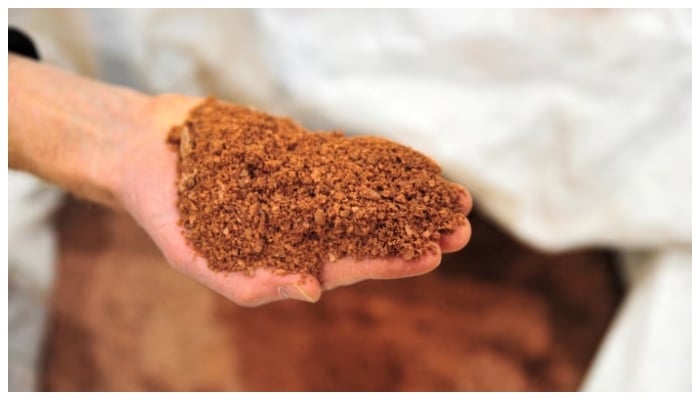
Pakistan’s inferred rare earth element (REE)-bearing deposits in Balochistan, Khyber Pakhtunkhwa and Gilgit-Baltistan remain under-quantified but even modest commercialisation could translate into multi-billion-dollar valuation, particularly for neodymium, praseodymium and dysprosium. Pakistan’s inferred bauxite resources exceed 100 million tonnes (Punjab and KP), suggesting a potential gross value exceeding $5–7 billion, critical for aluminium supply chains.
Yes, global capital has lately been circling Pakistan’s mineral frontier. Manara Minerals of Saudi Arabia is seeking a 10–20 per cent stake in Reko Diq. Fluor of the United States – a $16 billion engineering and construction giant – has signalled interest. Komatsu of Japan, a 4.1 trillion yen industrial powerhouse operating in over 150 countries, is interested in positioning itself. Metso of Finland, with 5.6 billion euros in annual revenue and a presence in 50 countries, is also looking to Pakistan’s mining ecosystem.
US Strategic Metals has signed a $500 million MoU with Pakistan’s FWO to develop critical minerals. Portugal’s Mota-Engil Group is exploring opportunities within the same space. Nova Minerals, listed in the US and Australia, is eyeing antimony exploration.
This is not charity. It is capital following geology. The question is no longer whether the minerals exist. The question is whether policy can match potential.
Here is the uncomfortable truth: Pakistan’s policy does not match Pakistan’s potential. Over the past two years, Pakistan has announced mineral conferences, MoUs, delegations and roadshows. What it has not announced is a single operational large-scale new mine entering production. Policy failure: the SIFC was created to fast-track strategic investment. Ground reality: approvals still require provincial clearances, federal coordination, environmental approvals and security layers. One window was promised. Ground reality: Many windows remain.
Policy volatility: Over the past two years, foreign mineral investors saw retrospective adjustments in other industries and discussions of windfall taxes. Remember: capital does not isolate risk by industry; it prices country risk.
Federal-provincial misalignment: Mining authority is provincial; investor signalling is federal. Provinces control land and royalties – Islamabad is courting capital. Investors, however, want one sovereign counterparty – not a constitutional puzzle. Until ownership, approvals, and guarantees are aligned, large capital will hesitate. Regulatory timelines: Global mining jurisdictions operate with defined permitting clocks. Pakistan operates with process ambiguity. Remember: capital does not flow towards ambiguity. Capital flows towards certainty.
No downstream strategy: Over the past two years, there has been no copper smelter policy. No rare earth separation framework. No incentive regime for mineral processing zones. We continue to talk extraction. Remember: capital does not fund holes in the ground. Capital funds value chains. Without a downstream policy, Pakistan offers rock. The world pays for refined metal. And capital will not come for rock alone.
No capital market mobilisation: No sovereign mineral development fund. No mineral-backed bond. No structured royalty securitisation. Yes, the resource exists; financial engineering is absent.
Foreign capital is waiting. Domestic rock is ready. Policy is in paralysis.
The writer is a columnist based in Islamabad. He tweets/posts @saleemfarrukh and can be reached at: [email protected]