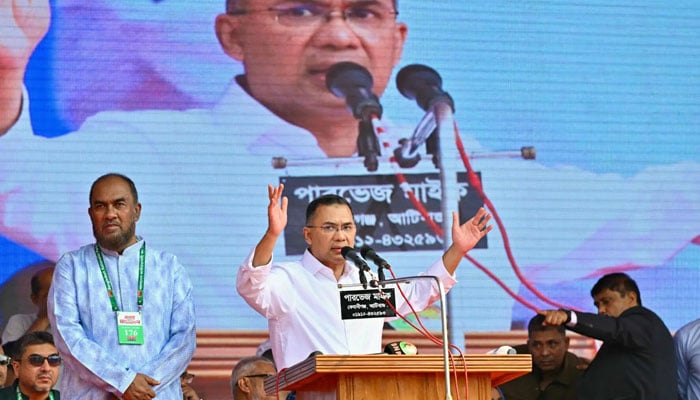
Defying seventeen months of propaganda that ‘there will be no election’, the national election has finally been held in Bangladesh. After a decade and a half of fascist rule and the fall of the Awami League in the July 2024 Revolution, the Bangladesh Nationalist Party (BNP) emerged as virtually unchallenged in the country’s electoral politics. The party secured an absolute majority in the February 12 election, bringing an end to the BNP’s fifteen-year-long political tragedy.
Fifteen years marked by enforced disappearances, extrajudicial killings, so-called ‘crossfire’ incidents and widespread plunder have politically wiped out the fascist Awami League. Filling the vacuum, Jamaat-e-Islami has risen as the principal opposition force. From the ‘Leningrad’ of Jatrabari during the July Revolution to university student bodies and now the National Parliament, it has reclaimed both political space and cultural confidence. Six young candidates from the revolutionary National Citizen Party (NCP) have won seats and are heading to parliament on a platform of state reform. Other young NCP candidates also mounted a strong challenge in the election. As a third political force, the party’s debut marks an important new chapter in Bangladesh’s political history.
Although the election was generally conducted fairly, allegations have surfaced of vote-counting irregularities at several polling centres and attempts to secure victories for heavyweight candidates. Through alleged collusion with the High Court, loan-defaulter candidates were able to survive the Election Commission’s scrutiny process, preventing the polls from remaining free of the influence of black money. The election of such candidates has raised concerns that corruption may continue to persist within the power structure for some time. Allegations that certain dual citizens unlawfully secured parliamentary seats by influencing the Election Commission also remain unresolved.
The results were disappointing for the leftist parties. Despite fielding capable candidates, their past encouragement of elimination-style politics during the Awami League’s authoritarian rule continues to haunt public memory. BNP supporters appeared relatively restrained in celebrating their landslide victory, yet left-leaning groups staged exuberant ‘victory marches’ across social media. This pattern of leftist triumphalism, seen after both the 2008 and 2026 elections, suggests a continuing political culture rooted in resentment, division and the rhetoric of eradication.
Leaders from various countries have congratulated the BNP. In his message, India’s Hindutva leader Narendra Modi expressed hope for the party’s “progressive” potential. In Bangladesh, however, both left-leaning politics and Hindutva discourse often deploy the term ‘progressive’ as coded language carrying anti-Muslim undertones. Having lost their preferred ally in the Awami League, some now appear willing to settle for the BNP as a reluctant alternative. Whether the BNP chooses to play that role remains to be seen.
How the BNP uses its overwhelming majority will be crucial. In the referendum held alongside the election regarding state reform inspired by the July aspirations, the Yes vote prevailed, indicating that a majority of citizens want structural reform of the state.
After fifteen years of Awami League rule, state institutions have become dysfunctional, and the economy has been left ailing from unchecked looting. Therefore, the BNP’s honeymoon period may be short-lived. Party leader Tarique Rahman’s statement, “I have a plan”, will be tested in the government’s first 100 days. Public allegations of corruption and extortion against some BNP activists have already surfaced. The new government must act from day one to erase this stain.
Many BNP activists who risked their lives under Awami League repression worked tirelessly to secure the party’s victory. I call them the Kajolrekhas of a political fairy tale, loyal and steadfast. Yet since August 5, 2024, a different phenomenon has appeared: sudden spring cuckoos and Kankon Dasis flooding social media within the BNP, reminiscent of the opportunists who emerged during the Awami League’s rise in 2009. They sideline genuine loyalists while forming a loud online chorus, echoing media-friendly intellectual narratives overnight. The old Awami refrain, “we were better before", has now morphed into a new impatience: “let us seize power first”. The post-1990 two-party patronage model seems unlikely to survive contemporary public scrutiny.
With the Awami League’s fifteen years of misrule as a cautionary example, the BNP should find it easier to avoid repeating those disastrous patterns: human rights abuses, institutional capture and national plunder. Simply refraining from those practices would already move the country towards better governance.
Professor Yunus and his advisory council, along with the army chief and public administration officials, have managed – despite multifaceted hostility – to put Bangladesh’s derailed democratic train back onto the tracks.
The aspirations of the July Revolution will ultimately be realised by the Gen Z youth who led it. Gen Alpha has already joined this procession of hope. Therefore, rather than focusing on opportunistic media figures, Hindutva aggression, noisy social media theatrics, power-hungry intellectuals or cultural wings, the BNP must pay greater attention to these younger generations. Boomers, Gen X and even senior millennials are, in many ways, exhausted generations. The spark of new thinking does not lie with them.
The BNP must seek fresh ideas. Commitments to social democracy, a welfare state, good governance and an inclusive society must be translated from lip service into reality. If the party can move beyond the stale notion in Bangladeshi politics that the state is merely something to ‘capture’ and instead internalise the idea of governance as a responsibility, it can use its electoral mandate to win the hearts of the people.
The teenage boy whose open palm once held a stunned sunrise during the Safe Roads Movement proved his strength and capacity in the July Revolution. Today, the youth of July have reached the National Parliament carrying the water lily buds of that revolution. In parliament, on social media and in the marches of life, they carry the dream of Bangladesh’s future journey.
Long live the July Revolution.
The writer is the editor-in-chief of E-South Asia. He can be reached at: [email protected]