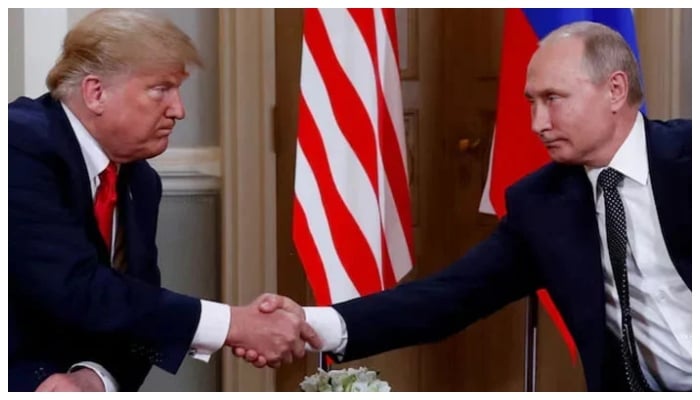
Last week, a quiet but catastrophic milestone passed with almost eerie stillness. On February 5, 2026, the New START agreement – the final thread holding the nuclear relationship between the US and Russia together – officially expired.
For the first time in half a century, the world’s two largest nuclear powers are operating without a single binding constraint on their strategic arsenals.
The silence from Washington and Moscow is the most unsettling part. We have entered what United Nations Secretary-General Antonio Guterres correctly described as a ‘grave moment’ for international peace and security. For decades, even at the height of the cold war, there was a shared understanding that nuclear weapons required a unique set of rules. Treaties weren’t just about numbers; they were about predictability. They provided the inspections and data exchanges that ensured a misunderstanding didn’t accidentally end civilisation.
Now, those guardrails have vanished. Russia has signalled it is comfortable in this vacuum. Russian Foreign Minister Sergey Lavrov recently stated that Moscow will observe the old limits only as long as it sees Washington doing the same – essentially a ‘trust but don’t verify’ situation that is the exact opposite of the mantra that kept the world safe during the 1980s. Meanwhile, the Trump administration has expressed interest in a ‘new architecture’ that includes China, but with Beijing consistently rejecting trilateral talks, there is no clear path to such a deal.
This is not a bilateral squabble; it is a global emergency. The collapse of the US-Russia framework removes the normative ceiling that once encouraged global restraint. China is already in the midst of a historic nuclear breakout, with Pentagon intelligence estimates suggesting it is on track to reach 1,000 deployed weapons by 2030. When the two giants at the top stop talking, the incentive for restraint elsewhere evaporates. From the Korean Peninsula to South Asia, the expiration of New START has normalised a world in which nuclear expansion is unconstrained.
This moment demands a shift in how we think about global security. If the ‘Big Three’ cannot or will not talk to each other, the rest of the world must force the issue. For countries like Australia, South Korea and Japan that rely on a stable, rules-based Indo-Pacific, silence is a luxury we can no longer afford.
First, we need to move towards ‘multilateral pressure’. The era of bilateralism is over, but that doesn’t mean middle powers are helpless. A coalition of influential nations – stretching from Canberra to Jakarta and across to Europe – must act as a diplomatic ‘third force’. This group shouldn’t just plead for peace; it should present a unified front of major economies demanding that Washington, Moscow, and Beijing agree on basic transparency measures. We need a global chorus to signal that a nuclear free-for-all is an unacceptable risk to international commerce and security.
Second, we must link arms control to the challenges of the 21st century. One of the primary reasons New START failed was a breakdown in trust over physical verification. In an age of satellite constellations and ubiquitous sensors, we can no longer rely solely on the invasive, old-school inspections that Moscow now finds intolerable. The international community should invest in ‘Verification 2.0’ – technical solutions like AI-based analysis and secure data sharing that don’t require high-level political trust to function.
Third, we must recognise that this expiration is a metaphor for the broader unravelling of global governance. Arms control was one of the few areas where Washington and Moscow cooperated even during periods of deep hostility. Its collapse symbolises the erosion of that minimal cooperation. If the powers that hold over 85 per cent of the world’s nuclear warheads cannot agree on limits, how can we hope to manage other global challenges like artificial intelligence, cybersecurity or climate change?
The danger is that we treat this as a niche military issue rather than the systemic crisis it is. Critics will argue that without ‘hard power’, middle powers lack the leverage to influence the nuclear dynamics between the superpowers. That is true in a narrow, tactical sense. But influence in global diplomacy is also about shaping narratives and offering ideas that others can adopt.
History shows that when the superpowers are locked in a stalemate, it is often the initiative of the ‘un-nuclear’ world that provides the breakthrough. Today, we need a similar surge of creative diplomacy. The alternative is a world where nuclear arsenals grow unchecked, verification disappears, and miscalculation becomes a matter of ‘when’ rather than ‘if’.
The expiration of New START is not just a story about the failure of old treaties. It is a story about the fragility of the global system. Leadership will be harder than silence. But in this grave moment, leadership from the middle is precisely what the world needs to avoid an unconstrained race toward a finish line no one wants to cross.
The writer is a freelance contributor.