My father was an active member of the National Awami Party led by Khan Abdul Wali Khan, one of the most consequential political leaders in what was then West Pakistan. In our home, politics was not an abstraction; it was a moral argument conducted over tea and newspapers.
The National Awami Party itself had fractured in the late 1960s, with Maulana Abdul Hamid Khan Bhashani leading a faction mostly in East Pakistan. That split reflected the widening gulf between the two wings of a country that insisted it was united while behaving as if it were not. In 1971, when General Yahya Khan’s regime launched military action in East Pakistan after refusing to transfer power to Sheikh Mujibur Rahman’s Awami League despite its electoral victory, Wali Khan’s party was among the very few political forces in West Pakistan that opposed the operation openly.
My father, a committed left-wing and progressive activist, travelled multiple times to East Pakistan in the 1950s and 60s. When I was growing up as a teenager in the 1970s, he would recount how policies crafted in Islamabad and Rawalpindi felt distant and dismissive in Dhaka and Chittagong. He would describe how language, economic disparity and the refusal to honour an electoral mandate were not technical disputes but existential affronts. He spoke without rancour but with regret.
What alienated East Pakistan, he believed, was not merely inequality but arrogance: a conviction in the western wing that central authority equated to national cohesion. That memory has stayed with me. Bangladesh, therefore, is not for me a foreign country in the usual sense. It is a reminder of how democracies fracture when power ceases to listen. It is against that personal backdrop that the latest election and referendum in Bangladesh assume a significance that transcends routine political change.
Bangladesh has just experienced a rare democratic double moment: a parliamentary election that has brought the Bangladesh Nationalist Party (BNP) to power after years of Awami League dominance. And a referendum has aimed at recalibrating the country’s constitutional architecture. The symbolism is potent. After more than a decade marked by impressive economic growth but rising concerns about shrinking opposition space and electoral credibility, voters have opted for alternation in government while simultaneously debating how to restrain whoever governs next.
The BNP’s victory marks the end of an era. Sheikh Hasina’s long tenure reshaped Bangladesh’s political and economic landscape. Under her leadership, infrastructure expanded, digital governance accelerated and the garment sector entrenched Bangladesh as a critical node in global supply chains. Poverty rates fell; social indicators improved; women entered the workforce in unprecedented numbers. Yet economic success coexisted with mounting accusations of electoral manipulation, curbs on dissent and the concentration of executive authority. The uprising that preceded this election, sparked by accumulated grievances and amplified by a younger generation impatient with patronage politics, forced a reset. An interim administration promised a cleaner contest. The result has delivered what democracy requires at a minimum: alternation. But alternation alone does not guarantee consolidation. The absence or marginalisation of the Awami League from the electoral arena complicates the narrative of democratic revival.
Bangladesh’s politics has long revolved around a duopoly – the Awami League and the BNP – whose rivalry often resembled personal vendetta more than ideological competition. When one pole is weakened or excluded, victory becomes clearer but legitimacy more contested. An election without one of its historic protagonists resolves arithmetic but leaves psychology unsettled. The referendum held alongside the election may prove more consequential than the change of prime minister. Its objective was to address a structural flaw that has haunted Bangladeshi politics: the winner-takes-all character of executive power. Proposals reportedly included strengthening checks and balances, revisiting the concentration of authority in the prime minister’s office, considering term limits and enhancing parliamentary oversight. Bundling reforms into a single plebiscite was controversial. Yet the impulse behind it is unmistakable. Bangladesh is experimenting with the idea that rules matter more than rulers.
Bangladesh’s political culture, like much of the region’s, has been shaped by a fear of annihilation. Losing power has frequently meant not merely sitting on opposition benches but facing legal jeopardy, administrative marginalisation and reputational assault. In such an environment, incumbents cling to authority with desperation, and challengers view victory as survival. If the referendum succeeds in diluting executive dominance and institutionalising oversight, it could reduce the stakes of electoral defeat. That would represent a generational shift. But the credibility of reform depends on the behaviour of those who benefit from it.
The BNP, long the aggrieved opposition, now faces the temptation to secure the very levers of state it once accused its rivals of weaponising. Whether it governs with magnanimity or mirrors past centralisation will determine whether Bangladesh has turned a corner or simply changed drivers. For Bangladesh itself, the stakes are economic as much as political. The country’s rise has been one of South Asia’s quiet success stories. The garment industry transformed it into a major exporter; remittances bolstered reserves; female employment reshaped social norms. Crucially, economic policy showed continuity even amid fierce party rivalry. Investors valued predictability.
Political turbulence, however, can erode confidence quickly. If constitutional reforms enhance transparency and insulate regulatory frameworks from partisan flux, Bangladesh’s growth trajectory may resume with renewed credibility. If politics reverts to street confrontation and bureaucratic purges, the economic dividend could narrow. Regionally, India watches events in Dhaka with strategic attentiveness. Bangladesh is central to India’s connectivity ambitions in its northeast and to border management. A BNP government may recalibrate ties, seeking equilibrium between pragmatism and domestic political optics. India, for its part, will need to adapt to a more institutional rather than personalised relationship. Stable governance in Dhaka benefits Delhi more than any particular leader does. China’s interest is pragmatic. Infrastructure projects and port development hinge on continuity.
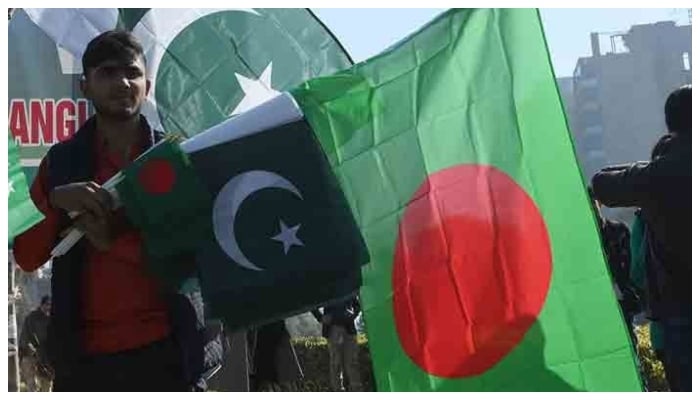
A Bangladesh that strengthens institutional guardrails may appear an even safer destination for investment. Conversely, renewed volatility would prompt caution. External actors, whether India, China or others, ultimately prefer predictability to personality. Yet it is Pakistan for whom Bangladesh’s democratic moment resonates most deeply. The two countries share a painful origin story. Bangladesh’s birth in 1971 was Pakistan’s rupture. For decades, the episode was framed in Islamabad as a geopolitical tragedy rather than a political failure. My father’s recollections offered a different lens: the refusal to honour an electoral mandate and the dismissal of regional grievances were not accidents but choices.
Today, Pakistan grapples with dilemmas that echo that history. Elections are contested; opposition leaders allege persecution; institutions are accused of partisanship. The fear of political extinction fuels brinkmanship. In such an environment, governance becomes secondary to survival. Bangladesh’s referendum, whatever its imperfections, reflects an attempt to address that fear structurally – by dispersing power and embedding oversight. Pakistan’s federation is more complex and its security environment harsher. Yet the principle underlying Bangladesh’s experiment is instructive: democracy requires not only free votes but credible constraints.
Imagine a Pakistan in which executive authority is transparently limited, parliamentary committees exercise genuine oversight and electoral bodies command universal trust. These are not radical ideas. They are the foundations of durable governance. There is also an economic parallel. Bangladesh’s continuity in export policy contrasts with Pakistan’s frequent policy reversals. Each political cycle in Islamabad often reopens settled economic questions. Bangladesh’s experience suggests that political competition and economic continuity need not be mutually exclusive.
Bilateral relations between Islamabad and Dhaka could also evolve. Trade remains modest relative to potential. Cultural and educational exchanges are limited. Pakistan would do well to approach any thaw with humility rather than nostalgia. Bangladesh today is economically confident and diplomatically assertive. Engagement must rest on equality. Beyond bilateral calculations, Bangladesh’s election and referendum illuminate a broader South Asian paradox. The region is rich in democratic aspiration yet prone to institutional fragility. Voters participate enthusiastically; elites quarrel relentlessly. The challenge is to convert civic energy into durable rules. Bangladesh is attempting that conversion in public view.
The ultimate measure will be restraint. Whether that script yields stability depends on whether leaders internalise a simple truth my father often repeated: when politics ceases to listen, nations begin to fracture.
The writer is dean of the faculty of liberal arts at a private university in Karachi. He tweets/posts @NaazirMahmood and can be reached at: [email protected]