On the International Day of Education today (January 24), as the world celebrates progress in learning, opportunity and human development, Pakistan has little to celebrate and much to lament. Instead of treating education as a public duty, as mandated by Article 25A of our constitution to provide ‘free and compulsory education to all children’, we outsource schools and public responsibility to the private sector, as if private ownership were a magic wand.
You don’t outsource your nation’s future: when the state itself begins to treat the constitution as optional, public policy becomes discretionary rather than obligatory, and we are left vulnerable to whims rather than rights. In reality, these schemes transfer public power and resources to private hands while leaving untouched the deeper crisis inside our classrooms: a pedagogy that rewards conformity and obedience and reproduces inequality and alienation.
How, then, can we transform our classrooms? How do we move from this pedagogy to one that builds the foundations of justice, creativity and freedom, one worthy of the constitution’s mandate?
Certainly not through outsourcing, nor by treating that promise as optional. Transformation will come only through an alternative pedagogy, a complete reimagining of education. History shows that such a transformation is possible. Other nations have broken free from similar legacies; Pakistan can do so as well. By placing voices like Frantz Fanon and Paulo Freire in conversation with our own realities, we begin to see that our crisis is not accidental but structural. And because its roots are shared, so too are the resources for transformation. The pedagogy we need must draw from this global reservoir of ideas, adapted to our soil.
Fanon and Freire gave the world a pedagogy of the oppressed: an education that exposes domination, restores dignity and empowers learners to become agents of change. My purpose here is to explain their central ideas and what it would mean to apply them to our classrooms today. Fanon understood colonial schooling as training the child to admire the coloniser’s language and manners, and to distrust his own. Freire described the classroom as a site of domination: knowledge is a deposit, students are containers and obedience is mistaken for learning. Anyone who has visited a classroom in Pakistan knows this perfectly describes our reality.
Colonialism, Fanon argued, was never content with economic exploitation. It sought cultural annihilation by implanting a sense of inferiority so deep that the colonised internalised myths of their own incapacity. The colonial school produced subjects fluent in foreign texts, yet strangers to their own world.
For Fanon, decolonisation has to be total. It is not enough to transfer political power to a native elite while leaving the machinery of domination intact. True liberation means recovering humanity itself: dignity, culture and equality. Yet Fanon also warns of a postcolonial trap: Elites educated in colonial schools simply replace the old masters and reproduce systems of privilege under new names.
Fanon’s analysis remains uncomfortably close to home. The language divide, English for elites, Urdu for others, mirrors colonial hierarchy. Rote learning and exam worship suffocate curiosity and creativity. Education functions as a filter of privilege. Independence without educational transformation, Fanon reminds us, is hollow. It is sovereignty without decolonisation.
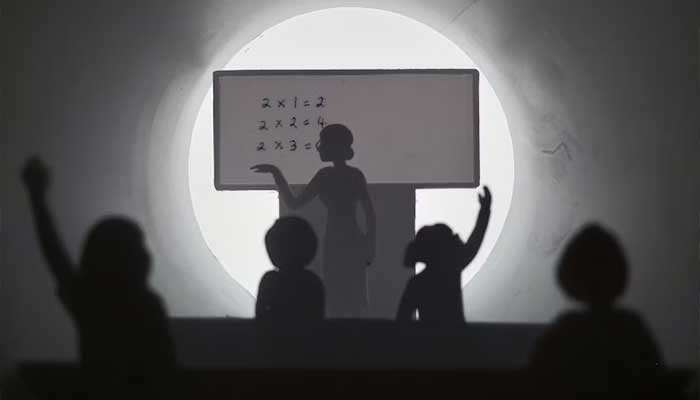
While Fanon exposed the colonial wound, Freire offered a way of healing. Working among Brazil’s poor, he saw that literacy programmes failed because they treat learners as empty vessels. He called this the ‘banking concept’ of education – the teacher deposits knowledge, the student passively receives. Such pedagogy does not liberate; it domesticates.
In 'Pedagogy of the Oppressed', Freire insists that education is never neutral. It either reproduces domination or nurtures freedom. Against the banking model, he proposes a problem-posing pedagogy in which teacher and student become co-inquirers and learning emerges through reflection on living conditions.
Literacy, for Freire, is not just learning letters; it is learning to name one’s reality – land, hunger, work, injustice and to see oppression as historical rather than natural. What appears as fate is revealed as injustice, and injustice must be resisted. Freire’s work in Brazil and Guinea-Bissau showed that peasants dismissed as incapable of abstract thought rapidly mastered literacy and critical awareness when education was grounded in their lived experience.
]Taken together, Fanon and Freire leave us with a bracing truth: pedagogy is never neutral. Schooling either domesticates or teaches freedom. It either reproduces injustice or restores dignity. The implication is simple: reforms that do not decolonise the classroom will fail.
Decolonising the classroom requires dismantling language hierarchies, replacing rote learning with inquiry, turning classrooms into spaces of dialogue rather than fear and treating the child not as a vessel to be filled but a mind to be awakened. Pakistan’s education will be transformed, if at all, by changing what happens between teacher and child. This is the alternative pedagogy we need, one that turns Article 25A into a lived reality.
The writer is a freelance contributor. He can be reached at: [email protected]