Preserving greenspaces has emerged as a critical global challenge as cities continue to expand. These spaces offer vital ecosystem services that promote environmental sustainability and human well-being, making their preservation a primary concern in urban planning. Therefore, their preservation is the primary focus in contemporary urban planning.
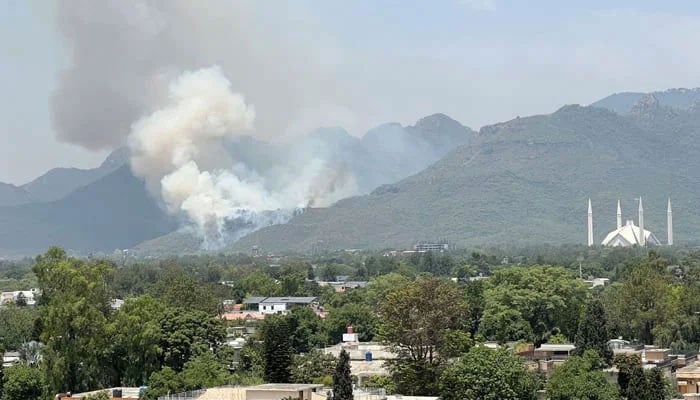
Islamabad, originally designed as a low-density city with wider green belts, is today under extreme environmental pressures. The changes extend beyond the visual skyline to the air people breathe. Along with haze, the recent land-use scandals, which have cost thousands financially, and tree cutting that has deprived the capital of a protective blanket, are not isolated occurrences. They both have structural parallels, the unplanned expansion that places relentless pressure on urban development and governance failures.
Based on Global Forest Watch statistics, Islamabad has lost 14 hectares of forest cover between 2001 and 2024 due to extensive development. This environmental degradation serves as a stress test for governance systems, uncovering the flaws that would otherwise be under wraps. When green buffers vanish and residents risk their lives, these issues transcend environmental and economic problems and become governance crises in which the system is failing.
Green covers and agricultural lands on the outskirts of Islamabad continue to be converted into residential and infrastructural developments. The substantial demand for affordable homes, overseas Pakistanis seeking investment opportunities, and the economic pull of the twin cities generated significant commercial impetus. Projects are aggressively promoted prior to obtaining NOCs and environmental approvals. During the phase, financial contributions are mobilised before regulatory interventions. The remedial measures generally involve adjusted layouts and penalties that allow operations under pending litigation. This cycle continues.
This pattern persists for structural reasons. Islamabad now has a population of over 2.4 million, growing at an annual rate of six per cent since 2001, which generates genuine high housing demand, and peripheral lands in this case are cheaper and offer high profit margins. The population pressure alone does not account for this persistence. Governance failure is the primary driver of degradation, and failures are systemic. Regulatory capture occurs when entities tasked with protecting the environment are unduly influenced by the industries they are meant to regulate. Corruption allows businesses to bypass regulations. Weak rule of law, characterised by uneven compliance and lack of accountability.
The enforcement mechanisms remain fragmented between CDA, RDA and other bodies. The scrutiny is weak, remedial measures are reactive and the resulting outcomes often lead to compromises. The repeated enquiries and requests raise questions about whether these measures are intended to enforce compliance or are merely symbolic interventions that allow businesses to operate with minimal disruption. The existing data show that regulatory measures are usually reactive, which are implemented after environmental and financial losses have already been registered.
This reactive tendency is also due to the misaligned mandates of the regulating agencies, political influences that protect strong contractors and corruption at multiple levels, which have turned punishments into a mere cost of doing business. Commercial activities declared non-compliant continue operations without interruption, reinforcing the perception of systematic accommodation rather than correction. As a result, business drives prevail over governance. The declarations made by the regulators appease the public outcry, yet the root cause of the problem remains unchanged. Declining biodiversity, increased soil erosion, and air quality indices that often exceed safe thresholds are now quantifiable consequences in the twin cities and directly affect citizens’ life expectancy. The recent plantation programmes in the twin cities are praiseworthy; saplings matter, but they require 10-15 years to reach maturity ecologically. This gap indicates that ecological restoration in twin cities is gradual and highlights that planting is not planning.
The challenge in Islamabad has moved from sustaining breathable air to an existential issue. The important question is whether people will endure the compounding stressors of climate change, health implications and financial collapses, and whether the growing gap between regulatory rhetoric and its actual enforcement remains unaddressed?
Islamabad has policies, dedicated entities, an established framework and a national climate change policy. What it lacks is strong execution. The urban governance failures manifested in poor policy implementation, lack of regulatory control, and weak coordination between stakeholders demonstrate that lapses occur at many levels and that mechanisms designed to guarantee transparency and measure progress are either fundamentally flawed or intentionally misleading, or both.
Islamabad needs a governance system that treats environmental resilience as non-negotiable and that political leaders and authorities prioritise conservation over vested interests. In Islamabad, existing planning and political will to conserve ecological buffers remain absent. The mechanism of governance is in place, yet the resolve to employ it is lacking. The plantation programmes must evolve into long-term forest plans that encompass maintenance budgets, adequate species selection, and effective protection laws.
Environmental justice scholarship challenges the unequal distribution of environmental burdens and benefits among various social groups. Environmental governance must be effective in preserving the ecosystem and in mitigating the unequal effects borne by people. This necessitates integration of social and ethical aspects of decision-making and promoting inclusive social governance systems. Three aspects of environmental justice are relevant to the governance shortcomings of Islamabad. Distributive justice concerns the equitable distribution of benefits and risks; procedural justice necessitates fair, inclusive and transparent decision-making; and recognition justice, which requires the recognition and valuation of diverse viewpoints within environmental governance.
The way forward requires not only improved implementation of the current models, but also a radical reconsideration of how urban development is governed.
The writer is a legal scholar specialising in development, governance and human rights. She is a member of the Global Ambassadors of Sustainability.