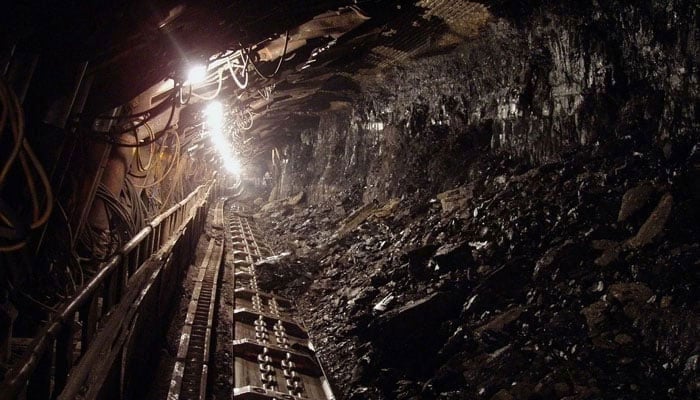
ALPURI: Five mine workers and a supervisor were seriously injured in an incident caused by toxic gas in a coalmine Cherat on Wednesday.
The incident occurred at Khan Parvez Coal Lease, Shakot No. 2, Naguman Mine No. 1, when poisonous gas suddenly filled the mine. As a result, five coalminers and one mine supervisor sustained serious injuries. Fellow workers risked their own lives to pull the injured out of the mine immediately after the incident.
The victims were initially provided first aid under the supervision of Labour Union Coal Mines Cherat, but due to their critical condition they were later shifted to the Burn Centre at Hayatabad, Peshawar, where some of them were reported to be in a critical condition.
Those injured were identified as Hakim Khan, Ayaz Khan, Ghani Rehman, Shazeer and Abdul Basit, all residents of Kanshal Olander, Alpuri tehsil of Shangla district. The injured mine supervisor was identified as Wazir Bacha, a resident of Pirabad, Miankhel Khet, Alpuri tehsil in Shangla.
Recently, another young labourer from Shangla had lost his life in a similar incident.Local sources said that there was no timely gas alarm system inside the mine, nor were basic safety facilities such as protective gear, oxygen masks, and gas detectors provided to the workers. This negligence, they said, was repeatedly costing precious human lives.
Coalmining has turned into a human tragedy for the people of Shangla where unemployed labourers are being forced to descend into so-called “wells of death” in search of livelihood. Accidents in coalmines have now become routine, with workers from Shangla dying on an almost daily basis.
Social activists and labour leaders say that coalmining has become a symbol of death and disability rather than employment for the people of Shangla. According to an unofficial survey, more than 11,000 people from Shangla have been permanently disabled in various mine accidents, with no effective rehabilitation system or government patronage available for them.
Statistics show that more than 65 percent of Shangla’s population is directly or indirectly dependent on coalmining for livelihood. Due to poverty, unemployment, and the absence of alternative sources of income, young men are forced to risk their lives by descending into the mines. It is tragic, they added, that there was no proper registration system for mine workers, nor were they provided with EOBI, pension, or insurance facilities.