For nearly four centuries, the global order has rested on the foundation of Westphalian sovereignty: the principle that a state has exclusive authority over its territory and that its head of state is immune from the jurisdiction of foreign courts.
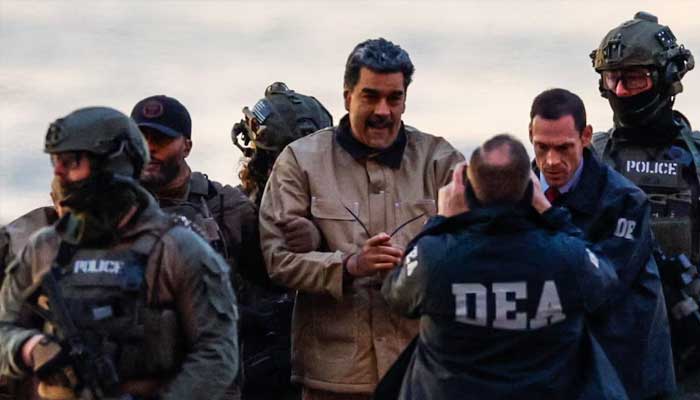
In the past weeks, that principle was not merely challenged; it was dismantled. The capture of Nicolas Maduro and his wife, Cilia Flores, by US special forces in Caracas and their transfer to US custody marks the birth of what we might call the ‘Decapitation Doctrine’. It is a shift that moves the world away from universal law and toward a system in which geography determines one’s level of immunity.
The Trump administration’s rationale for Operation Absolute Resolve is framed as a law enforcement action rather than an act of war. By relying on a narco-terrorism indictment filed in the Southern District of New York, Washington has bypassed the UN and the traditional mechanisms of international conflict. The message is as clear as it is jarring: the US no longer views the recognition of a foreign leader as a barrier to domestic prosecution. If a leader is deemed a criminal by the Department of Justice, they are subject to the same reach as any common cartel boss.
This development is a logical, if extreme, conclusion to a decade of eroding global norms. We have seen the steady decline of multilateral institutions and the rise of transactional diplomacy. But by ‘running’ Venezuela – as President Trump promised on January 3 – the US is doing more than pursuing a fugitive. It is a declaration of a new Monroe Doctrine for the twenty-first century. This updated version suggests that within its own hemisphere, the US will act as judge, jury, and jailer. It is a return to a ‘sphere of influence’ model in which the rules of the road are set by the regional hegemon.
To understand the gravity of this moment, one must look at the history of sovereign immunity. Since the mid-seventeenth century, the international system has functioned on the ‘fiction’ of equal sovereignty. Whether a nation was a global empire or a tiny principality, its leader was considered the personification of the state and thus beyond the reach of foreign domestic law. This was not a moral judgment, but a practical one designed to prevent a cycle of endless retributive litigation between nations. By breaking this seal, the US has effectively signaled that sovereignty is no longer an absolute right, but a privilege granted by the powerful to the compliant.
The legal community is understandably alarmed. If the US can arrest Maduro based on a domestic indictment, what stops other powers from doing the same? We are entering a legal wild west. Imagine a future where a court in Tehran issues an arrest warrant for a European defence minister, or a tribunal in Moscow indicts a Baltic leader for ‘crimes against the Russian state’. By removing the shield of sovereign immunity, the US has introduced a level of personal vulnerability for world leaders that will inevitably lead to a more paranoid and defensive international climate. This concern is already manifesting in UN Security Council debates over the operation’s legality, with Russia expelling US diplomats in retaliation and China halting debt talks with Venezuela.
This ‘judicialisation’ of foreign policy also creates a dangerous precedent for domestic politics. When foreign policy is conducted through the lens of criminal law, it becomes harder to engage in the necessary compromises of diplomacy. You cannot negotiate a peace treaty with someone you have labeled a common felon. In the past, the US often used ‘golden bridges’ to allow dictators to leave power gracefully. By opting for a New York courtroom instead of a quiet exile, the US may find that future dictators will choose to fight to the bitter end rather than risk a life sentence in a Brooklyn cell. Indeed, on January 5, Maduro and Flores pleaded not guilty in Manhattan federal court, with Maduro declaring himself “kidnapped” and a “prisoner of war” while his wife appeared with visible injuries from the raid – a gash over her eye and a forehead welt.
The transitional oversight of Venezuela by American officials creates a political vacuum that may be impossible to fill legitimately. While Venezuela Vice President Delcy Rodriguez has been named acting president by the Venezuelan Supreme Court and has received “unconditional support” from Maduro’s son even as she extends an olive branch to Trump, the reality on the ground is one of American leverage. Any successor to Maduro will now face the ‘proxy problem’. In an era of intense nationalism, a leader who is seen as being installed or protected by Washington will struggle to gain the internal legitimacy required to govern.
We are witnessing the transition from a world of rules to a world of reach. The US has demonstrated that its reach is unrivaled, but the long-term stability of the international system depends on more than just the ability to snatch a dictator from his bedroom. It depends on a shared understanding of where one state’s power ends and another’s begins. By blurring that line in Caracas, Washington may have achieved a tactical masterstroke, but it has left the global order in a state of profound and dangerous uncertainty.
The writer is a freelance contributor.