The discourse on carbon markets and sustainable agriculture has taken on renewed urgency, particularly for developing economies such as Pakistan, which stand at the intersection of climate vulnerability and agricultural dependence.
Among the most promising innovations reshaping this nexus is carbon farming, an approach that simultaneously enhances agricultural productivity and ecological resilience while integrating farmers into global carbon markets through the generation of verified Carbon Credit Units. For Pakistan, where agriculture remains a cornerstone of both livelihoods and national GDP, this emerging system offers a transformative pathway toward climate adaptation, economic diversification, and sustainable rural development.
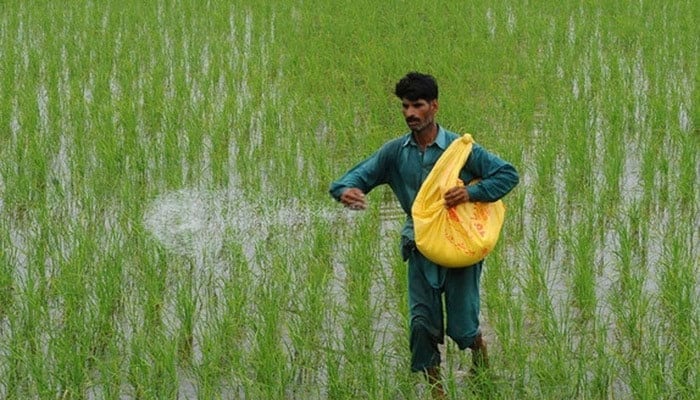
Agriculture occupies a central role in Pakistan’s economy, contributing around 19 per cent of the national GDP and providing employment to nearly 37 per cent of the country’s labour force. Approximately 60 per cent of Pakistan’s total land area is classified as agricultural land, supporting a farming community of more than eight million rural households. This sector underpins food security, exports, and rural livelihoods, yet it remains highly vulnerable to climate-induced stresses such as erratic rainfall, floods, droughts and soil degradation. In this context, carbon farming provides an integrated framework to mitigate emissions while enhancing land productivity and resilience.
Carbon farming is based on a scientifically robust premise: the adoption of carbon-friendly agricultural practices such as conservation tillage, agroforestry, biochar application, cover cropping, rotational grazing and improved livestock management. Landholders can actively capture or avoid greenhouse gas emissions. These measurable environmental benefits are quantified and converted into carbon credits, each representing one tonne of carbon dioxide equivalent (CO2e) sequestered or avoided. These credits can then be traded in voluntary or compliance carbon markets, allowing farmers and land managers to generate an additional and reliable revenue stream.
For Pakistan, integrating such mechanisms across its extensive agricultural base could unlock significant value. It would provide farmers with access to the expanding global net-zero economy, enhance soil organic carbon and water-retention capacity, lower input costs by reducing reliance on synthetic fertilisers and improve crop yields. These cumulative benefits align directly with Pakistan’s Nationally Determined Contributions (NDCs) under the Paris Agreement, which prioritise sustainable land management, reforestation, and emission reductions in the agriculture sector. The implementation process begins with the establishment of a carbon project, in which farmers or land managers adopt climate-smart land-use practices according to an approved methodology.
A feasibility assessment determines the land’s potential for carbon sequestration or emission reduction. Once the project design is validated, it is registered with a recognised carbon registry, such as Verra (Verified Carbon Standard - VCS), Gold Standard (GS), American Carbon Registry (ACR), Climate Action Reserve (CAR) or Global Carbon Council (GCC). These registries maintain transparency and credibility through standardised measurement, reporting, and verification (MRV) frameworks. Over time, project impacts are monitored using advanced tools such as remote sensing, soil sampling and satellite-based data analytics.
Verified emission reductions or carbon removals are then translated into Carbon Credit Units (CCUs), which can be sold domestically or internationally. Although the verification process is technically rigorous, the principle is straightforward: thoughtful land management produces quantifiable climate outcomes that translate into financial value.
Beyond direct financial gains, carbon farming offers profound ecological and socio-economic co-benefits. Incentivising nature-based solutions promotes biodiversity conservation, enhances pollinator habitats and restores degraded landscapes. Economically, it strengthens rural economies by reinvesting carbon revenue in communities, enabling smallholders to adopt modern technologies, diversify incomes, and enhance food security. Socially, it builds resilience to climate shocks, particularly floods, heatwaves and droughts, which increasingly threaten Pakistan’s agrarian regions. The policy context for these mechanisms was strengthened at COP29 in Baku, where historic progress was made on Article 6 of the Paris Agreement, laying the foundation for a globally governed carbon market.
The outcomes from Baku revived confidence in international carbon trading and opened new pathways for green finance in developing countries. Specifically, Article 6.2 enables bilateral and regional carbon trading, allowing countries to directly exchange verified carbon credits through cooperative agreements. For Pakistan, this presents an opportunity to develop a customised carbon market architecture aligned with national climate priorities and to leverage regional synergies with other South Asian economies.
Carbon markets provide a structured and transparent platform for trading certified emission reductions (CERs) generated by activities such as afforestation, renewable energy generation, waste management, and energy efficiency improvements. For Pakistan, with its rapidly expanding renewable energy sector and vast areas of underutilised land suitable for rehabilitation, participation in both voluntary and compliance markets could prove transformative for sustainable finance. Nonetheless, the integrity of the carbon market remains a global concern.
Variability in standards, methodologies, and verification processes across registries can undermine credibility. The World Bank reported that in 2023, the global market value of traded carbon credits declined from $1.87 billion to $723 million, reflecting waning investor confidence. To avoid these pitfalls, Pakistan must establish robust governance frameworks that ensure transparency, environmental integrity, and equitable benefit-sharing across all stakeholders.
Equally critical is the need for capacity building and institutional strengthening. Establishing reliable MRV systems, national carbon registries, and certification bodies will be essential for ensuring data integrity and investor confidence. Lessons can be drawn from regional peers, such as Indonesia and Vietnam, which have successfully built domestic carbon markets aligned with international standards.
While COP29 concluded with an ambitious climate finance pledge of $300 billion per year by 2035 from wealthier nations, fiscal and geopolitical uncertainties raise doubts about its realisation. In this environment, carbon markets present a viable alternative for mobilising climate finance at scale. As COP30 concludes, it is clear that climate action is no longer merely an environmental necessity but a strategic economic opportunity. Carbon farming, by embedding sustainability into Pakistan’s agricultural systems, can serve as a cornerstone of this transition, empowering farmers, restoring ecosystems and strengthening economic resilience.
In a rapidly evolving global climate economy, Pakistan’s ability to measure, manage and monetise its carbon potential will not only determine its environmental trajectory but also define its role in shaping the future of sustainable development.
The writer works on climate finance, carbon markets and sustainable development across disaster risk reduction and climate change.