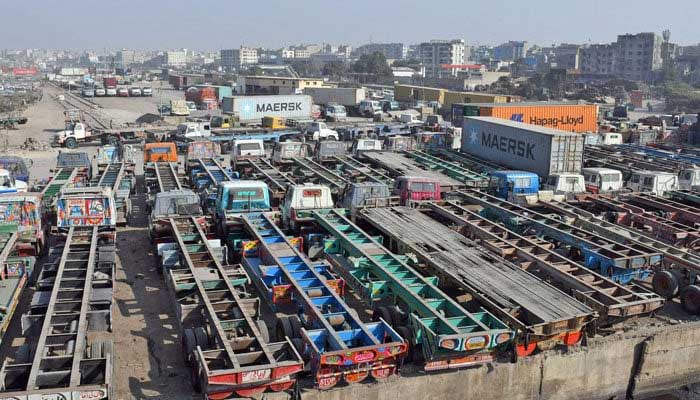
Running a business in Pakistan is rarely free from unexpected challenges, but the recently concluded 10-day-long transportation strike exposed just how vulnerable the country’s economic arteries remain. The strike, which ended on Wednesday after talks with the federal government and the provincial governments of Sindh and Punjab, had paralysed economic activity on a national scale. Triggered by protests against stricter enforcement of axle-load limits, increases in toll taxes and what transport unions described as heavy-handed policing on highways and motorways, the shutdown disrupted the movement of goods between ports, industrial centres and markets. While the strike may be over, its consequences are far from resolved. Supply chains remain tangled, consignments are still stuck at ports and businesses are struggling to recover from missed deadlines. The Karachi Chamber of Commerce and Industry has formally urged the Ministry of Maritime Affairs to intervene and direct shipping lines, terminal operators and port authorities to waive, suspend or substantially reduce demurrage and detention charges for goods stranded solely due to the strike. Without such relief, traders and manufacturers will be forced to absorb losses they had no role in causing.
There is no denying that protests against government policies are a legitimate right. However, when such protests place the entire economy in a chokehold, the cost is borne not by policymakers but by businesses, workers and consumers. Supply chain delays erode trust among buyers, both at home and abroad, and damage Pakistan’s already fragile reputation as a reliable trading partner. The export sector has already approached the FBR seeking at least a three-week extension for filing sales tax returns and making payments, a clear sign of the administrative and financial stress caused by the disruption. What is troubling is the lack of clarity over what exactly the government conceded to end the strike. Regulations on axle-load limits, traffic fines and toll taxes are primarily about safety and infrastructure protection. That transporters were able to halt the entire supply chain over rules meant to prevent road damage and reduce accidents raises serious questions. Reaching a middle ground is important, but the state must not appear so easily pressured that essential regulations become negotiable under threat of economic paralysis.
Transport-related violations remain widespread, with many operators ignoring rules with impunity. Any restrictions designed to ensure road safety and the smooth flow of traffic serve the greater public interest. The government must retain the upper hand in enforcing these rules, especially in a country where overloaded trucks contribute to deadly accidents and rapidly deteriorating highways. Road safety cannot be compromised for expediency, and it is hoped that the negotiations did not result in the withdrawal or dilution of meaningful safeguards. Going forward, both the government and stakeholders must prioritise dialogue and structured negotiations over brinkmanship. Protests should never become a tool to hold the economy hostage. Ensuring predictable policy enforcement, transparent communication and timely engagement with affected sectors is the only way to prevent future standoffs from paralysing businesses and undermining economic stability.