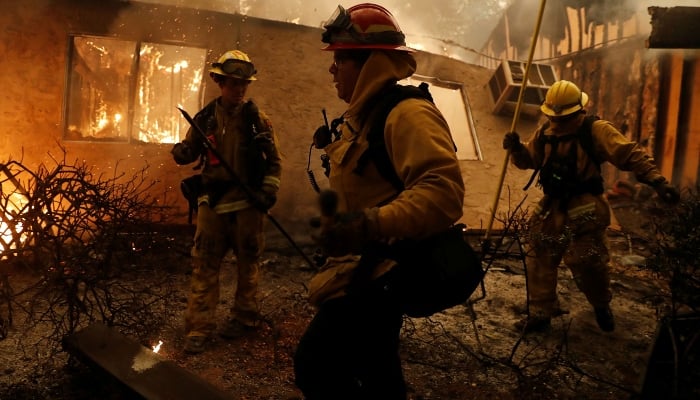
US Firefighter turnout gear marketed as non-PFAS (per-and poly fluoroalkyl substances) treated still contained brominated flame retardants across multiple layers, with the highest extractable levels showing up in some of the newer kits, a US study has found.
Study raises fresh questions about the chemicals used to meet flammability standards as PFAS are phased out.
The research, published in Environmental Science and Technology Letters, is described as the first US study to formally examine and document brominated flame retardants in firefighter turnout gear.
Turnout gear typically includes an outer shell, a moisture barrier and an inner lining, and manufacturers apply chemical treatments so garments meet safety standards set by the National Fire Protection Association, according to lead author Heather Stapleton of Duke University’s Nicholas School of the Environment.
Firefighters have raised concerns for years about PFAS in turnout gear. While no studies have directly linked PFAS-treated gear to firefighter health outcomes, the Duke summary notes that PFAS exposure has been associated in human and animal studies with health problems, including certain cancers.
Manufacturers have begun moving away from PFAS, and multiple states have passed laws that will ban the purchase of PFAS-treated turnout gear starting in 2027.
Against that backdrop, the researchers examined what else may be present in turnout gear, an area complicated by limited disclosure of chemical ingredients used in treatments.
The team analysed nine sets of used gear manufactured between 2013 and 2020, alongside three sets produced in 2024 that were marketed as non-PFAS treated. Using two analytical techniques, they tested each layer for PFAS and brominated flame retardants and measured “extractable” levels, chemicals likely to transfer during use, potentially increasing exposure through skin absorption or inhalation.
As expected, PFAS were detected in all gear produced between 2013 and 2020. The 2024 gear showed only low or non-detectable extractable PFAS levels, consistent with claims that it was not PFAS-treated, with the small amounts detected likely picked up from the surrounding environment during use.
However, every set tested contained brominated flame retardants, and extractable levels were generally higher than those measured for PFAS. The study found the highest extractable concentrations in gear marketed as non-PFAS treated, particularly in the moisture barrier, which Stapleton said suggests manufacturers intentionally added brominated flame retardants to meet flammability requirements, likely replacing a PFAS compound previously used in that layer.
Among the chemicals identified, decabromodiphenyl ethane (DBDPE) appeared at the highest extractable levels. The researchers noted there are no US studies examining health effects linked to DBDPE exposure, but cited a 2019 study of workers at a chemical manufacturing plant in China that found associations with altered thyroid hormone levels and signs of thyroid disease.
Stapleton said she was surprised to see DBDPE used in turnout gear, describing it as having properties similar to decaBDE, a toxic chemical largely phased out globally.
For turnout gear manufactured between 2013 and 2020, the outer shell typically showed higher extractable brominated flame retardants than internal layers, a pattern Stapleton said likely reflects build-up from smoke and soot during fires.
At the same time, the presence of brominated flame retardants in internal layers suggests some manufacturers have used them in treatments for years, even before PFAS began to be phased out, according to the authors.
The researchers said firefighters’ exact exposure levels and long-term health effects linked to these chemicals have not yet been determined, but argued the findings add new information for departments weighing whether to keep existing gear or invest in replacements.
Co-author R Bryan Ormond of North Carolina State University’s Wilson College of Textiles said turnout gear costs thousands of dollars per set and is often used for years, making the trade-offs significant.
Stapleton noted some manufacturers now offer gear that avoids both PFAS and brominated flame retardants and encouraged fire departments to push for clearer disclosure about chemical treatments used in protective equipment.