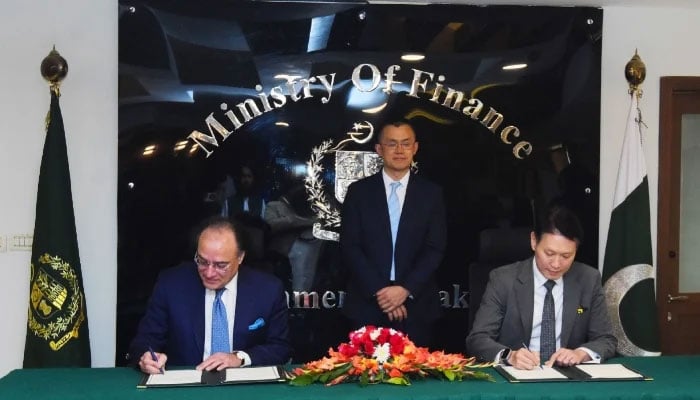
For Pakistan’s economic landscape, the year 2025 will stand out for a long time. One major change that the country faced this year was a surprising yet much-needed urgency shown by authorities to make space for cryptocurrencies. In a country where there was an almost ban on cryptocurrencies in 2018, measures taken this year have been the biggest highlight. The latest move by the government once again deserves recognition. Pakistan last week inked an MoU with Binance to explore the ‘tokenisation’ of up to $2 billion in the country’s assets. This means major crypto firms are now preparing to register and get licences. For the first time, Pakistan has established a regulated, transparent and globally compliant pathway for foreign exchanges. Per experts, this reduces the risks of corruption, scams and other irregularities. According to the Ministry of Finance, the initiative will examine tokenising sovereign bonds, Treasury bills (T-bills) and commodity reserves such as oil, gas, metals and other raw materials. Tokenisation involves creating digital versions of these assets. If executed through a major global platform like Binance, analysts say it could make Pakistani instruments accessible to overseas investors and improve liquidity, transparency and market participation.
All of this is commendable, but the relevant authorities must realise that this new field is not free from risks. Recent reports suggest that the crypto craze has also opened a world of opportunities for scammers who are looking for ways to break into people’s digital wallets and steal the amount. Then, there are the usual suspects: people who run Ponzi schemes to cheat others and steal their funds. Financial literacy in our country does require some improvement. At a time when most people are facing the pinch of rising inflation and deteriorating purchasing power, investing in any crypto-related schemes appears to be a good option, given how significant returns are. This makes it even more urgent for authorities to explain to people what this investment class is and how they should go about it. Several countries like the US and UAE conduct regular conferences to allow industry leaders and experts to have detailed conversations around this asset class. In Pakistan, unfortunately, such discussions are rare, if not almost non-existent.
According to experts, tokenisation will provide a quick and easy way to engage investors. They also claim that challenges like securing funding from the IMF will become much easier for us. This optimism is much-needed. Pakistan’s crypto diplomacy has irked our loudest critics as well where Pakistan was blamed for using crypto to sway America’s support towards it in the May clashes with India. In the crypto world, experts are divided into two extremes. One who dismisses the currency because of its highly volatile nature, and second who favours it to the extent that they are willing to ignore the red flags pointed out by the cautious. There have to be coordinated efforts to bridge this gap and to create an environment where caution is celebrated for informed decisions, not for dismissing an entire asset class.