At a time when Pakistan’s democratic framework appears increasingly brittle, the Tehreek-e-Tahafuz Ayin-e-Pakistan’s (TTAP) decision to hold a ‘National Consultative Conference’ on December 20 and 21 merits serious attention. The stated aim – to discuss the ongoing challenges to democracy and to explore avenues for political dialogue – could not be more timely. The controversy surrounding the 27th Amendment, the removal of Islamabad High Court judge Justice Tariq Mehmood Jahangiri, and the resignation of two senior Supreme Court judges have all reinforced the perception that judicial independence has been compromised. Whether one agrees with this assessment or not, the optics are troubling. In any democracy, even the perception of a weakened judiciary is enough to erode public trust. This is precisely why calls for political dialogue and constitutional fidelity cannot simply be dismissed as opposition grandstanding.
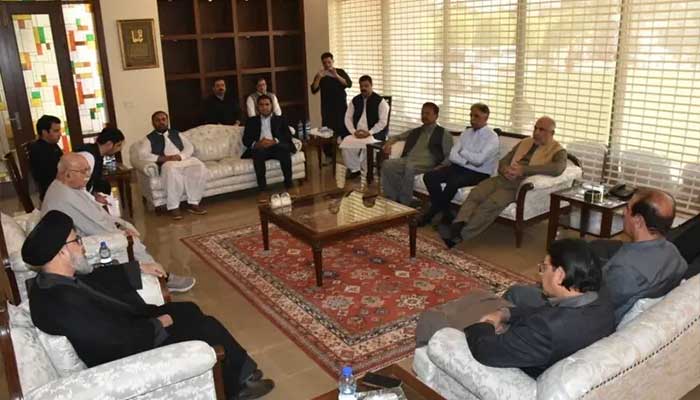
The TTAP conference brings together a broad spectrum of parties. Notably absent, however, are parties from the ruling alliance, who were not invited. While this limits the scope of immediate consensus-building, it does not negate the importance of the exercise. Dialogue, after all, does not always begin with everyone at the same table; sometimes it starts with creating pressure for that table to exist. Concerns have also been raised over what political experts describe as a ‘deliberate delay’ in appointing PkMAP chief Mahmood Khan Achakzai and Majlis Wahdat-e-Muslimeen leader Allama Raja Nasir Abbas as leaders of the opposition in the National Assembly and Senate. Both were nominated by the PTI, yet their appointments remain stalled on the grounds that the matter is sub judice. For a ruling alliance with a comfortable majority, this is an unnecessary and self-defeating approach. Creating procedural roadblocks weakens parliament itself and, by extension, the democratic process. The broader political climate has been further inflamed by the treatment of PTI founder Imran Khan. He was allowed to meet his sister after almost a month, only for all further meetings to be halted again. The scenes outside Adiala Jail, where Imran’s sisters and party workers were dispersed with water cannons, were unfortunate and condemnable and such heavy-handedness will only deepen polarisation in a country already stretched to its political limits.
In this context, the TTAP’s initiative to hold a national dialogue is a welcome move. Yet dialogue must be meaningful, not merely symbolic. Observers are right to hope that the conference produces a political roadmap rather than reinforcing the confrontational posture that has come to define PTI politics in recent months. There is little doubt that agitational politics and constant escalation have shrunk, rather than expanded, political space for the PTI. That said, responsibility does not rest with the opposition alone. The government, too, has adopted an increasingly extreme stance. Denying access, delaying parliamentary appointments and responding to dissent with force suggest an unwillingness to engage politically. A middle way must be found so that the democratic system is not made completely irrelevant. Allowing Achakzai and Allama Nasir Abbas to meet Imran Khan, facilitating internal opposition deliberations and easing restrictions on political interaction would be small but significant steps in that direction. Pakistan has seen where zero-sum politics leads: institutional erosion, public disillusionment and chronic instability. National dialogue cannot be a one-off event. It has to be a sustained process if the constitution, parliament and judiciary are to retain any real meaning.