After poverty and climate change, Technology-Facilitated Gender-Based Violence (TF-GBV) is the biggest challenge the world is confronted with today.
Though both poverty and climate change are existential threats, TF-GBV is a threat to the social fabric of society. It is not a new phenomenon, but an extension of offline Gender-Based Violence (GBV), which mainly started occupying digital space during Covid-19. Now, it is a genie out of the bottle, causing irreversible harm to the human value chain, with thousands of cases reported worldwide each year. Pakistan is no exception to it.
According to the United Nations Population Fund, about 60 per cent of women and girls worldwide have faced some form of TF-GBV. Economist Intelligence Unit reported that 38 per cent of women have personally experienced online harassment, while 85 per cent of women, who spend their spare time online, have witnessed it. A recent UN report reveals that women are 27 times more likely than men to be targets of online hate activities. The figures are alarming. Global data confirms the widespread nature of this issue and demands immediate attention of states to control it.
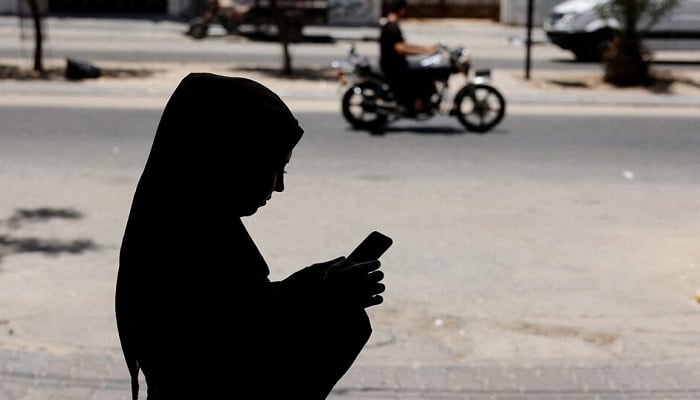
Experts say TF-GBV directly threatens the safety, economy and right to free expression. It encompasses gender-based harassment, abuse or assault carried out through online or digital platforms, including social media channels through messaging, email facilities, as well as video and image sharing sites. This phenomenon also includes behaviours such as digitally enabled stalking or surveillance, issuing threats or degrading messages, sharing intimate images without consent, doxing and other forms of sexualised cyber-harassment.
It should not be treated as merely an online activity, as its adverse effects can intensify offline violence in deadly circumstances. According to experts, it can practically limit women’s ability to engage in public life on the one hand, and on the other, affect their mental well-being and contribute to suicidal tendencies.
UN Women global guidance also confirms that millions of women and girls are affected each year by online violence such as cyberstalking, sexualized deepfakes, privacy breaches, and coordinated hate campaigns. Similarly, Unicef reports that adolescent girls are particularly vulnerable, with a significant portion experiencing online harassment before the age of 18. Amnesty International has documented that women, especially those belonging to marginalised groups, face abusive and threatening messages at disproportionately high rates.
In Pakistan, the situation also reflects global trends, as women and girls face severe and often escalating forms of digital violence. Digital rights bodies here term TF-GBV as a rapidly growing threat to society. The Digital Rights Foundation’s Cyber Harassment Helpline alone has recorded over 20,000 complaints in the last eight years, with the majority filed by women and young girls.
Recent data from the organisation indicate a sharp rise in such cases. In 2024, the helpline documented 3,171 cases, of which 2,741 involved cyber harassment. Women aged 18–30 remain the most affected group. In Punjab, the data continues to report the highest number of cases, followed by Sindh.
Online threats often escalate to physical violence, causing distress, fear, trauma and social exclusion. This phenomenon appears to be worse in rural areas with limited social support. Digital violence reinforces gender inequalities and restricts access to education, employment and leadership opportunities. Other national data forums suggest that the magnitude of the issue is far greater.
Reports indicate that in the last five years, more than 1.8 million women across Pakistan were targeted through cyberstalking, blackmail, non-consensual image sharing, online threats and other forms of digital abuse. Despite the high number of annual complaints, more than 73,131 cases were reported to the Federal Investigation Agency (FIA), according to the agency’s Annual Administration Report 2024. The conviction rate remains as low as 1 per cent, reflecting major barriers to justice and criminal negligence by law-enforcement agencies.
This issue must also be analysed and addressed within Pakistan’s wider socio-cultural context. A society already dealing with deep gender inequalities and entrenched patriarchal norms makes women particularly vulnerable when these dynamics spill into digital spaces. As more women engage in online education, political participation, employment, entrepreneurship and social-media activism, their exposure to digital harm increases. The rapid expansion of digital connectivity, therefore, demands urgent, structured, and gender-responsive action to ensure that online spaces are safe, inclusive and accountable.
Digital violence should be treated as violence. From cyber-stalking and non-consensual image sharing to coordinated harassment and deepfakes, it must be recognised and prosecuted as forms of gender-based violence. Legal frameworks must be accompanied by operational plans that build capacity in police, prosecutors, and courts to investigate, preserve digital evidence, and adjudicate cases without re-victimising survivors.
There is a need to strengthen helplines and survivor services such as gender-responsive hotlines, trained digital forensics units, legal aid, safety planning and trauma-informed counseling. Helplines must be widely publicised, accessible in local languages, and linked to referral pathways that include medical, legal and shelter services.
Prevention is as important as prosecution. The government needs to invest in age-appropriate digital literacy (students, parents, teachers) and training for development field staff and public servants. A structured national mechanism must be devised to collect disaggregated data (sex, age, region, type of abuse, platform) and track outcomes (reports investigations convictions). Regular public dashboards and independent research will reveal trends, expose gaps and inform policy choices.
Top-down policies must be complemented by bottom-up action, partnering with local women’s groups, school networks, religious institutions and community-based organisations to tailor interventions to local norms, improve digital access for women and girls and create safe online/offline spaces.
Redressal of digital violence is not only a technological challenge for the government, but also important for gender justice, basic rights and women-led growth. The path is clear and the goal is ahead; thus, the stakeholders need collective will and action.
The writer is a gender and women’s empowerment advocate associated with the Sustainable Development Policy Institute.