In the wake of the economic uncertainties triggered by the ongoing conflict in the Middle East and the resulting volatility in global energy prices, shipping routes and financial markets, it has become increasingly important for Pakistan to diversify and strengthen its export markets.
TRADE
In the wake of the economic uncertainties triggered by the ongoing conflict in the Middle East and the resulting volatility in global energy prices, shipping routes and financial markets, it has become increasingly important for Pakistan to diversify and strengthen its export markets.
Excessive reliance on a limited number of traditional destinations has long constrained the country’s export growth and exposed it to external shocks. Under these circumstances, launching a focused campaign to expand goods exports to neighbouring South Asian and Central Asian markets has become an economic imperative.
The Central Asian States (CAS) -- Kazakhstan, Uzbekistan, Turkmenistan, Tajikistan and Kyrgyzstan -- represent an increasingly important economic region with considerable trade potential. Driven by industrial modernisation, infrastructure development and expanding consumer markets, these countries possess strong import demand for machinery, advanced technology, chemicals, pharmaceuticals and specialised consumer goods. Food products and processed agricultural items are also in demand as these economies seek to diversify beyond traditional resource-based sectors.
At the same time, the region has substantial export potential owing to its vast natural resources, including oil, natural gas, coal and minerals. With a combined GDP of roughly $347 billion and steady economic growth, the region’s key sectors include energy, agriculture (particularly grains and flour), textiles and mining. As Central Asian economies increasingly seek to diversify trade beyond their traditional partners, the region offers promising opportunities for new economic partnerships.
Among the five states, Kazakhstan and Uzbekistan lead in importing advanced technology, industrial equipment and machinery, particularly for the energy, mining and emerging technology sectors. Demand also exists for pharmaceutical products, chemicals, automobiles, textiles and processed food items. Growing markets include South Asia, Europe, and China, while new trade corridors and increased regional cooperation are helping facilitate economic diversification.
As of early 2026, the region continues to record relatively strong -- though somewhat moderated -- economic growth driven by industrial diversification, infrastructure expansion and rising consumer demand. The potential for Pakistan’s exports to the Central Asian States is considerable, with estimates suggesting that bilateral trade could reach nearly $10 billion, almost three times higher than present levels, within a few years.
Currently, Pakistan’s trade with the Central Asian States remains relatively modest. During FY2024, Pakistan’s total trade with the region was about $429 million. Of this, Pakistan’s exports accounted for roughly $402 million, while imports were about $27 million, resulting in a substantial trade balance of $375 million in Pakistan's favour. Total trade improved somewhat during FY2025, exceeding $442 million, but Pakistan's exports declined sharply to about $197 million.
Direct trade with the region remains underutilised and largely confined to textiles, food products and limited industrial goods. This is inconsistent with broader efforts to enhance economic cooperation through transit agreements, particularly with Uzbekistan and Kazakhstan -- the two largest trading partners in the region. Pakistan’s key exports include pharmaceuticals, rice, sports goods, surgical instruments, textiles and light engineering products, which continue to enjoy steady demand.
Kazakhstan, the largest economy in the region, offers the most significant market potential. With projected GDP growth of around 4.5-5.5 per cent in 2026, the country is seeking to diversify its economy away from its heavy reliance on oil exports. The government plans to launch new investment initiatives to boost production in sectors such as agricultural machinery, household appliances, and chemical products. Although Kazakhstan remains a major importer, its import-substitution policy is driving increasing demand for machinery and technology to support domestic industrial production.
Strengthening transport connectivity, improving banking channels and expanding trade facilitation agreements will be essential if Pakistan is to translate the region’s considerable potential into meaningful economic gains
Uzbekistan is emerging as another important market, with GDP growth projected to remain strong at about 7.0 per cent in 2026. The country is undertaking major industrial modernisation in sectors such as food processing, electrical equipment and textiles. At the same time, large-scale upgrades in transport and logistics infrastructure are creating demand for construction materials, machinery and pharmaceutical products. With plans to expand textile production by nearly 30 per cent by 2026, there is significant potential for exports of textile machinery and raw materials. Likewise, Tajikistan, though relatively underexplored, also holds considerable potential for industrial goods and specialised agricultural products. As its economy gradually expands, demand for machinery, industrial equipment and pharmaceutical products is expected to grow in the coming years.
Kyrgyzstan has recently emerged as an important logistics and commercial hub. With GDP growth exceeding 11 per cent in 2025, rising consumer demand is creating opportunities in sectors such as information technology services, light manufacturing and pharmaceuticals. Export prospects exist for pharmaceuticals, ready-made garments, processed food products and agricultural equipment. The country’s ongoing digital transformation is also creating new opportunities for technology-related services and products. Also, Turkmenistan’s economic growth is expected to remain relatively stable, though its market remains largely shaped by state-led investment. The government is seeking to diversify its natural resource-based economy, thereby creating demand for industrial machinery, agricultural equipment, chemicals and specialised vehicles.
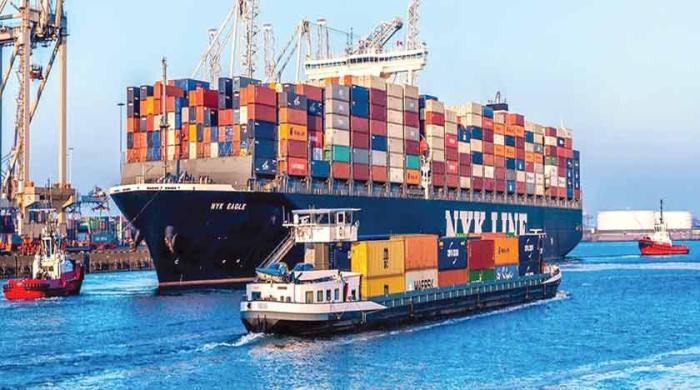
Despite these opportunities, Pakistan’s trade with Central Asia remains far below its potential. Major constraints include logistical barriers, limited transit infrastructure, banking and payment challenges, and heavy reliance on trade routes passing through Afghanistan. Nevertheless, recent initiatives -- including transit trade agreements with Uzbekistan and improved regional connectivity -- have begun to ease some of these constraints.
Kazakhstan and Uzbekistan continue to dominate Pakistan’s trade relations with the region, although the other three countries are gradually increasing in importance. Trade with Tajikistan has shown encouraging growth, while Turkmenistan remains a modest but strategically significant partner due to its energy resources. Kyrgyzstan represents a smaller but potentially expanding market, particularly for agricultural and consumer goods.
Central Asian countries are also active participants in several regional economic cooperation frameworks aimed at strengthening trade and connectivity. These include the CAREC programme and the Economic Cooperation Organisation (ECO), of which Pakistan is also a member, along with Afghanistan and Azerbaijan. These fora provide useful platforms for promoting regional trade integration.
The Central Asian region, therefore, represents a largely untapped market capable of contributing significantly to Pakistan’s export diversification. To fully exploit these opportunities, Pakistan needs to pursue a more focused export strategy that expands trade beyond traditional markets and products. In particular, the engineering sector should receive greater emphasis.
Pakistan has the capacity to export a wide range of engineering and industrial products, including electric fans, auto parts and vehicles such as tractors and motorcycles, surgical and medical instruments, cutlery and kitchenware, textile machinery, diesel engines, pumps and compressors, steel structures, agricultural implements, pipes and tubes and household appliances. Both the public and private sectors in Pakistan have a long history of exporting industrial machinery and equipment to developing economies. These include sugar mills, cement plant equipment and machinery for fertiliser, construction, and power generation industries.
Strengthening transport connectivity, improving banking channels and expanding trade facilitation agreements will be essential if Pakistan is to translate the region’s considerable potential into meaningful economic gains.
The writer is a retired chairman of the State Engineering Corporation.