History’s cruelest joke is that the real winners often never fire a single shot. As the Middle East teeters on the abyss, one man in Moscow is quietly pouring himself a drink. Vladimir Putin didn’t start this fire, but he’s warming his hands on it just fine.
OIL RESERVES
History’s cruelest joke is that the real winners often never fire a single shot. As the Middle East teeters on the abyss, one man in Moscow is quietly pouring himself a drink. Vladimir Putin didn’t start this fire, but he’s warming his hands on it just fine.
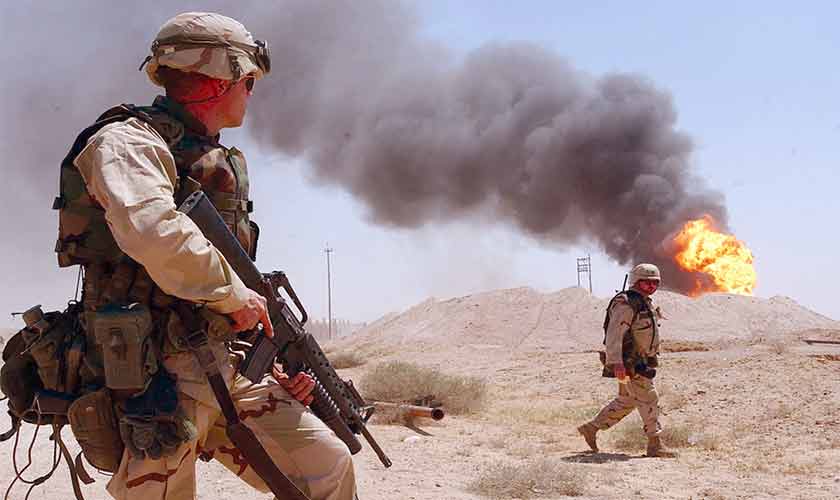
The Strait of Hormuz is now effectively closed. What was once a war-game scenario sketched on Pentagon whiteboards is now brutally real. Tankers aren’t moving, barrels aren’t arriving and desperate energy-importing economies are scrambling like passengers fighting over lifeboats. In that panic, buyers are turning to whoever still has oil to sell.
Russia has plenty. Three years of biting Western sanctions were supposed to bleed Russia dry. Western capitals had practically written the obituary for Putin’s war economy. They forgot the first rule of geopolitics: one region’s catastrophe is another’s windfall. Oil prices were surging, and Russia’s petrodollar revenues -- the very lifeline that was meant to be severed -- were being quietly replenished by a crisis Russia didn’t even have to engineer. You couldn’t script this kind of luck.
Meanwhile, Washington’s fingerprints were all over a curious side plot. Months before Gulf tensions exploded, the US had begun quietly courting Venezuela -- yes, that Venezuela, the one Washington spent years sanctioning, destabilizing and trying to regime-change. Suddenly, Western energy companies were being waved back towards Caracas. Coincidence? Perhaps. Or perhaps someone in Washington saw the storm coming and placed a few bets before the rain started. Historians will argue. Energy traders already know.
Then there’s China -- the giant nobody wants to provoke but everyone is quietly trying to corner. The world’s largest energy importer has been running a shadow pipeline of Iranian crude through labyrinthine trading routes designed to thumb its nose at Western sanctions. Somewhere around 90 per cent of Iran’s oil is exported to China. Disrupt that flow and you’re not just hurting Chinese factories, you’re sending a message to Beijing in a language it understands: economic pain. The irony, of course, is that the same disruption that squeezes China simultaneously fattens Russia’s wallet. The architects of this pressure campaign may want to check their math.
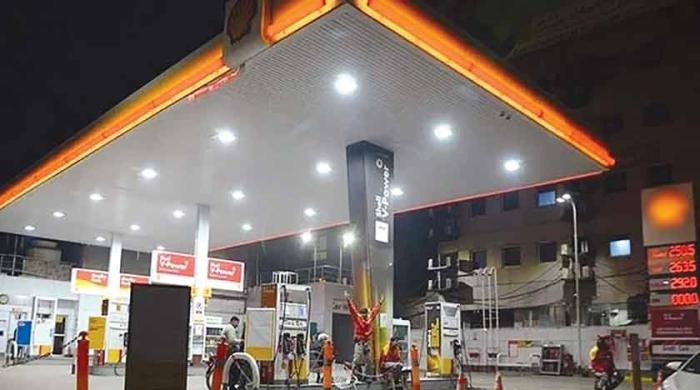
For Pakistan, though, there is no chess game to admire. There is only the bill. Pakistan imports most of its energy, which means every tremor in global oil markets registers instantly on Pakistani streets -- and it’s already happening. Petrol prices have jumped roughly Rs55 per litre in recent days. That’s the rickshaw driver recalculating his fares, the baker passing costs to the bread buyer, the factory owner deciding whether to expand or contract.
The State Bank of Pakistan, to its credit, held its nerve. When the Monetary Policy Committee met on March 9, 2026, it kept the policy rate steady at 10.5 per cent -- a sensible pause. But nobody should mistake a pause for a plan. Interest rates cannot unblock a strait. Monetary policy is a scalpel being asked to perform surgery on a gunshot wound. When inflation is being imported, raising rates is largely theatre. It signals discipline to the IMF and comforts bond markets but does precious little for the household that just watched its grocery bill climb 20 per cent.
When inflation is being imported, raising rates is largely theatre. It signals discipline to the IMF and comforts bond markets but does precious little for the household that just watched its grocery bill climb 20 per cent
And yet the institutional machinery will grind forward. Inflation will tick up, the data will look ugly and Pakistan’s financial system will once again reach for the rate hike lever. The cycle is almost poetic in its cruelty: foreign war breeds domestic inflation, inflation breeds tighter money, tighter money breeds slower growth and slower growth breeds more vulnerability to the next foreign war.
Pakistan’s agony in this crisis is an identity crisis dressed in spreadsheets. The Pakistani street bleeds for Iran; religious solidarity, cultural memory and a deep historical bond make Tehran feel like kin. But the Pakistani state answers to a different set of creditors which have been Pakistan’s financial backstop for years through deposits, rollovers and quiet bailouts when the IMF was slow and the reserves were thin.
And then there’s the IMF itself, that Washington-anchored institution whose support is the difference between Pakistan’s economy functioning and unraveling. So, Islamabad does what it always does: says very little and means even less. It offers calibrated condolences, issues statements of concern and does not choose sides because it cannot afford to. Foreign policy, when you are broke, is not strategy but survival.
The deeper strategic farce is this: does anyone in Washington actually believe the Iran playbook will work? Venezuela buckled -- eventually, partially -- because its political system has a pressure valve. Iran does not. Its leadership does not just tolerate sacrifice; it venerates it. A government that has built its entire ideological architecture on the glory of resistance and martyrdom is not going to be sanctioned into surrender. You might as well try to extinguish a fire with the fire’s own mythology.
The Middle East may be the stage, but the real drama is being written in energy futures, currency reserves, and central bank minutes. Russia banks its windfall, China frets about supply chains, Washington plays 4D chess and ends up back in Venezuela (and then maybe Greenland or Cuba). And Pakistan -- always Pakistan -- absorbs the shock with the stoic exhaustion of a country that has survived too many other people’s crises.
Wars fought in distant deserts have a way of arriving in Pakistan wearing very ordinary clothes: a higher number at the petrol pump and the cold sweat of a trader staring at a portfolio that was fine yesterday.
The writer is a chief investment officer at a multinational and teaches financial markets in Pakistan. He can be reached at: [email protected]