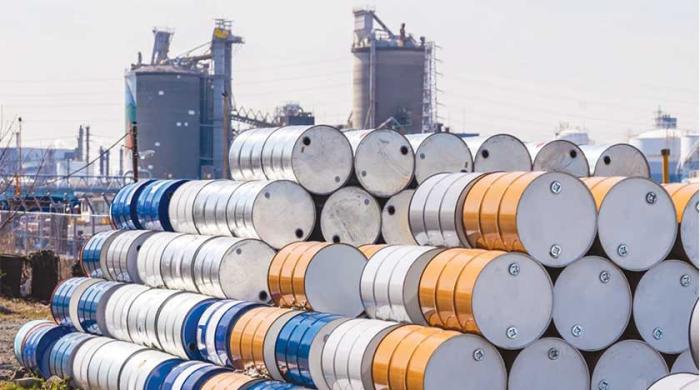
In a region where geography shapes economic outcomes, Pakistan’s prosperity depends on transforming its borders from choke points into efficient corridors of secure, predictable, and commercially viable trade.
TRADE
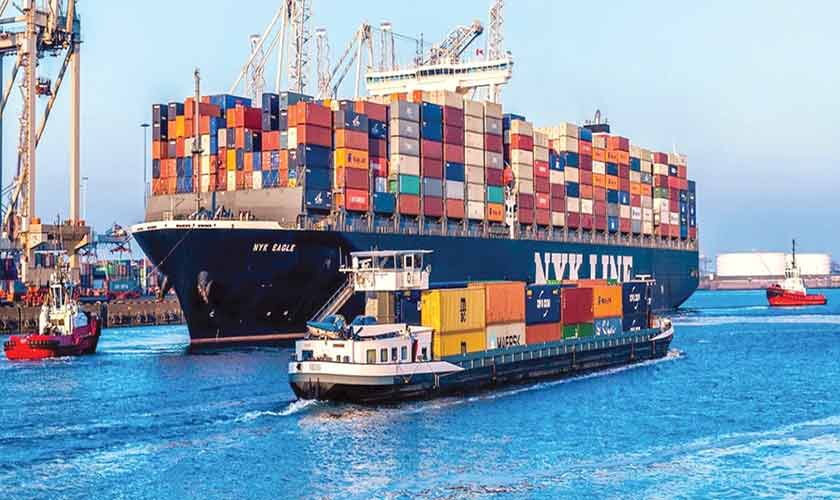
In a region where geography shapes economic outcomes, Pakistan’s prosperity depends on transforming its borders from choke points into efficient corridors of secure, predictable, and commercially viable trade.
Cross-border trade is the traditional method of producing and manufacturing goods and services among individuals, businesses, or other legal entities from different countries. Cross-border trade in Pakistan plays a vital role in the economy due to its strategic geographic location and proximity to South Asia, Central Asia, Iran and the Middle East.
Positioned at the crossroads of Asia, Pakistan has different agreements with its neighbours, such as CPEC with China, the South Asia Free Trade Agreement (Safta), the Preferential Trade Agreement (PTA) with Iran and the Pakistan-Afghanistan Transit Trade Agreement (MOC, 2006). These agreements can help Pakistan boost cross-border trade with other countries.
In 2019, Pakistan's cross-border trade was efficient, with exports totalling $2,385.65 million out of $23,748.68025 million from the Asian region. These exports were made to Afghanistan (14.48 per cent), Bangladesh (8.42 per cent), India (5.35 per cent) and Sri Lanka (3.51 per cent). Pakistan also exports a small share to other Asian countries, such as Nepal, the Maldives and Bhutan. But relations with India and Afghanistan do not show potential for improvement and are still degrading day by day due to political concerns between them.
Pakistan also imports goods and commodities from Asian countries, such as China (36.71 per cent), the UAE (16.01 per cent), Saudi Arabia (5.80 per cent), Indonesia (5.42 per cent), Qatar (5.29 per cent) and India (5.13 per cent), which makes the huge amount of $61 billion in imports.
Pakistan's trade with China always been effective and bilateral. China's exports to Pakistan have increased every year, rising from $16.67 billion in 2023 to $19.62 billion in 2024. But Pakistan's exports to China are negligible, totalling $2.38 billion in 2024. Now, trade between Afghanistan and Pakistan through the Pakistan-Afghanistan Transit Trade Agreement (MOC, 2006) is zero due to political tensions. Some of the Pakistan-Afghan border is closed indefinitely. This not only affects the formal economy but also the street and informal economy in both countries.
By 2021-22, Pakistan had effective, well-maintained bilateral trade with Afghanistan. Exports were more than imports. The fluctuations in trade reflect changes in trade costs, border conditions, demand for goods, and trade policy, resulting in a notable surplus in 2021-23 driven by higher imports. While imports fell sharply in 2023-24, exports recovered. It means trade with Afghanistan should take more importance across orders.
The story is also not very amazing when it comes to trade with India. After independence, both countries have had political concerns with each other and lack a formal trade framework, while there is significant potential for both Pakistan and India to pursue trade creation rather than trade diversion, given their cultural similarities.
The data shows that both countries have bilateral trade, but Pakistan has fewer imports due to India's foreign trade policy. Trade ties were suspended in 2019 and imports of raw materials turned negative. Even after the suspension of formal bilateral trade, Pakistan secured a $35 million trade deficit with India in the 1st quarter of FY2025, according to Arab News. However, limited imports and exports between the two countries continue under special permission, such as the import of pharmaceutical raw materials.
Pakistan needs long-term trade agreements with enforceable clauses, including dispute resolution mechanisms and penalties for arbitrary stoppages, to improve credibility and reduce uncertainty for firms
To further strengthen the statement, State Bank data shows that during July-September of FY2025-26, Pakistan imported $36.6 million and exported $1.95 million worth of Indian goods. This resulted in a surplus of $34.7 million for the Indian economy. It means that both countries must continue their bilateral trade, while based on their own benefits,
Now, in this region, Iran is the only country, after China, with which Pakistan has a free trade policy. In 2024, Pakistan's exports to Iran total $73.4k, consisting of delivery trucks and construction vehicles. While this export value fell from $247 million in 2019, it indicates a major contraction in bilateral market and export flows. Iran's exports to Pakistan are valued at $1.2 billion, mainly consisting of petroleum gas, refined petroleum and dried legumes. The value of exports has risen over the last five years due to Pakistan's energy shortage although Pakistan has a large trade deficit with Iran due to asymmetric bilateral trade.
Pakistan offers a game-changing structure that could help increase bilateral trade between the two countries. In recent days, Pakistan and Iran agreed to expand their agricultural and economic cooperation, aiming to reach a $10 billion trade target by 2028.
Despite persistent border frictions, sanctions/financial constraints and security-driven disruptions that keep formal commerce below its potential, deepening structured trade with Iran, Afghanistan and India is essential for Pakistan to cut transport costs, stabilise supply chains (energy/food), expand exports through nearby markets, earn foreign exchange and build regional interdependence that supports long-term stability.
Now to address Pakistan’s cross-border trade and business challenges, the country should prioritise trade facilitation and predictable commercial rules while keeping day-to-day commerce insulated from political tensions. This means reducing unnecessary checks and delays at borders through risk-based inspections, single-window clearance and clear SOPs that stop repeated ‘junctions’ and discretionary stops.
Pakistan should also tailor each border to its dominant trade flows, for example, investing in cold-chain infrastructure and fast SPS testing where perishables are common, dedicated transit lanes for high-volume cargo and digitised documentation where informal trade is prevalent, so goods can move faster with fewer leaks.
In parallel, Pakistan needs long-term trade agreements with enforceable clauses, including dispute resolution mechanisms and penalties for arbitrary stoppages, to improve credibility and reduce uncertainty for firms. Finally, establishing a G2G (government-to-government) banking/settlement channel, or other compliant payment arrangements where normal banking is constrained, would lower transaction costs, reduce reliance on informal payments and improve documentation and tax compliance.
The impact of these reforms would be shorter clearance times, lower logistics costs, more formal trade, greater exporter confidence, higher foreign-exchange earnings and stronger regional supply-chain stability.
The writer is a research associate at the Sustainable Development Policy Institute (SDPI), Islamabad.