There is a shift happening right now that most Pakistanis don’t know about, but should. An 11-year-old in Lisbon just built a working Facebook clone. A Swedish duo is making $700,000 annually from a startup they launched seven months ago. Neither had formal programming training. They used something called ‘vibe coding’ -- and it’s about to reshape Pakistan’s entire tech economy.
VIBE CODING
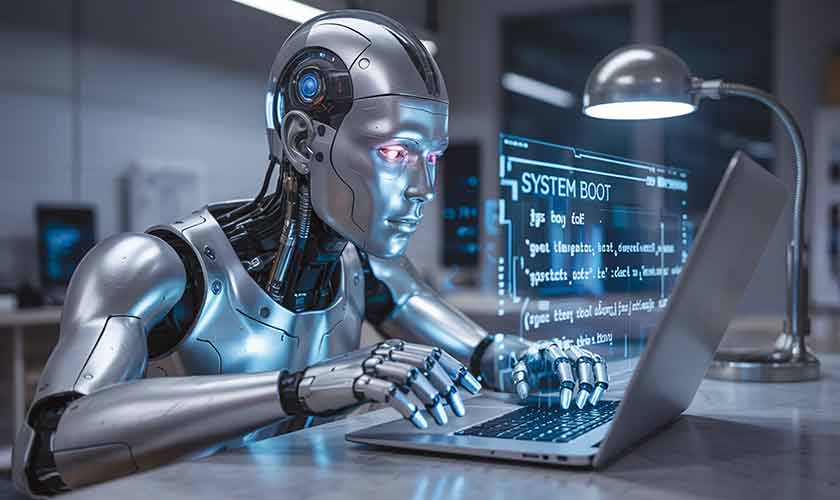
There is a shift happening right now that most Pakistanis don’t know about, but should. An 11-year-old in Lisbon just built a working Facebook clone. A Swedish duo is making $700,000 annually from a startup they launched seven months ago. Neither had formal programming training. They used something called ‘vibe coding’ -- and it’s about to reshape Pakistan’s entire tech economy.
Collins Dictionary named ‘vibe coding’ its Word of the Year for 2025. That’s mainstream validation that software development has fundamentally changed. And Pakistan, with our 600,000+ IT professionals and status as the world’s fourth-largest freelancing nation, is poised to either capture a massive opportunity or watch it pass us by.
Vibe coding is a development approach in which you describe what you want to an AI platform in plain language and the platform generates functional code. Andrej Karpathy, one of the world’s most respected AI researchers and former Director of AI at Tesla, introduced the term in February 2025. Within months, the concept exploded. By mid-2025, 44 per cent of developers globally had adopted AI coding tools. Among US developers, that number jumped to 92 per cent daily usage.
The market is responding accordingly. The vibe coding industry is projected to reach $12.3 billion by 2027, with a compound annual growth rate of 38 per cent. At Google and Microsoft, 30 per cent of new code is now AI-generated. GitHub Copilot alone has 1.8 million paying subscribers.
But here’s the critical insight for Pakistan: vibe coding isn’t replacing programmers. It’s democratising software creation while making experienced developers more valuable.
Think about what that means for a country where IT exports are projected to exceed Rs500 billion (~$1.8 billion) by 2026; nearly half of companies will use advanced analytics by 2026; the AI/ML market is growing at 28.66 per cent annually and expected to reach $3.2 billion by 2030; and our federal AI policy aims to train one million professionals.
We’re not just participants in the global tech economy. We’re positioned to be leaders -- if we adapt quickly.
Traditional software development requires 3-6 months to build an MVP and costs $30,000-$50,000. With vibe coding platforms like Lovable, Replit, or Cursor, that same MVP can be built in days for under $500.
Consider the math: A freelance developer currently charges $30-50/hour for custom development work. With vibe coding, they can deliver the same output 3-5x faster while maintaining quality. That’s not just a productivity boost; it’s a competitive advantage in a global marketplace. But there’s a nuance here that matters: vibe coding rewards conceptual understanding over execution speed.
Scott H Young, a programmer and learning researcher, noted in his analysis of vibe coding that "even if I wasn’t writing the code, I needed the knowledge of how code works and what design constraints to set up to get a good result”. The Pakistani freelancers who will dominate aren’t the ones who can code fastest. They understand software architecture, user experience and business requirements well enough to guide AI effectively.
Our educational institutions -- NUST, COMSATS, LUMS, FAST, ITU -- are producing thousands of computer science graduates annually. But we need to shift focus from syntax memorisation to systems thinking.
Pakistani businesses face a chronic problem: custom software is expensive and slow to develop. Vibe coding eliminates that constraint. Platforms like Lovable have nearly eight million users globally, with more than half of Fortune 500 companies using them. They’re not experimental tools anymore. They’re production-ready platforms that non-technical business owners can use to build functional software.
For Pakistan’s growing startup ecosystem -- with incubators like The Nest I/O, Plan9 and NIC supporting hundreds of new businesses annually -- vibe coding means faster iteration, lower burn rates and more shots on goal before running out of runway
For Pakistan’s growing startup ecosystem -- with incubators like The Nest I/O, Plan9 and NIC supporting hundreds of new businesses annually -- vibe coding means faster iteration, lower burn rates and more shots on goal before running out of runway.
But businesses need to understand the limitations. A TATEEDA analysis of vibe coding in regulated industries notes: "The headline risk isn’t that AI can’t produce code -- it’s that it can produce plausible code faster than teams can validate it”. Healthcare, fintech and any business handling sensitive data still needs experienced engineers to review AI-generated code for security vulnerabilities and compliance requirements.
Approximately 45 per cent of AI-generated code contains security flaws like insecure authentication or missing input sanitisation. That’s why vibe coding works best for prototyping and internal tools, while production systems with sensitive data still require human oversight.
Here’s an uncomfortable truth for the thousands of students enrolled in BS Computer Science programmes at Pakistan’s universities: the job market you’re preparing for is changing faster than your curriculum. Traditional computer science education in Pakistan emphasises algorithms, data structures and implementation. That foundation remains valuable. But the market is shifting toward what industry analysts call ‘vibe architects’ -- developers who can bridge business needs and AI execution.
A Forbes 2026 prediction notes: “Junior roles focused on boilerplate code are declining, replaced by ‘vibe architects’ who bridge business needs and AI execution”. In tech hubs globally, companies are rethinking hiring priorities. It’s no longer about how many programming languages you know. It’s about how well you can articulate visions and orchestrate AI agents.
A CNBC report on a two-day vibe coding class captured this shift perfectly. One participant with no technical background said: "As long as you can read, write and follow instructions, you can probably vibe code”. That’s democratisation. But it also means Pakistani CS students can’t rely on syntax knowledge alone for a competitive advantage.
Universities in Pakistan need to adapt. COMSATS, ranked #1 in Computer Science research in Pakistan, and NUST, ranked #2, are producing excellent theoretical education. But we need more emphasis on prompt engineering, AI tool orchestration and human-AI collaboration workflows. The University of Punjab’s PUCIT, ITU Lahore and LUMS are adding AI and data science tracks. That’s a start. But the real shift needs to be cultural: teaching students to think of AI as a co-pilot, not a threat.
If we want to capture this $12 billion opportunity rather than watch it flow to India, Bangladesh, or the Philippines, Pakistan needs coordinated action across multiple fronts.
Educational institutions should add vibe coding and AI tool fluency to CS curricula immediately. Students should graduate knowing how to use Cursor, Replit, GitHub Copilot and Lovable as naturally as they know Git. Partner with platforms such as Lovable and Replit to secure educational licenses. MIT and Stanford are already integrating these tools into coursework. Pakistani universities should follow.
The federal AI policy approved in 2025 aims to democratise AI and train one million professionals. Vibe coding should be a core component of that training. The government should provide tax incentives for Pakistani developers who learn and certify in AI-assisted development tools. Singapore and Estonia offer tax breaks for upskilling in emerging technologies. We should do the same.
Freelancers and developers should start using AI coding tools today. Not next month. Build a portfolio of vibe-coded projects. Show potential clients not just that you can code, but that you can deliver working software 3-5x faster than traditional development.
Position yourself as a ‘vibe architect’ rather than a ‘coder’. Your value is in judgment, strategy and orchestration -- not typing speed. Startups and companies should test vibe coding for internal tools and prototypes. Don’t bet the company on unvetted AI-generated code, but don’t ignore the speed and cost advantages either.
Hire developers who demonstrate proficiency with AI tools. In technical interviews, assess not just coding ability but the ability to effectively prompt and validate AI-generated solutions. Invest in proper code review processes. If you’re using vibe coding, you need experienced engineers who can spot security vulnerabilities and architectural flaws that AI might generate.
Here’s what I want Pakistani tech professionals, students, and business owners to understand: vibe coding is no longer optional.
By 2027, industry analysts predict more than 80 per cent of businesses will use AI daily for software development. The question isn’t whether vibe coding becomes mainstream. It’s whether Pakistan adapts quickly enough to capture the opportunity.
The countries that adapt fastest will dominate the next wave of software services. India is already aggressively integrating AI coding tools. Bangladesh is investing in tech education infrastructure. The Philippines is positioning itself as an AI-enabled outsourcing hub. Pakistan can’t afford to be late to this shift.
I run a marketing and growth agency. Last year, I used vibe coding to build my agency websites in under a week -- work that would have traditionally taken weeks and cost thousands of dollars. I’m not a developer. I learned to articulate requirements clearly enough for AI to execute them.
That’s the future we’re moving into. And it’s available to every Pakistani who’s willing to learn. The question isn’t whether vibe coding will reshape our tech economy. It’s whether we’ll lead that transformation or scramble to catch up after others have already captured the advantage.
I know which one I’m betting on.
The writer is the founder of Scale Me Good, a marketing and growth agency, and author of ‘The Vibe Economy: How AI Is Rewiring Business’.