Pakistan’s economic discourse has traditionally centred on expanding exports of goods, particularly textiles and agricultural products. Despite repeated policy interventions, this strategy has delivered limited and volatile results, leaving the economy exposed to persistent trade and current account pressures. In contrast, services exports, a rapidly expanding component of global trade, remain underdeveloped in Pakistan’s growth model.
ECONOMIC STABILITY
Pakistan’s economic discourse has traditionally centred on expanding exports of goods, particularly textiles and agricultural products. Despite repeated policy interventions, this strategy has delivered limited and volatile results, leaving the economy exposed to persistent trade and current account pressures. In contrast, services exports, a rapidly expanding component of global trade, remain underdeveloped in Pakistan’s growth model.
Across South Asia, neighbouring economies offer instructive examples. India’s transformation into a global hub for information and communication technology services has fundamentally altered its external sector. India’s ICT sector exports grew from $74,793 million in 2014 to $122,879 million in 2024, reflecting a 64 per cent increase over the period. IT and business process outsourcing now account for a significant share of India’s export earnings, generating high-value foreign exchange with minimal import dependence. This shift has helped India stabilise its balance of payments while creating millions of skilled jobs.
Similarly, smaller South Asian economies have leveraged services, particularly tourism, to drive growth and external stability. Nepal and Bhutan have positioned tourism as a key source of foreign exchange, capitalising on natural and cultural assets while maintaining relatively low import intensity. Sri Lanka, despite recent economic turmoil, continues to rely heavily on tourism receipts as a stabilising force. The Maldives presents the clearest case as tourism dominates its export earnings, underpinning income growth and fiscal capacity despite limited goods production.
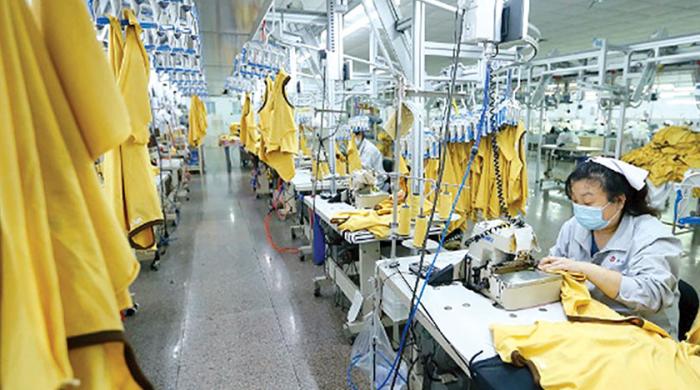
Pakistan, by contrast, remains heavily reliant on low-value goods exports that depend on imported energy and intermediate goods. This weakens the net foreign exchange impact of export growth and perpetuates external vulnerabilities. Yet Pakistan has begun to make inroads in services exports, particularly in IT, telecommunications, and digital services. ICT exports of Pakistan increased from $811 million in 2014 to $3,632 million in 2024. This demonstrates the extensive growth potential of this sector, which could generate valuable export earnings for Pakistan.
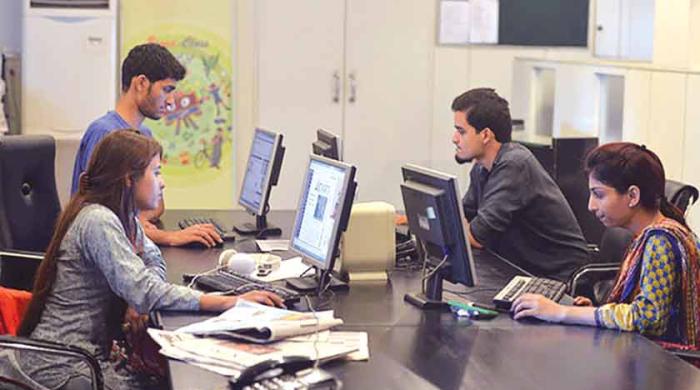
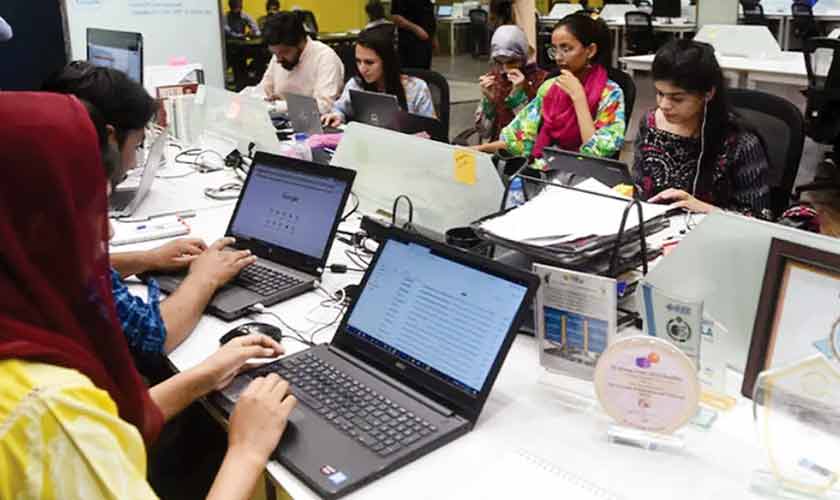
Growth in freelance and remote work exports reflects rising global demand and Pakistan’s expanding pool of young, educated workers. Importantly, these services generate foreign exchange without increasing import pressures. Pakistani professionals are among the largest contributors to global online labour platforms, supplying software development, design, content creation and consulting services. However, much of this activity remains informal and underreported, suggesting that official services export figures understate the sector’s true contribution.
As regional experience shows, services exports, whether through ICT or tourism, offer a viable pathway to higher productivity, stable foreign exchange earnings and employment generation
The employment implications are equally significant. Pakistan’s labour force is growing rapidly, but traditional manufacturing has struggled to generate sufficient productive jobs. ICT services, digital marketing, fintech and professional services are labour-intensive in skills rather than capital and are better aligned with the country’s demographic profile. India’s experience illustrates how sustained investment in digital capabilities can turn demographic pressures into economic opportunity, a path Pakistan has only partially pursued.
Policy experience from other countries reinforces the importance of deliberate strategy. Malaysia’s approach, documented in a WTO case study, shows how identifying priority services sectors and supporting them through dedicated export-promotion institutions can accelerate growth. Malaysia established specialised bodies to coordinate public-private efforts, build export-ready skills, facilitate regulation and promote services abroad. This focus on capacity-building and market access stands in contrast to Pakistan’s fragmented approach to services trade.
Pakistan’s services exports were $8,096 million in 2024, up from $5,392 million in 2020. Despite recent progress, services exports still account for a modest share of Pakistan’s total exports compared to regional peers. Structural constraints continue to limit scale, including gaps in advanced digital skills, uneven broadband access beyond major urban centres, regulatory and taxation ambiguities, and limited access to finance for startups and service exporters.
The policy takeaways are clear. Countries that have succeeded in expanding services exports have moved beyond generic trade promotion toward explicit, sector-focused strategies. For Pakistan, this implies the need for a dedicated services export promotion framework that links incentives to net foreign exchange earnings, encourages formalisation of freelance and digital exports, invests in advanced skills and integrates services trade objectives into broader trade and investment policy.
Pakistan’s growth trajectory cannot depend indefinitely on the export of low-value goods in an increasingly competitive global market. As regional experience shows, services exports, whether through ICT or tourism, offer a viable pathway to higher productivity, stable foreign exchange earnings and employment generation. The opportunity is evident; however, the challenge lies in translating this potential into a coherent, long-term policy agenda.
The writer is an associate research fellow at the Sustainable Development Policy Institute (SDPI), Islamabad. He can be reached at: [email protected]