The challenge of powering a growing economy is as much institutional as it is technical. Across the world, energy sectors once dominated by state ownership have undergone a profound transformation as governments and regulators have recalibrated the respective roles of public policy and private capital.
PRIVATISATION
The challenge of powering a growing economy is as much institutional as it is technical. Across the world, energy sectors once dominated by state ownership have undergone a profound transformation as governments and regulators have recalibrated the respective roles of public policy and private capital.
What distinguishes enduring success stories is not ownership alone, but the presence of well-designed frameworks that align incentives, sustain investment, especially in the technological and digital realm, and embed accountability within national infrastructure systems.
The long-held assumption that state control, by itself, guarantees national interest has been repeatedly tested and found wanting. In markets spanning Latin America to Europe, public monopolies struggled to keep pace with rising demand, technological change, and capital requirements. The UK’s privatisation of electricity utilities in the late 1980s remains one of the most frequently cited examples of reform done with regulatory clarity. Reliability improved markedly, service benchmarks strengthened and investment levels remained resilient over successive decades. Ofgem’s data shows sustained reductions in outages, underpinned by transparent regulation that protects consumers while providing utilities with the predictable returns necessary for long-term planning.
Emerging markets offer equally instructive lessons. Brazil’s electricity reforms in the 1990s demonstrate how private participation, under effective oversight, can deliver tangible operational gains. As private distributors expanded networks and modernised systems, technical and commercial losses declined sharply, while access and service quality improved. World Bank assessments attribute these gains to clearly defined contractual obligations on both investment delivery and performance outcomes, rather than ownership change alone.
These global patterns reveal a simple but often overlooked principle: electricity is economics at scale. Reliable power underpins industrial productivity, urban growth, small-business competitiveness and household welfare. When utilities lack operational discipline or access to capital, reliability deteriorates and the resulting economic costs ripple across the wider economy. Power shortages and system inefficiencies do not merely inconvenience consumers; they constrain growth and erode investor confidence.
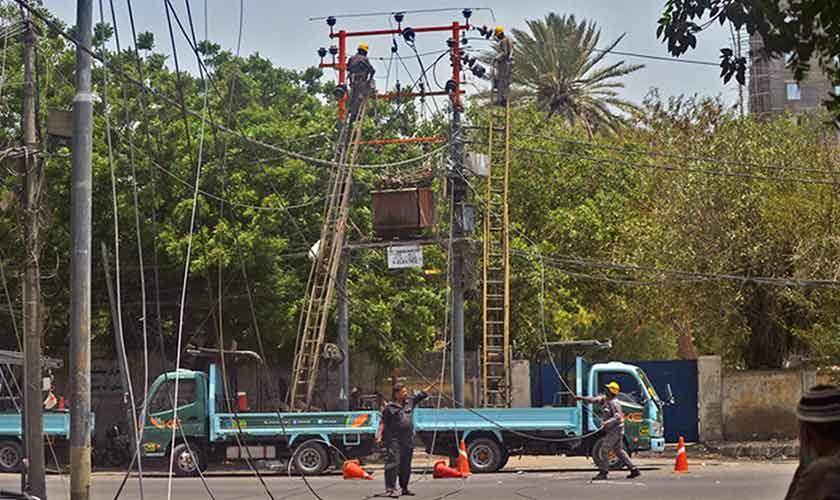
Pakistan’s energy landscape has long reflected this tension. State-owned distribution companies, responsible for last-mile delivery, have been burdened by high technical losses, weak recovery performance and persistent financial stress. These structural shortcomings have been a central driver of the power sector’s cumulative circular debt, estimated at approximately Rs1.7 trillion by end 2025. Electricity theft, billing inefficiencies and delayed recoveries have repeatedly compelled government intervention through subsidies, placing strain on public finances while crowding out investment in system modernisation.
Recognising the limits of incremental fixes, the government of Pakistan has begun a strategic shift in approach. The current privatisation agenda prioritises the transformation of electricity distribution companies through structured engagement with private sector partners, supported by fiscal and governance reforms linked to IMF and World Bank programmes. Sell-side due diligence is underway for five DISCOs, signalling intent to open entities serving tens of millions of consumers to market-based discipline and capital participation.
State-owned distribution companies, responsible for last-mile delivery, have been burdened by high technical losses, weak recovery performance and persistent financial stress. These structural shortcomings have been a central driver of the power sector’s cumulative circular debt
Recent directives from the federal cabinet and the Privatisation Commission have formalised the appointment of financial advisers and defined transaction pathways for the Islamabad Electric Supply Company, the Faisalabad Electric Supply Company (IESCO), and the Gujranwala Electric Power Company (GEPCO) as part of the first phase of restructuring. Additional utilities, including the Hyderabad Electric Supply Company (HESCO) and the Sukkur Electric Power Company (SEPCO), are expected to follow as part of a phased reform plan.
This acceleration of policy activity reflects a growing consensus that the status quo is no longer sustainable. Alternative proposals, such as transferring DISCOs to provincial governments, have been considered but found wanting. Expert assessments consistently conclude that shifting liabilities across public balance sheets does little to address deeper weaknesses in governance, investment capacity, and operational accountability.
International experience reinforces the merits of this calibrated approach. Countries such as Turkey and Argentina have used long-term concession models to harness private sector capacity for modernising distribution networks, reducing losses, and expanding access, while retaining strong regulatory oversight. These cases underscore the importance of clear contracts, enforceable performance benchmarks, and tariff continuity that allows investors to recover capital over realistic asset life cycles.
Within Pakistan, the privatisation dialogue has gained urgency alongside signs of improving financial discipline in parts of the distribution system. Government data indicates a reported reduction in losses as utilities strengthen billing practices and operational controls. While uneven, these improvements are widely seen as necessary groundwork for investor confidence and transaction readiness.
The broader reform agenda extends beyond ownership structures. Circular debt-restructuring arrangements with commercial banks, tariff rationalisation and the rollout of smart metering are aimed at strengthening revenue collection, reducing theft and restoring the sector's credibility. These measures affect not only investor sentiment but also consumer trust in a system historically characterised by inefficiency and uncertainty.
Amid this complexity, Pakistan’s experience with privately managed utilities offers a useful domestic reference point. Karachi’s power system, K-Electric, operated under a privatised, vertically integrated model, illustrates how commercial orientation, investment continuity, and governance discipline can reshape service quality when anchored in a stable regulatory framework.
According to the Pakistan Federal Public Expenditure Review 2023, released by the World Bank, KE’s privatisation has saved Rs900 billion for consumers and the government. While distinct in scale and structure from a nationwide DISCO reform, the experience demonstrates the potential dividends of aligning private participation with accountability and long-term planning.
The ongoing DISCO privatisation initiative should therefore not be viewed merely as a fiscal or budgetary exercise. It represents a structural opportunity to embed capabilities that the public sector, acting alone, has struggled to sustain. When supported by strong regulation, transparent processes, consumer safeguards and enforceable performance metrics, privatisation can attract capital and managerial expertise that strengthens national infrastructure rather than diluting the public interest.
As Pakistan advances this agenda, the stakes are clear. Modern energy infrastructure is foundational to industrial competitiveness, export growth, urban productivity and employment creation. Privatisation is neither a panacea nor an abdication of state responsibility; it is a governance tool. Used judiciously and consistently, it can catalyse efficiency, accountability, and sustainable economic progress for generations to come.
The writer is a freelance journalist and can be reached at: [email protected]