In boardrooms across Pakistan, corporate performance is increasingly assessed through narrow financial lenses of quarterly earnings, topline growth, cost efficiency and bottom lines, often at the expense of deeper structural realities.
ECONOMIC GROWTH

In boardrooms across Pakistan, corporate performance is increasingly assessed through narrow financial lenses of quarterly earnings, topline growth, cost efficiency and bottom lines, often at the expense of deeper structural realities.
This fixation on short-term metrics may create the appearance of control, but it obscures a growing imbalance between organisational ambition and workforce experience. As economic volatility intensifies and talent mobility accelerates, the cost of overlooking people and purpose is no longer abstract; it is systemic, measurable and already reshaping the country’s labour and productivity landscape.
That crisis manifests in ways leaders often choose to rationalise rather than confront. Pakistan’s labour market has undergone significant structural shifts. Recent data shows the total labour force expanded sharply to 85.6 million in 2024–25, up from around 71.8 million in 2020–21, reflecting a large and growing working-age population. At the same time, the unemployment rate climbed to 7.1 per cent, leaving approximately eight million people without work and highlighting the challenge of translating demographic scale into meaningful employment. While total employment rose to 79.7 million, underemployment and informality remain widespread, with a large share of workers outside stable, structured arrangements.
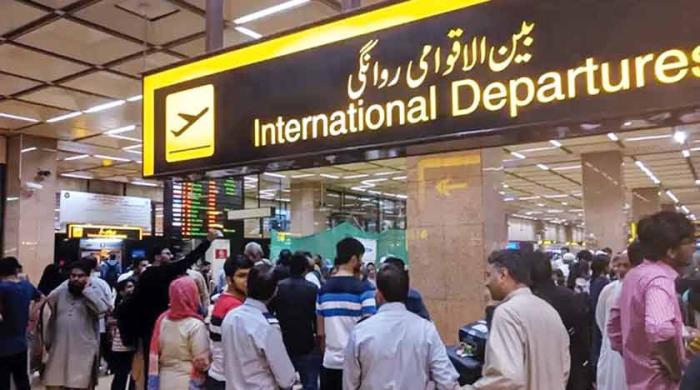
These macro trends are accompanied by an accelerated brain drain. The Economic Survey of Pakistan notes that the number of highly skilled individuals seeking work abroad more than doubled in 2023, driven by economic stress, limited domestic opportunities and uncertainty. By April 2024, an estimated 13.5 million Pakistanis had pursued official avenues to work in more than 50 countries, with the Gulf States absorbing the majority.
Within this broader migration pattern, a significant segment of Pakistan’s youth and skilled professionals are leaving because local markets fail to offer sustained career growth and credible workplace experiences. Even where jobs exist, the quality and terms of employment often fall short of expectations.
The real question, therefore, is not whether Pakistani companies can afford to prioritise purpose and employee well-being; it is whether they can afford not to. In an economy marked by volatility, currency instability and policy uncertainty, fearless leadership becomes a strategic necessity. Fearlessness is not the absence of fear; it is the discipline to act despite it. Too often, organisations default to survival mode, prioritising immediate financial targets over long-term organisational health. This short-termism produces fragile growth that collapses under pressure because it lacks foundational integrity.
Purpose-driven growth operates differently. It functions as a strategic compass, guiding investment decisions and stakeholder relationships, particularly during turbulent periods. Leaders willing to absorb short-term discomfort, learn openly from failure, and move forward with their teams build institutions that adapt rather than merely endure. Empirical evidence supports this approach. Deloitte’s Global Human Capital Trends research shows that purpose-driven organisations report materially higher innovation, engagement and retention. Google’s Project Aristotle found that psychological safety, not hierarchy or perks, was the defining factor of high-performing teams.
In emerging markets, especially, the future will favour leaders who understand that people are not an expense to be managed, but the engine through which enduring value is created
Yet many corporations remain trapped in extractive business models that treat employees as cost centres rather than assets requiring cultivation. This mindset is increasingly misaligned with both generational expectations and economic reality. Mental health and workplace well-being are no longer discretionary perks; they are foundational to productivity, resilience and compliance with evolving labour norms.
I often encounter the term ‘enlightened leadership’, though it frequently misrepresents what effective leadership looks like on the ground. Leadership is not constant motivation or performative inspiration. In practice, it is grounded, disciplined and fair. It requires understanding both people and business, creating focus, removing friction and enabling teams to deliver consistently. It is not about rhetoric but about reliability.
Aspirational language, when detached from execution, becomes counterproductive. I have seen trust eroded when vision is not matched by systems, incentives, and behaviour. The equation is simple: human dynamics and business mechanics must operate together. Culture without process leads to chaos; process without culture leads to disengagement. Sustainable performance emerges only when both are aligned.
As we move beyond the first quarter of the twenty-first century, global dynamics have undergone a fundamental reset. Technology now underpins progress across sectors, reshaping how value is created and sustained. This demands a recalibration of how organisations approach technology and long-term value creation while continuing to invest in talent. The shift must be from reactive problem-solving to proactive capability building. Technology without talent becomes underutilised capital; talent without technology remains constrained and inefficient. Organisations that neglect skills development, digital maturity and operational resilience risk stagnation, if not irrelevance.
As artificial intelligence reshapes work, forward-looking firms will deploy it not as a tool for displacement, but for elevation. Those who use AI to augment roles, improve decision-making and reduce cognitive overload will be better positioned to retain high-value talent. Over the next three years, the most successful companies will be structured, data-driven and globally connected, measuring success not only through financial outcomes but through execution quality, talent retention and stakeholder trust.
Ultimately, sustainable advantage will belong to organisations that balance growth with purpose, discipline and long-term investment in human capital. Profit remains essential, but it is not the objective; it is the outcome of getting the fundamentals right. In emerging markets, especially, the future will favour leaders who understand that people are not an expense to be managed, but the engine through which enduring value is created.
The writer is a business leader focused on organisational transformation, purpose- driven growth strategies and building resilient enterprises in emerging markets. He is the group CEO and managing director at TMC Private Limited.