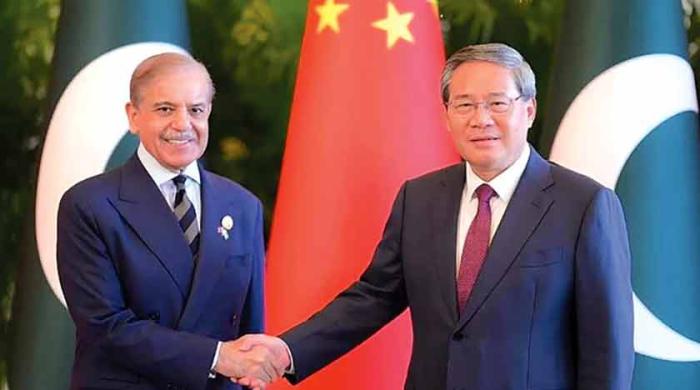
Pakistan and China are marking 75 years of diplomatic relations in 2026 through a year-long series of commemorative events, celebrating a milestone in what has come to be known as their all-weather strategic cooperative partnership.
PAK-CHINA TIES
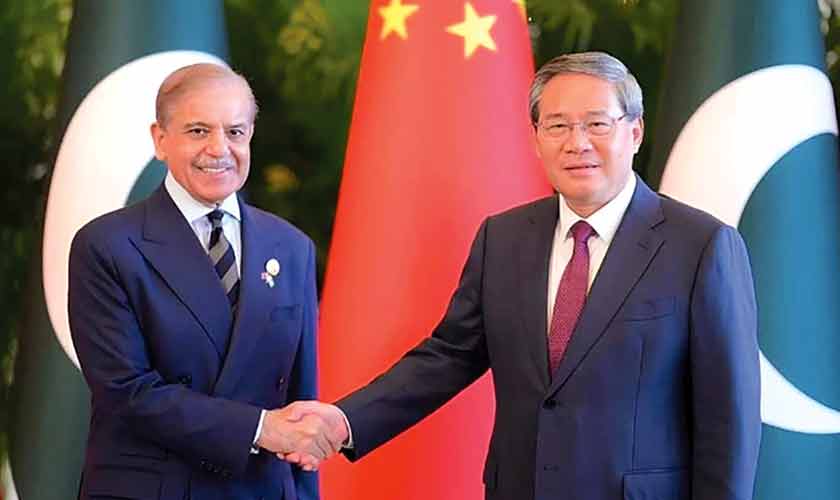
Pakistan and China are marking 75 years of diplomatic relations in 2026 through a year-long series of commemorative events, celebrating a milestone in what has come to be known as their all-weather strategic cooperative partnership.
While this relationship today spans defence, economy, infrastructure and culture -- most visibly through the China-Pakistan Economic Corridor (CPEC) -- its foundations were laid much earlier, particularly in the sphere of industrial cooperation.
This cooperation began in the mid-1960s, when Pakistan embarked on a deliberate policy shift from consumer-goods manufacturing to developing a capital-goods industry. China provided timely technical and financial assistance for the establishment of the Heavy Mechanical Complex (HMC) at Taxila, along with comprehensive technology transfer for the manufacture of a wide range of products. This early collaboration proved invaluable, setting the stage for a long-term technological and economic partnership that deepened steadily over subsequent decades. Chinese assistance played a pivotal role in building Pakistan’s heavy engineering base, a cooperation that has since expanded across multiple sectors and is widely regarded as a model of interstate.
A significant milestone in Pakistan-China technical cooperation came in 1967 when 32 engineers, foremen and technicians from the Pakistan Industrial Development Corporation (PIDC) were selected for advanced technical training in China as a single batch. This was an unprecedented initiative. The training covered product engineering, design, manufacturing, project planning and quality control in mechanical and metallurgical disciplines. Lasting from six months to a year, it took place in multiple Chinese cities, particularly in manufacturing clusters and design institutes aligned with the specific training needs of Pakistani engineers.
Historically, this was the first time Pakistan had received such broad-based and generous technical training from any country -- amounting to technology transfer in its truest sense, which Western partners were largely reluctant to provide at the time. It was equally remarkable that China hosted such a large group of foreign engineers in a single group. The initiative was designed to equip Pakistani professionals to manage emerging industrial projects being developed with Chinese support.
Four of us, however, were unable to join the group at the time of departure due to pressing responsibilities at home, as construction work at HMC had already commenced. We were tasked with supervising project contractors and consultants and liaising with the Chinese team working on site. We eventually travelled to China in May 1969 for three months of specialised training at the Shanghai Heavy Machinery Plant in Minhang district, a major producer of heavy-duty industrial machinery for the metallurgical, mining and energy sectors.
Shanghai at the time was deeply affected by the Cultural Revolution, though early signs of domestic industrial growth were visible. Minhang had emerged as a busy industrial hub dominated by large state-owned heavy-machinery factories, equipped with what were then considered modern facilities, though much of the machinery dated back to the 1950s.
As Pakistan and China commemorate 75 years of diplomatic relations, personal experiences offer a glimpse into the human dimension of this enduring partnership
I was assigned training in machine-shop practices and production planning under the supervision of Xie Guo, the machine-shop manager. We lived on the factory premises, were provided with halal food prepared by a Muslim cook, and had individual interpreters assigned. Unlike the regular workforce, we were exempted from mandatory daily physical labour.
Every Friday, we were escorted to the Shanghai Great Mosque and Madrassah to offer prayers. The mosque, maintained by the local Muslim community, remained functional throughout the Cultural Revolution, a rare distinction at the time. Built originally in 1917 and rebuilt in 1925, it continued to serve as an important centre of learning and culture.
Those months marked the beginning of my enduring affection for China and the Chinese people. Yet upon returning, none of the 32 engineers could maintain contact with their Chinese counterparts, largely due to strict restrictions on correspondence prevalent at the time.
Over the course of my long career with PIDC, HMC and later the State Engineering Corporation (SEC), I visited China frequently for training, technology assimilation, business negotiations and as part of government delegations. One particularly memorable visit occurred in 1996, when Brigadier (r) Muhammad Asghar, then federal minister for industries and production, led a five-member delegation -- including myself -- to China to finalise commercial proposals related to the expansion and diversification of Pakistan Steel Mills. The discussions covered proposed Chinese investment and management, with a strong emphasis on indigenisation through the SEC and optimal utilisation of local human resources. After extensive negotiations in Beijing with the Chinese minister of metallurgical industry and the chairman of the China Metallurgical Group Corporation, the relevant agreements were signed.
During this visit, the delegation also travelled to Shanghai. While the Minister, along with four members of the delegation, proceeded to the Pudong Special Economic Zone, I was informed that I would instead visit the Minhang Economic and Technological Zone. I only discovered the reason upon arrival. What awaited me was a deeply moving reception at the same Shanghai Heavy Machinery Plant where I was trained 27 years earlier. The chief executive welcoming me was none other than my former instructor, Xie Guo, now director general and plant manager.
I was greeted warmly by engineers, managers and workers, many of whom joined in an emotional reunion followed by speeches and a generous lunch. It felt less like an official engagement and more like a homecoming, marked by sincerity, warmth and an extraordinary sense of continuity. In 1996, the Minhang district of Shanghai was a rapidly developing hub for industrial, economic and technological development, characterised by modern, high-tech manufacturing and a major centre for foreign investment.
As Pakistan and China commemorate seventy-five years of diplomatic relations, such personal experiences offer a glimpse into the human dimension of this enduring partnership -- one built not merely on agreements and projects, but on mutual respect, trust and genuine friendship between the peoples.
The writer is a retired chairman of the State Engineering Corporation.