Pakistan’s export sector has long been trapped in a low-competitiveness equilibrium, high costs, thin margins, policy uncertainty and a narrow product and market base.
EXPORTS
Pakistan’s export sector has long been trapped in a low-competitiveness equilibrium, high costs, thin margins, policy uncertainty and a narrow product and market base.
Against this backdrop, the prime minister’s industrial and export incentive package announced on January 30, 2026 is both timely and politically significant. It acknowledges, at the highest level, that exporters are struggling not because of a lack of entrepreneurial capacity, but because the domestic cost structure and regulatory environment have become hostile to production, value addition and scaling. The announced measures include electricity tariff reductions, lower wheeling charges, cheaper export refinancing and facilitation through Blue Passports, signalling a welcome shift towards cost-side relief and liquidity support.
However, Pakistan’s experience with export incentives is sobering. Well-intentioned relief measures have repeatedly failed to deliver durable export growth because they were layered onto a fragmented governance architecture characterised by red tape, discretionary implementation and poor interagency coordination. The real test of the January 2026 package, therefore, lies not in its announcement but in whether it can overcome the structural and administrative weaknesses that have historically neutralised similar initiatives.
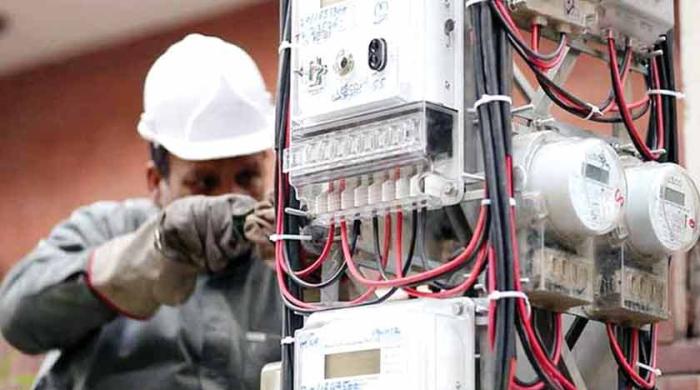
The reduction of Rs4.04 per unit in industrial electricity tariffs and the lowering of wheeling charges to around Rs9 per unit directly address one of the most binding constraints on Pakistan’s manufacturing competitiveness: energy costs. For export-oriented sectors, particularly textiles, engineering goods and agro-processing, energy is not a marginal input but a decisive determinant of international price competitiveness. In this sense, the relief is economically sound.
Yet energy pricing in Pakistan is not merely a tariff problem but a governance one. Cross-subsidies, line losses, electricity theft and chronically inefficient DISCOs have turned industrial consumers into residual financiers of systemic inefficiency. Without parallel reforms to power-sector governance, tariff relief risks becoming a temporary fiscal palliative rather than a foundation for sustained competitiveness. Exporters need predictability as much as they need lower prices. Episodic reductions followed by abrupt reversals undermine investment planning and reinforce short-termism.
The cut in the Export Refinance Rate from 7.5 per cent to 4.5 per cent is another positive step, particularly in a high-interest-rate environment where financing costs have eroded exporters’ working capital and balance sheets. Cheaper refinancing improves cash flow and eases immediate liquidity pressures, allowing firms to meet export orders and manage inventory cycles.
However, the refinance scheme remains largely transactional rather than transformational. It supports shipment-based financing but does little to incentivise long-term investment in productivity, technology upgrading, or export diversification. Access also remains uneven. Smaller exporters and new entrants often struggle with documentation requirements, collateral demands and bank risk aversion. The result is a familiar pattern: established firms capture most of the benefits, while the export base remains shallow and concentrated.
The introduction of Blue Passports for leading exporters reflects an acknowledgment that non-tariff frictions matter in a globalised economy. Easier international travel can help market development, buyer engagement and participation in trade fairs. Symbolically, it signals recognition of exporters as economic ambassadors rather than regulatory suspects. However, facilitation cannot be reduced to symbolic privileges for a select few. The more pressing challenge lies within Pakistan’s borders: customs delays, overlapping inspections, inconsistent rule interpretation and weak coordination between federal and provincial authorities.
For Pakistan to move towards an export-led growth path and to realistically approach its ambitious export targets under the URAAN framework, the focus must shift from episodic incentives to systemic competitiveness
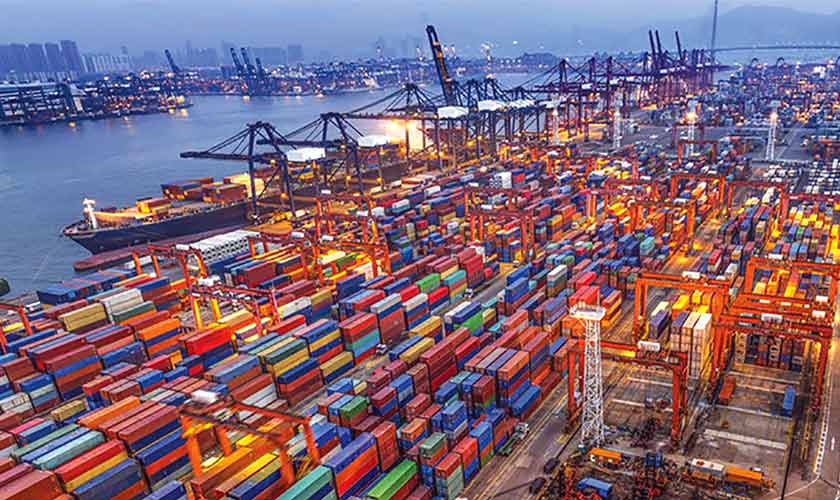
More broadly, the initiative operates within severe structural constraints. Pakistan’s exports remain highly concentrated, with textiles accounting for around 55 per cent of goods exports and heavy reliance on US and EU markets. This leaves the economy vulnerable to tariff shocks, trade diversion and preference erosion. Recent US tariffs and the EU–India Free Trade Agreement illustrate how quickly competitiveness can be undermined. The closure of roughly 144 textile units signals not a cyclical dip but a deeper erosion of industrial viability that marginal incentives alone cannot reverse.
Perhaps the most serious threat to the success of the January 2026 package is Pakistan’s entrenched red tape. Export incentives often come wrapped in complex eligibility criteria, multiple certifications, post-audit uncertainties and discretionary enforcement. Firms frequently report that the cost of compliance time, documentation and informal payments can outweigh the monetary value of incentives.
Fragmentation across institutions exacerbates the problem. Energy relief involves power regulators, DISCOs and provincial authorities. Export refinance is handled by the State Bank and commercial banks. Passport facilitation involves interior and foreign affairs institutions. In the absence of a single coordinating authority, exporters are forced to navigate multiple bureaucracies, each with its own processes and incentives. The result is partial uptake, uneven implementation and policy fatigue.
Another recurring weakness is the absence of consolidation. Pakistan’s export support landscape is characterised by numerous schemes, strategies and institutions that operate in silos. The incentive package does not yet appear to be explicitly anchored within the National Industrial Policy or the National Priority Sectors Export Strategy (2023–2027). Without such anchoring, incentives risk becoming ad-hoc measures rather than instruments of structural transformation. Similarly, industrial and trade policies often move in parallel. Trade agreements are negotiated without sufficient alignment with domestic industrial capacity, while industrial incentives are designed without reference to external market access conditions. This misalignment weakens competitiveness and limits the returns from both policies.
To Overcome Red Tape and fragmentation, incentive delivery must first be digitised and centralised. A single-window digital platform for export incentives could drastically reduce compliance costs and discretion. Eligibility verification, application, disbursement, and monitoring should be automated to the greatest extent possible. Second, incentives should be rules-based, not discretionary. Clear, published criteria and time-bound processes reduce uncertainty and rent-seeking. Exporters should know ex ante what they qualify for and when they will receive it.
Third, consolidation requires institutional leadership. A dedicated Export Competitiveness Council, with representation from key ministries and the private sector, could oversee implementation, resolve inter-agency bottlenecks, and ensure alignment with industrial and trade strategies. Fourth, incentives must be performance-linked. Rather than blanket relief, support should increasingly reward productivity gains, technological upgrading, export diversification and compliance with sustainability standards. This would align short-term relief with long-term competitiveness.
The January 2026 export incentive package is an important acknowledgement of the pressures facing Pakistan’s industrial and export sectors. It provides necessary breathing space during periods of heightened external and internal stress. But relief without reform will only delay, not reverse, structural decline.
For Pakistan to move towards an export-led growth path and to realistically approach its ambitious export targets under the URAAN framework, the focus must shift from episodic incentives to systemic competitiveness. That requires cutting red tape, consolidating policy frameworks, aligning industry with trade, and embedding incentives within a long-term national industrial strategy. Exporters seek a predictable, transparent and enabling environment in which efficiency and innovation are rewarded. If the current package can become a catalyst for such reform, it may mark a turning point. If not, it risks joining a long list of well-meaning but ultimately transient interventions in Pakistan’s export policy history.
The writer is a trade facilitation expert, working with the federal government of Pakistan.