This week’s highlight, through Case No 9, reveal how art can confront power and silence without looking away.
There is a quiet but noticeable shift tak-ing place in Pakistani popular culture, one where creators seem less interested in pleasing audi-ences and more willing to sit with difficult truths. Case No. 9, which recently finished airing on Geo Entertainment feels like part of that shift.
Written by journalist Sha-hzeb Khanzada, the drama carries the weight of some-one who has spent years watching how power, law and public opinion collide in real life. From the start, it signals that this will not be familiar television. Instead of focusing on familial conflict or domestic melodrama, it centres on the courtroom and the exhaustive and sometimes painful quest for justice.
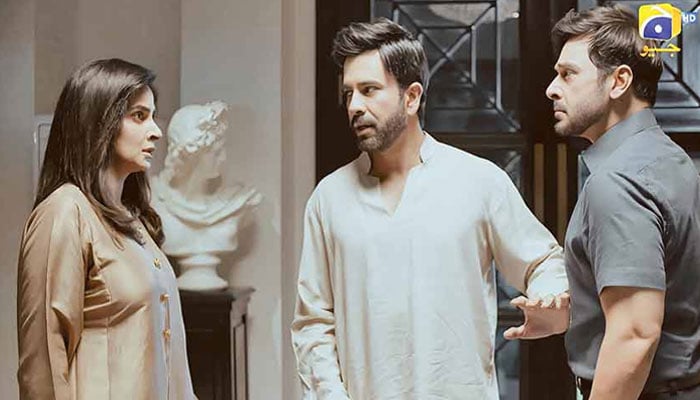
Saba Qamar’s Sehar is a rape survivor seeking acc-ountability from Kamran, played by Faysal Quraishi, a man who isn't just wealthy, but also influential and powerful.
From the beginning, the drama acknowledges that justice is not only about public opinion but about the difficulty of enduring soci-ety’s gaze, being victimised by doubt and navigating the slow and frustrating pro-cesses of a system that was never designed with surv-ivors in mind.

Storytelling through drama: When fiction and truth blend together
The subtle impact of Case No. 9 lies in the drama’s unwillingness to oversimplify its female characters. Sehar is not written as a symbol or
a lesson. She is allowed to feel a multitude of emotions including anger, fear and frustration. She openly dis-cusses her trauma without using euphemisms or hints, a choice that still feels bold for Pakistani television.
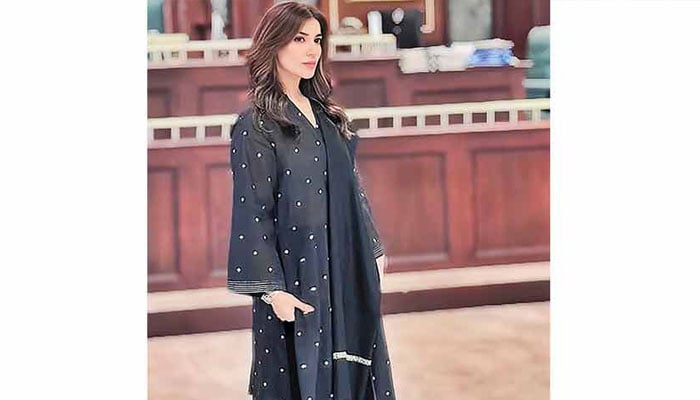
Naveen Waqar’s portrayal of Manisha, a Hindu woman, is treated with sensitivity and does not erase or sensat-ionalise her faith.
Aamina Sheikh’s Beenish, the prosecutor, serves as a stabilising influence amidst the chaos and helps the audience to understand the law without resorting to legal jargon ad nauseum. The drama frequently passes the Bechdel test, with women speaking to one another about work, evidence and moral conflict, not just about men. It may seem like a small detail but within the context of local television, it feels quietly radical.
“The strongest element of Case No. 9 is how closely it reflects reality. Pakistan’s rape statistics are gruesome but often buried. Case No. 9 brings them to the surface through courtroom exchanges and uncomfortable silences that follow each trial. It showcases not just the violence but how the fear of being seen, judged and not believed becomes part of the trauma. Khanzada’s background as a journalist plays a role here because reporting on such issues has equipped him to merge the fictional and the truth. The cases feel lived in, shaped by stories where power repeatedly tilts the scales. Actor Junaid Khan once described the drama as something you cannot simply switch off and that rings true. It commands attention.”
The strongest element of Case No. 9 is how closely it reflects reality. Pakistan’s rape statistics are gruesome but often buried.
Case No. 9 brings them to the surface through court-room exchanges and uncom-fortable silences that follow each trial. It dramacases not just the violence but how the fear of being seen, judged and not believed becomes part of the trauma.
Khanzada’s background as a journalist plays a role here because reporting on such issues has equipped him to merge the fictional and the truth. The cases feel lived in, shaped by stories where power repeatedly tilts the scales. Actor Junaid Khan once described the drama as something you cannot simply switch off and that rings true. It commands attention.
In this sense, Case No. 9 occupies a space similar that was originally carved out by an American network drama Law and Order: Special Victims Unit.
Storytelling through drama: When fiction and truth blend together
For over two decades, Special Victims Unit has created a space for dialogue about consent, coercion and sexual violence and the many ways in which consent can be eroded through pre-ssure, power imbalance and manipulation rather than explicit physical force. The cultural impact of SVU has been shaped through years of educating both men and women that violations often occur through subtle shifts rather than extreme acts. Mariska Hargitay, the star of SVU, has continued the cul-tural impact off-screen by working as an advocate for survivors and using her platform to support legal reform, understanding and empathy. Case No. 9 gestures towards a similar potential within a Pakistani context. It carries the same possibility of re-shaping how audiences understand consent, credi-bility and blame. By being explicit about rape, providing an accurate portrayal of legal processes and refusing to sanitise trauma, it has the potential to inspire audi-ences to challenge their own conditioning. It suggests that television, when handled responsibly, can shift public understanding and encour-age conversations that ext-end beyond drawing rooms and social media debates.
Saba Qamar’s portrayal of Sehar is both raw and res-trained. She has spoken about the toll of repeatedly inhabiting Sehar’s pain and that weight dramas in the smallest moments.
Storytelling through drama: When fiction and truth blend together
Qamar’s subtle perfor-mance makes it clear that there is no excess here, instead it reveals how fear erodes both safety and self. Kamran, as portrayed by Faysal Quraishi, presents a kind of unnverving presence. He is not a monster in the traditional sense but feels familiar, a reminder of how abuse often hides behind respectability.
The drama is not without fault. Several viewers were disappointed with the pacing and debate sequences that stretched on. These critiques suggest that viewers were not indifferent but actively engaing with the material and discussing its themes.
Ultimately, Case No. 9 signifies that Pakistani tele-vision can tackle sensitive topics like sexual violence without sensationalising the act or diminishing its sur-vivors and can trust viewers with difficult material.
Whether the industry chooses to build on this courage remains to be seen. For now, Case No. 9 proves that storytelling can continue to create dialogue and pro-voke thought long after the television is switched off.