On International Women’s Day, Instep celebrates iconic female pop culture figures, from the pioneers who broke barriers to the modern-day flag bearers who lead the way today.
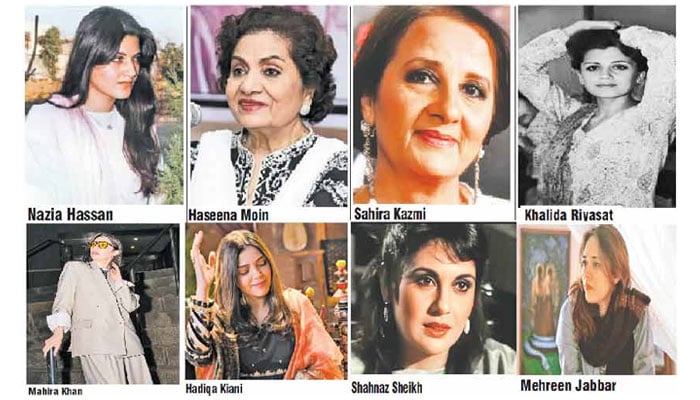
Pakistan’s cultural landscape has been shaped, again and again, by women who possessed and still possess courage. From the golden era of state television to the evolving pop culture of the nineties, from the rise of independent cinema to the ever-expanding world of global music streaming, female artists have rewritten this country’s creative vocabulary. They created a space for others and resonated across generations.
Their contributions were not accidental victories; they were conscious acts of defiance that ultimately won the hearts of the people.
This is a celebration of some of those women.
Not an exhaustive list, no list ever could be, but a portrait of the artists who permanently changed what Pakistani pop and the entertainment world looked and sounded like, and the feeling of empowerment they brought to everyone who entered their orbit.
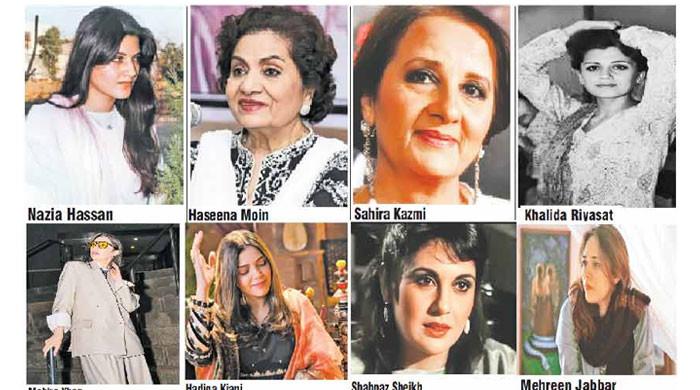
Nazia Hassan
Music has always been at the core of Pakistan’s popular culture. But before Nazia Hassan, we had filmy pop. She was the pioneer who is forever entrenched in our individual and collective memory. Nazia Hassan was 15 years old when she recorded ‘Aap Jaisa Koi’ for the Hindi film Qurbani in 1980 and won the Filmfare Award for Best Female Playback Singer, becoming not only the first Pakistani to receive the honour but, to this day, its youngest recipient. What followed was nothing short of a cultural revolution. Alongside her brother Zoheb, she released a string of albums: Disco Deewane, Boom Boom, Young Tarang, Hotline and Camera Camera, that dominated charts across South Asia and the Middle East, reaching audiences for whom Pakistani pop had merely existed as a concept. She was not simply the subcontinent’s first pop star; she was proof that one could be. She wore the title lightly and lived it fully, going on to serve as a UNICEF cultural ambassador, using her celebrity platform for causes beyond the music. She died in 2000 at just 35 years old, succumbing to lung cancer after a fierce battle. She was awarded Pakistan’s Pride of Performance Award posthumously in 2002. The music she made still plays at weddings, in films, in the memory of everyone who grew up hearing it. Some legacies are not measured in years. They live on and inspire generation after generation. Hassan was not just a singer or a pop star. She was and still is the soundtrack of our lives and will always be the nightingale of the East.
Mahira Khan
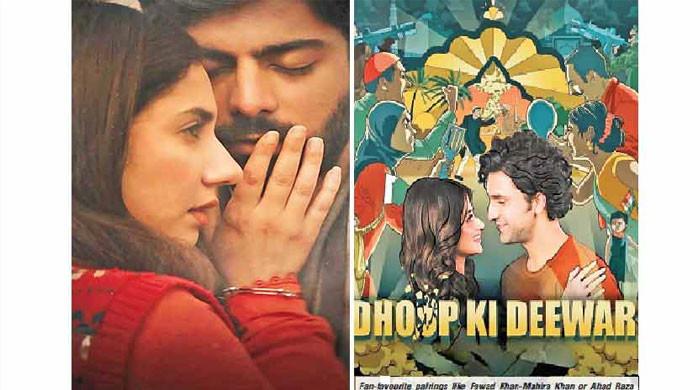
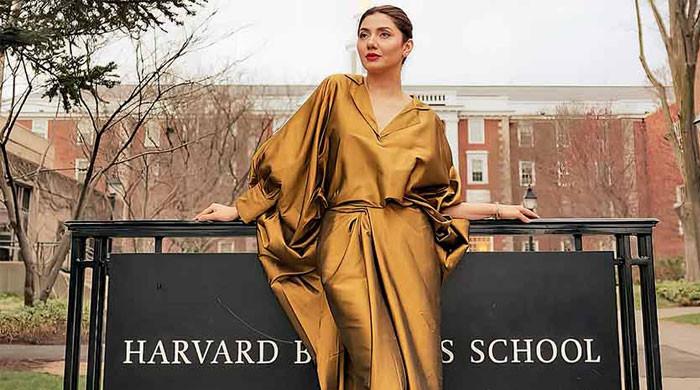
Mahira Khan is one of those rare entertainers whose name became bigger than any single role she played and then she went and made the roles bigger anyway. Humsafar made her a household name across Pakistan and beyond, earning her a reach that extended well into India at a time when Pakistani dramas were crossing the border in a way they rarely had before. Khan brought to that role a vulnerability that connected with millions of viewers and the recognition it earned her opened doors that had not existed before. Films like Bol and Bin Roye placed her at the centre of Pakistan’s contemporary cinema revival. Her Bollywood debut Raees, opposite Shah Rukh Khan announced her on a scale few Pakistani actors had previously reached. Through films like Verna, Superstar, The Legend of Maula Jatt and Neelofar, Khan forms the portrait of an actor who has not coasted on recognition but continued to test herself against material that demands something real. Influence is not limited to the screen and Mahira Khan is a living testament, breaking barriers by speaking about her personal mental health struggles and trying to remove the stigma that comes attached with such illnesses, inspiring others to believe that there is always light at the end of the tunnel.
Haseena Moin
There are many women who have written for television and given us extraordinary stories. But for so many of us, it is Haseena Moin whose name springs to mind as the author of fully-fledged female characters. She wrote women who had ambitions, ideas, careers and wit. Women who could be funny without being trivial, heartbroken and lonely without being pitiful or victims. The dramas she wrote, Ankahi, Tanhaiyaan and Dhoop Kinaray, became the cornerstone of PTV’s golden age. Her heroines were women making decisions and living with their consequences. She wrote comedy with warmth and tragedy with insight and heart. She dared to write about subjects in ways we had not deemed possible. From Aahat to Des Pardes, Shayad ke Bahar Aaye and Parchaiyan, she made Pakistan’s television dramas worth binging before we knew what the term would mean in context to television. There is a reason her characters are still quoted and recalled with such affection decades later. She did not write caricatures, she wrote human beings. In doing so, she gave Pakistan its most iconic dramas.
Hadiqa Kiani
There are artists who have a moment and there are artists who have a career. Hadiqa Kiani has had a career, one that has refused, at every turn, to settle into comfortable repetition. She arrived in the 1990s as one of Pakistan’s most powerful pop voices, her hits ‘Boohey Barian’ and ‘Dupatta’ proving that a woman could lead the mainstream music scene without compromise. Then she reinvented herself. Her appearances on Coke Studio drew on a spiritual and classical heritage that felt both deeply rooted and newly alive. Her collaborations for television drama soundtracks extended her reach to new audiences. Then came another reinvention: acting. Her performances in Raqeeb Se, Pinjra and Hadsa earned genuine critical acclaim, a reminder that versatility when it is authentic, is its own form of artistry. Through it all, she has remained committed to humanitarian work, lending her cultural influence to causes beyond the stage.
Mehreen Jabbar
Mehreen Jabbar’s work has a quality that is difficult to manufacture: it feels considered. Whether directing a television serial exploring class and identity or a feature film about a woman and child trapped across a border, there is a deliberateness to the way she approaches human complexity. Her drama Daam remains a landmark of Pakistani television. Her film Ramchand Pakistani, which premiered at the Tribeca Film Festival, placed Pakistani independent cinema on an international map at a time when few other films were doing so.
Her second feature, Dobara Phir Se, moved between New York and Karachi and found audiences in Pakistan, the UK, the United States and the UAE. More recently, she directed the streaming series Ek Jhoothi Love Story, showing that the transition to digital platforms does not mean a flattening of storytelling. Jabbar has spent her career demonstrating that Pakistani stories, told with craft and honesty, can travel.
Sahira Kazmi
Sahira Kazmi began her career as a newscaster reading the English bulletin on PTV. Then, she became an actor, earning recognition for her roles in Parchaiyan and Teesra Kinara. But Sahira Kazmi’s most lasting impact came when she moved from in front of the camera to behind it, at a time when direction was almost exclusively male territory. As a director, she helmed some of the most enduring dramas of the 1980s and 1990s. Her collaboration with Haseena Moin on Dhoop Kinaray produced a serial so beloved that it was translated into Arabic and broadcast in Saudi Arabia over three decades later as part of a cultural exchange initiative. Her drama Tappish tackled student politics and sexual violence. Aahat addressed family planning. Hawa Ki Beti and Zaib-Un-Nisa confronted domestic abuse with unflinching honesty. Kazmi used television not merely as entertainment but as a forum for the conversations Pakistani society needed to have. Her work remains a benchmark for what the medium can achieve and she remains the director who made us believe in the idea that women could and should direct.
Shahnaz Sheikh
Ask any Pakistani of a certain generation about Ankahi and they will almost certainly mention Sana Murad first. The character, ambitious, level-headed, modern in her thinking without being cartoonishly so, became one of the most beloved in the history of Pakistani television. The woman who played her, Shahnaz Sheikh, gave the role a warmth and intelligence that made Sana feel real rather than idealised.
Sheikh went on to collaborate with Haseena Moin again on Tanhaiyaan, a serial now considered a cultural classic. Here, she took on something altogether different and it made her stand out. Her character, shy, grieving and withdrawn, navigated what we might today recognise as depression and anxiety, demanding a different kind of performance entirely. Where Sana Murad had been bright and outward-facing, Zara was a woman turned inward, quietly coming apart and quietly putting herself back together. Sheikh played it without melodrama; the pain was simply there, beneath the surface, visible only in the way she held a silence or avoided a room. It was the kind of portrayal that makes a viewer feel they have witnessed something private and it is why Tanhaiyaan endures not just as entertainment but as an emotional document of a particular kind of female experience. Her characters consistently portrayed women as confident, thinking individuals, a choice that carried real significance at a time when television heroines were often written more narrowly. She eventually stepped back from acting, explaining that she had no interest in repeating herself as a performer. That instinct, for doing something well or not at all, is perhaps the most Sana Murad thing about her.
Khalida Riyasat
To speak of Khalida Riyasat is to speak of a particular quality of presence, the kind that makes you forget you are watching a performance. Through her roles in Aik Muhabbat Sau Afsanay, Tabeer and earlier work including Bandish and the detective series Naamdaar, she helped establish television drama as an art form deserving of genuine respect. She died in 1996 at the age of 43 from cancer. Nearly a decade after her death, tributes were paid to her at the first Indus Drama Awards by some of the industry’s most prominent voices. In 2021, the Government of Pakistan named a street and intersection after her in Lahore. She is remembered not for what she said about her craft, but for what she demonstrated through it.
Saba Qamar
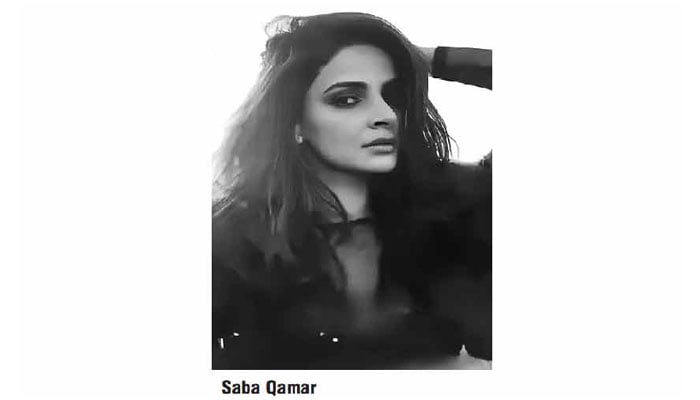
Saba Qamar has built a career out of choosing the harder role. In Baaghi, she played Fauzia Batool, based around the story of slain Pakistani model and social media personality Qandeel Baloch, who was murdered by her brother in the name of honour in July of 2016. It was the kind of role that demanded not only performance but courage, telling a story that Pakistani society would rather have left untold. In Cheekh, she anchored a drama around sexual violence. Her performance opposite Irrfan Khan in Hindi Medium brought her international recognition without softening the artistic choices she had built her reputation on. In the film Kamli, she gave a performance that can honestly be described as career-best.
What connects all of it is a refusal to play it safe, not as a pose, but as a genuine creative philosophy. She began with a breakthrough role in Dastaan in 2010 and has not stopped pushing the boundaries since. Her most recent work, the drama Case No 9, continued in the same spirit: socially conscious, emotionally demanding and unafraid of the conversation it was trying to start.