Bilal Maqsood on talent, infrastructure, Pakistan Idol and the realities of building a music career
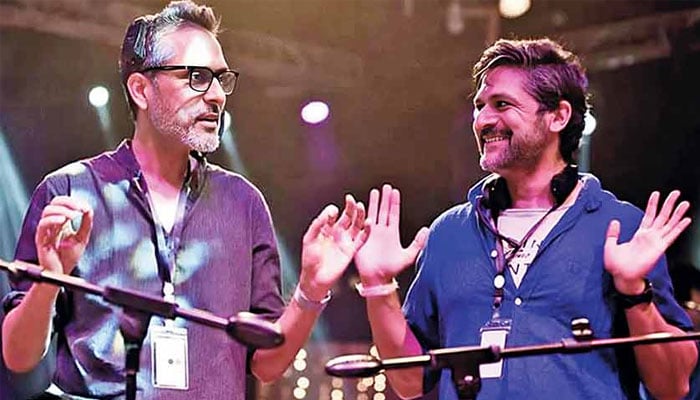
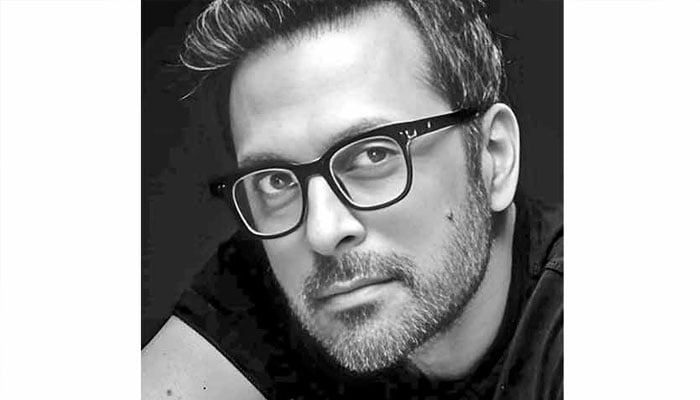
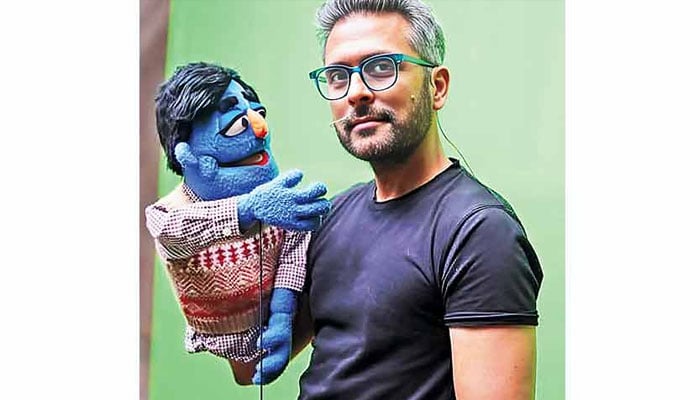
Born in Karachi in 1971 and trained in Communication Design at the Indus Valley School of Art and Archi-tecture, Bilal Maqsood is a name that needs no introduction. He began his career with pioneering music group Strings (co-founded with Faisal Kapadia) and later expanded into composition, production and tele-vision. After 33 years, as Strings disbanded on an amicable note, Maqsood went on to create solo songs before fully embracing a long held dream of making children’s content through Pakkay Dost. Music remains a crucial component of this Urdu-language show where each season Bilal sings and writes songs in a manner that entertains, engages and educates children.
Don’t stop the music
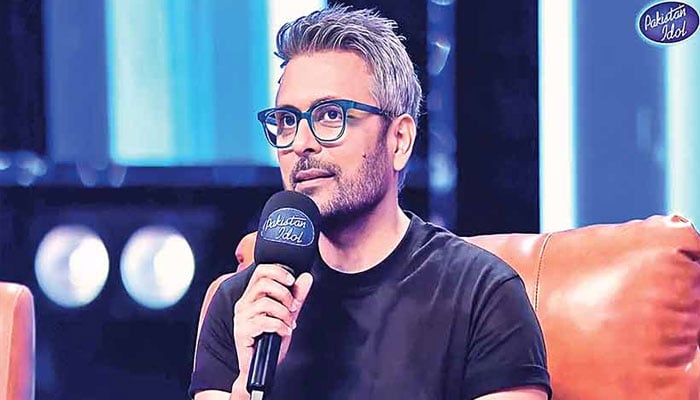
Today, he serves as a judge on Pakistan Idol bringing years of experience as a singer, producer, lyricist and industry expert. In this exclusive conversation, he reflects on the state of Pakistan’s music industry, the impact of digital platforms and why music, despite its cultural centrality, still struggles to be recognised as an industry.
Instep: How do you see the future of music in Pakistan?
Bilal Maqsood (BM): I genuinely believe the future is bright, not because challenges have disappeared but because access has expanded. There were times when music faced much harsher restrictions than today. In the late 1980s and early 1990s, censorship was strict. I remember editing music videos when even a singer’s appearance was monitored. If hair extended below the ears or if someone wore blue jeans, footage could be cut, while black jeans were allowed. Today, artists are not dealing with that level of control. The challenges now are economic and structural rather than ideological. That shift alone changes the possibilities.
Instep: Can a child realistically establish themselves in music today?
BM: The biggest difference is technology. Platforms like YouTube and TikTok have opened the market completely. Musicians no longer depend solely on television channels or record labels. Anyone with talent and discipline can upload their work and reach a global audience. I gen-uinely feel that this is a promising time for Pakistani music. Don’t stop the music
Instep: Can Pakistan compete with India musically?
BM: Talent has never been our weakness. The appreciation our singers receive from across the border shows that clearly. Pakistani vocalists can stand confidently on any stage. Whether it is our Coke Studio or Pakistan Idol, people in India openly praise our singers.
Where India differs is in scale and ecosystem. Beyond Bollywood, there are strong regional industries with structured production systems. Music is deeply embedded within a larger commercial framework. We often work with limited resources and fewer institutional supports. Yet despite that, our artists consistently produce high-quality work. So competition is not really the issue, sustainability is.
Instep: Can music be pursued as a stable profession?
BM: If you are truly good at what you do, you can build a career in music. The same applies to any profession. Excellence determines longevity.
The difficulty lies in predictability. In fields like banking or medicine, there is a visible career ladder. In music, that path is unclear. Parents want certainty for their children. Until the country develops stronger professional structures for musicians, hesitation will remain.
Instep: You have said music is not recognised as an industry in Pakistan. What does that mean in practical terms?
BM: Film has formal industry status and receives incentives and policy support. Music does not receive the same recognition. When high-level government meetings are held, representatives from film and television are invited. Music is rarely treated as a standalone economic sector.
“Film has formal industry status and receives incentives and policy support. Music does not receive the same recognition. Music is rarely treated as a standalone economic sector. At the same time, on national occasions such as Independence Day, Eid or state events, music is essential. Yet there is no effective royalty enforcement system. Until music is formally recognised as an industry, these systemic issues will continue.” – Bilal Maqsood
At the same time, on national occasions such as Independence Day, Eid or state events, music is essential. Yet there is no effective royalty enforcement system. Songs are broadcast widely, especially on radio, but compensation mechanisms remain weak. Until music is formally recog-nised as an industry, these systemic issues will continue.
Instep: Are there adequate institutions for music education?
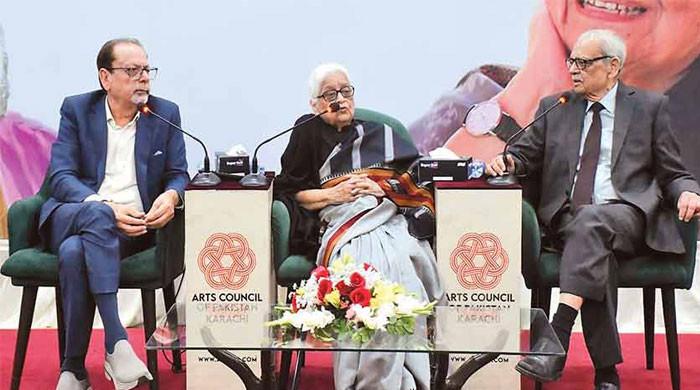
BM: In Karachi, institutions such as the National Academy of Performing Arts (NAPA) where formal music education is provided and The Arts Council of Pakistan, Karachi (ACPKHI) also offer music training. Private tutors are also available. So access to learning is not the main issue.
Don’t stop the music
The real challenge is what happens after training. Without a strong professional ecosystem, parents worry about what comes next. Education must connect to opportunity. I don’t have complete information about how seriously music is being taught in Lahore or Islamabad, so I cannot comment on that.
Instep: Is a teacher essential, or can talent be self-taught?
BM: Talent is crucial. Many contestants on Pakistan Idol have learned primarily through YouTube. In today’s world, digital platforms can function as teachers. That said, academies and formal training provide discipline and grounding. Self-learning can work, but structured mentorship strengthens technique and professionalism. Ideally, both should coexist.
Instep: What has your exper-ience been like judging Pakistan Idol?
BM: Being a judge on Pakistan Idol carries responsibility. It is easy to criticise decisions from the outside, but once you sit in that chair, you realise that every comment can influence someone’s journey. Fairness must remain central.
This season, the level of preparation has stood out. Contestants are performing in Urdu, Punjabi, Sindhi and Balochi, representing a wide range of musical traditions. The growth from auditions to live stages has been noticeable. Exposure, mentorship and consistent feedback accelerate development in ways that are difficult to replicate independently. From a production perspective, the show has been executed at a high standard, with strong audio quality and seamless overall delivery. That professionalism makes the experience both demanding and rewarding.
Instep: Do judges make independent decisions, or is there collective harmony?
BM: There is strong mutual respect and friendship among the panel. Everyone brings a distinct perspective, but the dynamic is genuinely collaborative. That trust and coordination makes the judging process smooth and decisions easier to navigate. Working together in this way has been a positive experience.
Instep: Have you personally learned anything from the show?
BM: Learning never stops. Watching young singers prepare, perform live, accept criticism and return stronger is inspiring. Performing under pressure week after week is not easy. Their resilience is a reminder that growth requires discipline and humility.
Instep: Who stands out among the contestants?
BM: Each finalist brings strength in a particular genre. Some excel in classical or folk traditions, like Maham, who channels the style of Abida Parveen, while others, like Nabeel, have the ability to make every song their own. Then there are contestants excelling in contemporary pop and other styles. From a producer’s perspective, I could imagine working with any of them depending on the project. At this stage, naming favourites wouldn’t be fair, every one of them is top-class in their craft.
Instep: Why do we see fewer bands today compared to the past?
BM: Sustaining a band has become more challenging in the current environment. Social media platforms reward individual visibility, and metrics such as followers, likes and views often shape perceptions of success. It is cheaper and easier for a solo artist to manage production, branding and promotion independently, making it simpler to achieve visibility and occasionally, a hit. That ecosystem naturally favours individuals. Behind many successful solo acts, however, skilled musicians still work quietly in the background. What has changed is not the presence of collaboration but its visibility.
Instep: You do not describe yourself primarily as a singer. Why?
BM: In Strings, the primary lead vocalist was Faisal Kapadia. His voice and style were loved not only in Pakistan but internationally. I do not place myself among renowned singers. My strengths lie more in composition, production and direction. I have sung, but I see myself first as a composer and music director.
Instep: Tell us about Pakkay Dost and why you created it.
BM: Pakkay Dost began as my independent effort to create mean-ingful Urdu-language content for children at a time when most material they consume is foreign. I started it entirely on my own, and gradually more people joined, turning it into a collaborative project.
The goal was simple: programming rooted in local language and culture, something families could watch together. Children today are often handed devices while parents are occupied, and many parents feel a quiet sense of guilt about that distance. We wanted a show that parents would actually want to watch with their children.
Over time, the response has been encouraging, particularly from overseas Pakistanis. Interest from organisations such as UNICEF has further validated the direction. Each season, we see that goal materialising. Viewership among parents is steadily increasing and the show has become a platform for meaningful family bonding, combining entertainment with early childhood development and positive messaging in a familiar cultural context.
Instep: What ultimately needs to change for Pakistan’s music sector to grow?
BM: Recognition and regulation. Talent exists. Digital platforms provide exposure. Institutions offer training. But without formal industry status, reliable royalty systems and structured career pathways, growth will remain uneven.
If systems improve, musicians will not only create culturally significant work, they will also build sustainable careers. Until then, success will depend largely on individual resilience rather than collective support.
– Mohammad Nasir is a staff member of Geo and Jang Group of Companies