Print Story
X




Two girls from a local boxing club won gold at the National Boxing Championship 2026
| I |
n a country where boxing has long struggled for recognition and institutional support, a new generation of athletes from Faisalabad is quietly reviving Pakistan’s once-glorious boxing tradition.
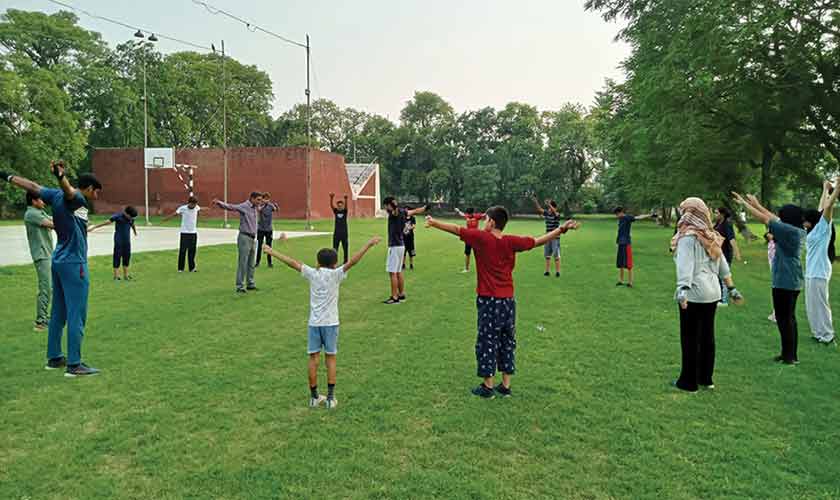
At the centre of this resurgence is the Usman Boxing Club, where many young boxers are training with dreams of representing Pakistan on the international stage.
Their recent success at the National Boxing Championship in Hyderabad has not only brought medals to Faisalabad but has also renewed hope that the city once considered a powerhouse of Pakistani boxing may reclaim its lost prominence.
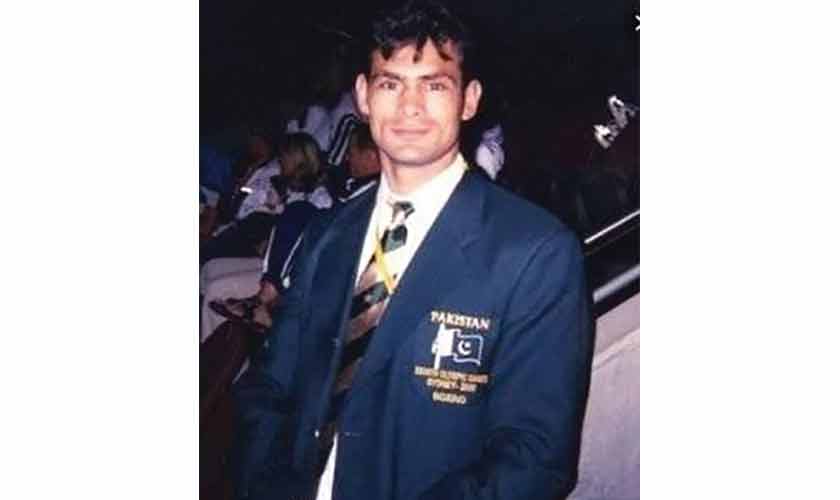
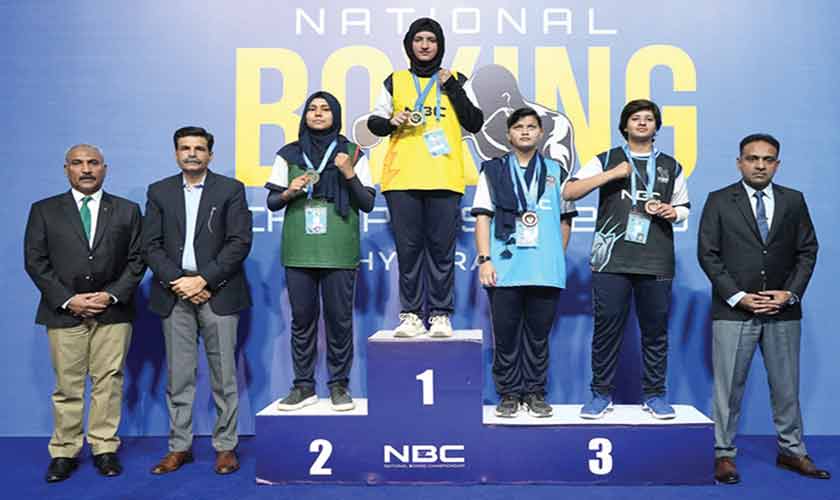
Two female boxers from the club won gold medals at the championship, while two male players secured bronze medals, drawing attention to a grassroots initiative driven largely by passion, sacrifice and the memory of a legendary boxer whose dream continues to inspire the next generation.
Head coach Rizwanullah Khan told TNS that the club was established on March 10, 2021, at a ground adjacent to the athletic track of the University of Agriculture, Faisalabad.
“The main reason behind establishing this club was the final wish of my late brother, Usmanullah Khan,” he said. “He was a renowned boxer who twice represented Pakistan in the Olympics - first at the 1996 Atlanta Olympics and later at the 2000 Sydney Olympics. He was also South Asian and Asian gold medalist.”
Rizwanullah Khan recalled that under his coaching, Faisalabad division had secured first position in the Punjab Games in 2008, safter a hiatus of 33 years. However, after entering the legal profession, he gradually distanced himself from boxing.
“In February 2020, Usmanullah Khan then in Canada, was diagnosed with brain cancer. He made me promise that I would return to coaching boxing. Four days later, he passed away,” he said.
Khan says the Punjab team that participated in the National Boxing Championship 2026 consisted of 14 players, six of whom belonged to the Usman Boxing Club.
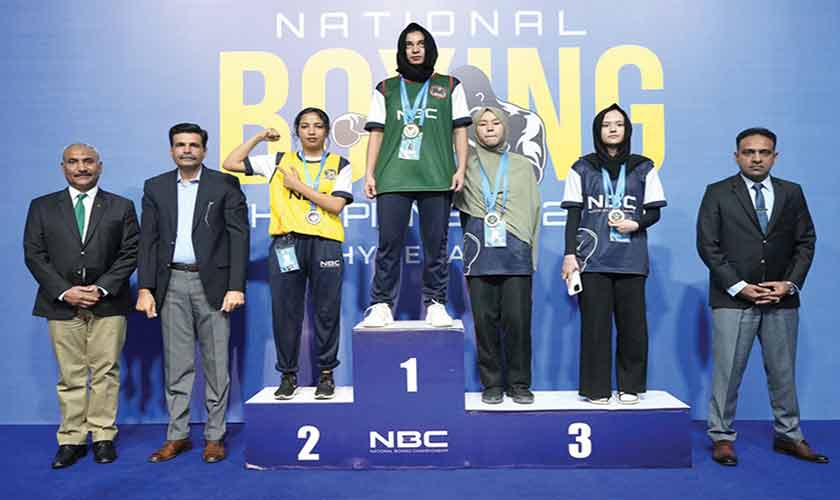
“Among them, two girls Alishba Kamal and Hafsa Naveed won gold medals; two boys, Ahmad Ali and Ibrahim Shahnawaz, secured bronze medals,” he said.
Rizwanullah Khan said that three players from the club Alishba Kamal, Hafsa Naveed and Shah Nawaz Ibrahim had been selected for the national training camp for the upcoming Commonwealth Games in England. He has been appointed assistant coach for the camp, which will begin in Islamabad immediately after Eid.
He credited the revival of boxing in Pakistan to the efforts of Pakistan Boxing Federation president Nasir Ijaz Tung, secretary Major Irfan Younis and Pakistan Olympic Association secretary Muhammad Khalid Mahmood.
“The National Boxing Championship itself is a major achievement,” he said. “Efforts are being made to develop boxing in Pakistan and train boxers and coaches in international-level techniques through. An MoU has been signed between the Pakistan Boxing Federation and the Kazakhstan Boxing Federation.”
Rizwanullah Khan said his own parent institution was the Pakistan Boxing Club, where both he and his elder brother had learned boxing.
“That was the golden era of boxing in Faisalabad. Six out of the eleven members of Pakistan’s national boxing team belonged to this city. They were Usmanullah Khan, Rizwanullah Khan, Muzaffar Abbas, Nisar Ahmad, Muhammad Akram and Muhammad Anwar,” he said.
He said that Faisalabad had produced many renowned boxers over the years, including Rizwan Mehboob, now joint secretary of the Punjab Boxing Association and secretary of the Faisalabad Boxing Association, who had been a national junior champion.
Among the rising stars, he said, he had great hopes or Alishba Kamal, who won the gold medal in the featherweight category at the National Boxing Championship 2026. A fifth-semester BS microbiology student at the University of Agriculture Faisalabad, Alishba says she had never practiced boxing before entering university.
“I had trained in martial arts, but I started boxing only after coming to university,” she told TNS. “One day, I came to the ground with my friends just to take pictures. The coach was training children there. Watching them practice, I was so inspired that I decided to learn boxing. Soon after that, I joined the club.”
She credited her success to the training and mentorship of coach Rizwanullah Khan.
“He trained me so well that I was able to win a gold medal at the national championship,” she said.
Alishba says boxing is an extremely demanding sport requiring rigorous daily training and major lifestyle changes.
She says her achievements had encouraged some other girls to join the club.
“Boxing is generally considered a male sport. Women who enter this field need extraordinary courage and determination,” she says. “This sport itself is a challenge: stamina, fitness, confidence — everything matters. Early on, one struggles with low confidence and weak stamina. Gradually one improve on both counts and gets better at the game.”
Alishba says she is pursuing her studies and boxing with equal seriousness and hopes to represent Pakistan internationally.
Hafsa Naveed, the other gold medalist from the club, won in the under-60kg category. She is a fourth-semester BS (physical education and sports sciences0 student at Government College for Women University, Faisalabad.
Like Alishba, she also credited her coaches for her success.“ To win a title, you have to face difficulties,” she says. “My coaches worked very hard with me. Coach Rizwanullah Khan and Coach Khizranullah Khan have the central role in bringing me to this stage.”
Hafsa says that women face challenges not only in sports but also in everyday life.
“I believe that when women participate in sports, they become mentally and physically stronger,” she says. “They learn to deal with all kinds of difficult situations.”
She encourages girls and women to participate in sports to stay physically fit and become more confident.
“Girls interested in a sport should join a team and continue playing,” she says. “They should make their parents and their country proud.”
The story of Faisalabad’s young boxers is not merely about medals and championships; it is also about resilience, revival and reclaiming a forgotten sporting identity.
In a city once celebrated as the heart of Pakistani boxing, the emergence of talented young women athletes represents a quiet but powerful social change.
With extraordinary determination, these athletes are challenging stereotypes, reviving a declining sport and carrying forward the legacy of legends like Usmanullah Khan.
The writer has been associated with journalism for the past decade. He tweets @naeemahmad876