Print Story
X




His fifth budget can define Prime Minister Shahbaz Sharif’s policy legacy
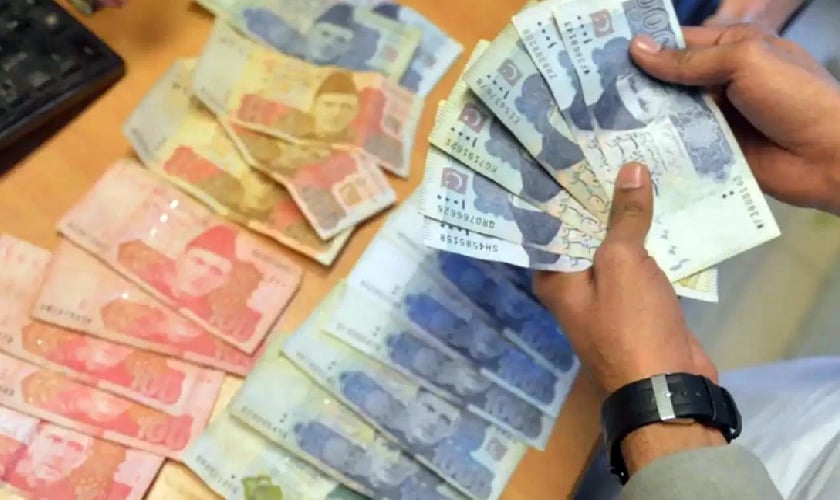
As Finance Minister Muhammad Aurangzeb prepares to unveil Pakistan’s budget for 2026-27, the government confronts a dilemma that increasingly defines policymaking across emerging economies: how to maintain fiscal stability while easing the growing pressure on households already strained by inflation, taxation and slowing income growth.
This year the context is different. Inflation has moderated, foreign exchange reserves have improved and the looming threat of sovereign insolvency has receded. Yet for much of Pakistan’s middle and lower-middle classes, daily economic reality still feels punishingly fragile. Food prices remain elevated, electricity and fuel costs continue to squeeze household budgets and real income growth has failed to keep pace with the cumulative inflation burden of recent years.
This is why the coming budget carries unusual political significance. It will not merely be judged by the IMF, credit rating agencies and bond markets. It will also be judged by salaried households, small traders, pensioners and urban middle-income families who increasingly feel trapped between taxation, inflation and stagnant wages.
The government’s challenge is therefore not simply to stabilise the economy, but also to rebuild economic confidence and social trust.
The IMF’s latest framework for Pakistan is heavily focused on fiscal consolidation. The Federal Board of Revenue has been assigned an ambitious tax target, exceeding Rs 15 trillion. The petroleum levy target is expected to rise toward Rs 1.73 trillion. Provincial governments are also being pushed to mobilise tax revenues from agriculture, services and property.
These targets reflect legitimate concerns. Pakistan’s debt servicing burden remains exceptionally high, tax collection efficiency remains weak and repeated fiscal slippages have undermined credibility. Yet there is also a growing risk that excessive dependence on indirect taxation and petroleum levies could weaken already fragile household consumption and investor sentiment.
The IMF increasingly recognises these risks.
In a recent policy note on global energy and food shocks, the IMF argued that governments should focus on “protecting people, not prices.” Rather than broad subsidies or universal price suppression, the recommendation centred on targeted support for vulnerable households, temporary assistance mechanisms and carefully calibrated interventions that preserve fiscal space while cushioning social pain.
That distinction is important for Pakistan.
The country cannot sustainably return to blanket fuel subsidies or politically driven price freezes. Pakistan simply lacks the fiscal space to absorb such measures without worsening debt vulnerabilities and external financing pressures. Equally, a purely extraction-based approach risks undermining social cohesion and economic confidence.
The solution lies in ‘smart’ rather than indiscriminate relief.
The first priority should be targeted support for lower- and middle-income households. The Benazir Income Support Programme remains one of Pakistan’s few functioning social protection mechanisms. It should be further expanded and digitally strengthened. However, the current inflationary environment also demands temporary support for segments of the urban salaried class that increasingly fall outside traditional safety-net frameworks yet remain highly vulnerable to energy and food shocks.
Pakistan’s middle class now faces a triple squeeze: rising utility costs, aggressive withholding taxation and stagnant purchasing power.
The salaried sector’s tax contribution has surged sharply in recent years. Much of the informal economy, meanwhile, continues to remain weakly documented. This imbalance is becoming economically and politically unsustainable. A modest rationalisation of income tax slabs for salaried households, combined with inflation-indexed adjustments, would provide psychological and financial relief without fundamentally derailing fiscal targets.
Second, the government should avoid excessive reliance on petroleum levy as a substitute for tax reform.
The test is no longer whether Pakistan can avoid crisis. It is whether it can cause ordinary citizens to believe that economic stability will eventually translate into economic opportunity.
Fuel taxation has increasingly become a parallel revenue system compensating for weaknesses elsewhere. Yet petroleum taxation transmits rapidly across the economy through transport, logistics, food distribution and electricity costs. Overreliance on fuel taxation therefore risks intensifying cost-push inflation and weakening industrial competitiveness.
Instead of permanent broad subsidies, the government could temporarily smooth extreme price spikes during periods of severe geopolitical volatility, particularly if Middle Eastern tensions intensify further and global oil prices rise sharply. Even the IMF framework accepts that in exceptional and temporary shocks, carefully calibrated short-term interventions may be justified.
Third, Pakistan needs to shift from revenue extraction toward tax fairness.
The problem is no longer merely one of low taxes, but of unequal burden. Large documented sectors, including salaried individuals and formal businesses, increasingly feel penalised for compliance, while politically protected sectors remain undertaxed. IMF assessments note the stark imbalance between heavily taxed petroleum consumption and extremely low effective taxation in agriculture despite its substantial share of economic activity.
A credible reform agenda must broaden the tax base rather than simply intensify pressure on already compliant sectors.
This also requires a difficult but unavoidable debate about fiscal federalism.
Since the 7thNFC Award, provinces receive a substantial share of federal revenues, yet provincial tax mobilisation has remained relatively weak. Provincial revenue authorities such as Punjab Revenue Authority and Sindh Revenue Board have frequently posted operational surpluses, yet overall provincial taxation remains below 1 per cent of GDP despite vast untapped potential in services, property and agriculture.
The imbalance has shaped a system where the federal government shoulders the bulk of macroeconomic stabilisation while provinces remain heavily dependent on transfers from Islamabad.
This model is becoming increasingly difficult to sustain.
At the same time, the government must avoid sacrificing long-term growth in pursuit of short-term stabilisation. Pakistan’s investment-to-GDP ratio remains stuck near 14 per cent, far below the levels historically associated with high-growth Asian economies. Economic growth of around 3 to 4 per cent remains insufficient to generate adequate employment opportunities for Pakistan’s rapidly expanding working-age population.
The danger is that Pakistan stabilises the economy while simultaneously suppressing its growth potential.
The budget should therefore include targeted incentives for export-oriented investment, technology adoption, logistics modernisation and industrial productivity. Relief focused on productive sectors rather than politically motivated consumption spending would generate stronger long-term returns.
Finally, credibility matters. Citizens are more likely to tolerate difficult economic adjustments when they believe sacrifice is being shared fairly and when the state demonstrates discipline in its own spending priorities. That means improving governance, reforming loss-making state-owned enterprises, reducing policy unpredictability and ensuring that taxation is linked to visible improvements in public services.
Pakistan’s challenge today is not merely balancing books. It is rebuilding the social contract between state and citizen.
For Prime Minister Shahbaz Sharif, his fifth budget may define his policy legacy. If it merely deepens extraction without restoring trust, growth and affordability, stabilisation may prove politically fragile. If the government can combine fiscal realism with targeted relief, tax fairness and growth-oriented reform, Budget 2026–27 could mark the beginning of a more sustainable economic transition.
The real test is no longer whether Pakistan can avoid crisis. It is whether it can cause ordinary citizens to believe that economic stability can eventually translate into economic opportunity.
The writer is a senior lecturer in finance, leading apprenticeships and partnerships at Birmingham City’s Business School. He posts on LinkedIn @dr-hafiz-muhammad-usman-rana.