Print Story
X




Childhood stunting must be recognised as a crisis that requires urgent attention and decisive policy action
| N |
early 40 per cent of Pakistani children under five are stunted. As Peru, Bangladesh and Ethiopia have demonstrated political will can reverse this fate, Pakistan faces a decisive choice: treat malnutrition as a secondary concern or recognise it as the most urgent development crisis of the generation.
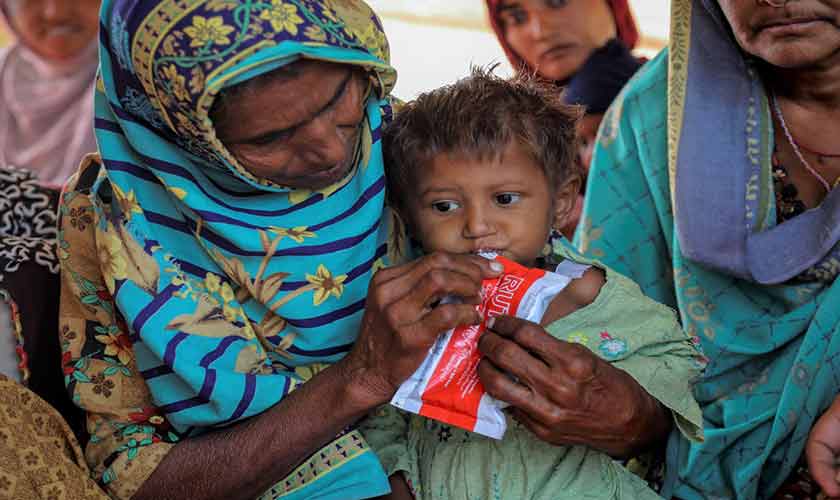
In a dusty settlement near Rahim Yar Khan, five-year-old Zainab sits quietly beside her mother, holding a small steel bowl of thin lentils and stale bread. She does not cry or complain. Her silence speaks a different language. Zainab’s body and mind have already been shaped by deprivation. The window in which her brain could grow, her immune system strengthen and her cognitive capacity flourish has quietly closed.
Zainab is not an exception; there are too many children like her.
Pakistan ranks among the most severely affected countries on earth by child stunting. Nearly 40 per cent of the children under the age of five — millions of human beings in their most formative years — are stunted. That figure does not only mean short stature. It also means reduced cognitive capacity, weakened immunity, poorer educational attainment, lower lifetime earnings and a near-certain inheritance of poverty. Development economists describe these children as “the shortest generation” — not merely in height, but in opportunity, capability and the promise of a prosperous nation.
Medical science is unequivocal on one point: the damage done in the first thousand days of life — from conception to the age of two — is irreversible. No future effort in schooling, healthcare or economic opportunity can restore what is lost in that narrow biological window.
What makes Pakistan’s stunting emergency particularly alarming is its invisibility. Unlike floods, political upheaval or economic crises, chronic malnutrition generates no dramatic news cycle. Children do not collapse publicly. They simply grow less — physically and intellectually. The damage unfolds slowly, quietly and permanently across thousands of villages, urban slums, and flood-affected districts.
The structural causes are well-documented and deeply interlinked. Poverty has made protein-rich foods — eggs, dairy, pulses, meat — unaffordable for millions of families, who subsist on carbohydrate-heavy diets deficient in essential micronutrients. Maternal malnutrition perpetuates the cycle generationally: undernourished mothers give birth to underweight infants, who in turn face reduced life chances before they draw their first breath. Unsafe water and inadequate sanitation cause repeated intestinal infections that block nutrient absorption, rendering even available food nutritionally futile. The catastrophic floods of 2022 that inundated a third of the country destabilised the already fragile food systems across entire regions.
The result is a structural disconnect that defines Pakistan’s governance challenge: policy is designed at the top, while failure accumulates at the bottom: in district offices, union councils and village health posts where children actually live.
The global evidence is unambiguous: stunting is not inevitable. It is a policy choice. Several countries have transformed their nutrition outcomes within a single generation — not through sudden wealth, but through political commitment and coordinated action.
Peru cut its stunting rate by more than half in fifteen years through targeted early-childhood nutrition programmes centred explicitly on the first thousand days. Bangladesh invested in maternal health infrastructure and female education, achieving steady and sustained reductions over two decades. Vietnam linked agricultural reform with nutrition-sensitive food policies, ensuring diversified diets for its most vulnerable populations. Brazil combined social protection programmes with school feeding initiatives. Ethiopia deployed community health workers into remote regions to deliver supplementation and nutrition education at household level.
None of these countries was a lot richer than Pakistan when they began. The distinguishing variable was leadership — a national commitment to treat child malnutrition as an emergency rather than a background condition.
In Pakistan, several institutions are demonstrating what is possible when research connects to real-world necessity. The University of Agriculture, Faisalabad, has emerged as a leading force in nutrition science and food security, linking agricultural output directly to child health outcomes through its fortified school-meal initiatives.
The establishment of the Pakistan Korea Nutrition Centre represents a significant milestone in this effort — a model of international collaboration strengthening domestic research capacity. The National Institute of Food Science and Technology has developed nutrient-rich snack formulations from chickpea and soybean flour: low-cost, scalable solutions targeting protein deficiency among vulnerable communities. These are not laboratory curiosities. They are practical interventions, developed with urgency and designed for the field.
The principal architect of the Pakistan Korea Nutrition Center was Dr Iqrar Ahmad Khan. He laid its institutional foundation with the support of his dynamic team, including former Dean of the Faculty of Nutrition and Home Sciences Dr Masood Sadiq Butt and Dr Beenish Israr, through collaboration and funding from the Korean government. Following her post-doctoral research in Korea under the guidance of Dr Kim, Dr Beenish Israr played a key role in developing academic and research partnerships with Korean universities. Through these collaborations, the PKNC introduced innovative mother-and-child nutrition interventions and school breakfast programmes aimed at improving dietary habits, nutritional literacy and public health awareness among vulnerable communities.
Today, these efforts are being strengthened under the leadership of Vice Chancellor Dr Zulfiqar Ali, Dean Dr Imran Pasha, DG NIFSAT Dr Muhammad Issa Khan, Dr Beenish Israr and Dr Atif Randhawa. They are expanding nutrition-focused academic and community outreach programs. Vice Chancellor Dr Zulfiqar Ali is making visionary efforts to strengthen food and nutrition sciences and further empower PKNC initiatives for sustainable public health development. The National Institute of Food Science and Technology has also been recognised as a lead institution of the PHEC Cluster, with the University of the Punjab serving as the co-lead institution.
Pakistan has also launched national nutrition strategies, provincial stunting reduction frameworks and donor-supported programmes in collaboration with the UNICEF, the WHO and the World Bank.
What Pakistan requires is not another policy document. It requires a coordinated national nutrition emergency strategy — one that treats the crisis with the urgency it demands and the accountability structures it has never received.
That strategy must centre maternal nutrition — ensuring pregnant women receive iron supplementation and prenatal care through strengthened primary health systems. It must expand community health workers to deliver breastfeeding support and hygiene education at household level. It must introduce school feeding programmes that simultaneously improve attendance and nutritional outcomes. Agricultural policy must be reoriented from yield-only metrics toward diversified food systems that prioritise pulses, vegetables, dairyand micronutrient-rich crops. The clean water infrastructure must be extended as a nutrition intervention besides a sanitation measure.
Above all, real-time monitoring systems must be established to ensure transparency and performance. Often, it is not the absence of programmes that fails children; it is the absence of accountability.
What metric should national progress be measured by? By its motorways and skyscrapers? By its GDP growth rate? Or by whether its children — all of its children — get the biological foundation to think, to learn and to contribute?
Millions of Pakistani children are currently losing their cognitive and physical potential. This is not a future threat; the harm is unfolding now — in Rahim Yar Khan in the Punjab; in Sindh’s flood plains; in Balochistan’s remote districts; and in urban slums. The countries that reversed this trend did not wait for prosperity to arrive before investing in their children. They understood that healthy children were how prosperity arrived.
Zainab is waiting. So are millions of children like her.
The writer is a former chairman of the Department of Entomology at University of Agriculture, Faisalabad.