Print Story
X




Sustained local schooling can improve student retention and reduce dependency on external aid
| Z |
afarwal is a tehsil in the Narowal district in the northeastern part of the Punjab. It lies close to the border with Indian Punjab and is largely a rural area where agriculture remains the main source of livelihood. According to census-based estimates and education sector reports, Narowal district has an overall literacy rate of 70-75 per cent. Zafarwal tehsil has traditionally been placed slightly below this average. This lag has been blamed on its stronger rural composition, fewer urban centres and limited access to higher-level schooling facilities. The population is mainly dependent on farming, daily wage labour and seasonal agricultural cycles. These economic factors directly affect school attendance, continuity of education and long-term academic progress.
Rural districts in the Punjab with similar border geography (Narowal, Kasur and Bahawalnagar) have consistently shown higher dropout pressure at secondary level due to livelihood dependence on agriculture and migration for labour.
Zafarwal has reflected a broad pattern visible across less developed districts of the province. While the Punjab has done better than most provinces in overall literacy indicators, a significant rural-urban gap has persisted. Urban centres such as Lahore, Rawalpindi and Sialkot report literacy rates of 78-80 per cent, while rural and border districts often report lower achievement, particularly at secondary and higher secondary levels. Across the Punjab, education data shows a consistent trend: enrolment is relatively high at the primary level, but many students drop out before completing matric. Poverty, distant schools and early entry into the labour market explain the difference.
In rural Punjab, the real issue is not school entry; it is school survival. Children enter schools easily. However, the system fails to retain them long enough to complete higher secondary education.
In Zafarwal and some nearby villages such as Darman, education has historically followed the same pattern. Most children were enrolled at an early age, but retention was weak. Many families depended heavily on agriculture and the children were expected to support household income by joining farming activities. Because of this, schooling was frequently interrupted during peak agricultural activity like sowing and harvesting. For girls, distance from schools, lack of transport, cultural restrictions and safety concerns reduced participation
According to Pakistan Social and Living Standards Measurement surveys, female literacy in rural Punjab often lags 15-20 per cent behind male literacy, mainly due to mobility restrictions and limited school accessibility.
Before a structured intervention was made, the education system in this region showed a typical declining pipeline. Primary enrolment was relatively good, but transition to middle and secondary levels dropped sharply. Field patterns from similar rural districts in the Punjab suggest that while most children enter primary school, only a much smaller proportion complete matriculation and even fewer reach higher secondary education. This dropout trend is not unique to Zafarwal.
Within this context, a local initiative emerged through Ghulam Ahmed and his family under RS Welfare Foundation. Their approach was based on the understanding that rural education challenges are not only about building schools, but also about ensuring continuity, accessibility and trust in the education system. The idea was to reduce the barriers.
This led to the establishment of Ramal International College and School in Zafarwal. The institution was designed as a facility offering education up to higher secondary level. Its purpose was to reduce dropout rates by ensuring that students do not need to shift between distant institutions or go elsewhere for higher education.
The school has purpose-built classrooms; science laboratories for physics, chemistry and biology; computer labs for digital learning; and a library to support academic development. The campus also provides structured learning environment.
One of the most important features of this institution is accessibility. In rural Punjab, distance to school is one of the strongest factors behind dropout rates. To address this, transport facilities were introduced for students coming from surrounding villages. Financial barriers were reduced by providing scholarships and fee support mechanisms, ensuring that children from low-income households are not excluded from education due to cost.
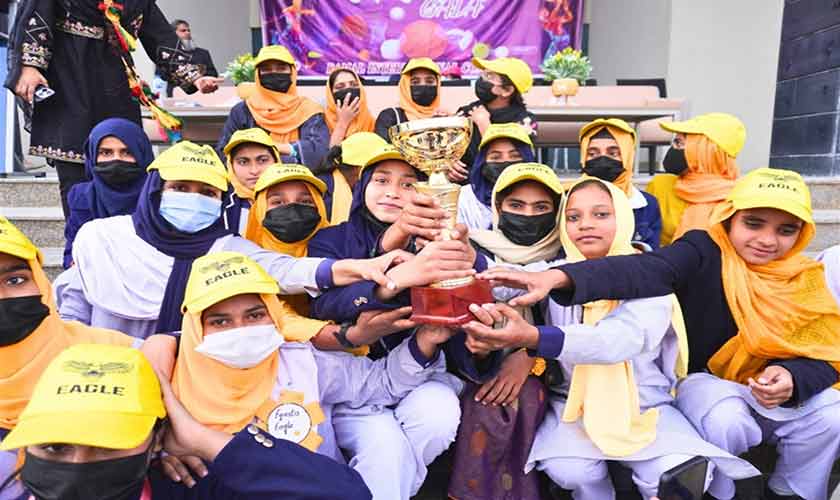
The teachers focus on moving beyond traditional rote learning and encourage conceptual understanding, analytical thinking and student participation. Students are also encouraged to take part in co-curricular activities. This helps build confidence, communication skills and leadership qualities.
More students are now continuing into middle and secondary levels. There has also been a gradual increase in female participation. This shift aligns with broad improvements observed in other parts of rural Punjab where infrastructure and institutional access have improved.
The change in community mindset is important. In rural Pakistan, attitudes towards education are often shaped by immediate economic pressure. Earlier, many families viewed schooling as secondary to survival. However, with improved access and visible educational outcomes, there is a gradual shift in thinking. Parents are increasingly expressing long-term aspirations for their children, including professional careers such as medicine, engineering and teaching.
Once education yields visible results, it stops being an abstract idea and can become a family strategy for survival and dignity.
The institution also attempts to integrate skill development. This is particularly important because youth unemployment and skill mismatch remain major challenges across Pakistan. By introducing basic digital literacy and skill-oriented exposure, the institution attempts to prepare students for both higher education and employment pathways.
Zafarwal represents a typical rural Punjab educational landscape where structural barriers such as poverty, distance, gender inequality, and weak infrastructure have historically limited educational outcomes. Within this environment, the establishment of Ramal International College and School represents a localised intervention aimed at improving access, reducing dropout rates and strengthening educational continuity. Such initiatives have shown that targeted efforts can slowly reshape both access and aspiration in underserved communities.
The idea of Ramal International College & School emerged from long-standing educational gaps observed in the Zafarwal region. Before its establishment, local families were dependent on nearby government schools, which were often limited in infrastructure, teacher availability and continuity of education beyond primary and middle levels. Such gaps frequently result in student dropout after early schooling.
The founding vision, led by Ghulam Ahmed and his family under RS Welfare Foundation, was shaped by continuous observation of children leaving education due to distance, poverty and lack of institutional continuity.
Primary funding of Ramal International College and School comes from RS Welfare Foundation, a community-based welfare initiative supported through private contributions and family-led financial backing. Local philanthropic donations also contribute to sustaining its operations.
The institution is also supported in part through tuition fees - partially reinvested into infrastructure development, teacher salaries, laboratory expansion and student support programmes.
The institution does not depend on large/ international donor funding. Over time, small contributions from local well-wishers have also supported scholarships, transport facilities and infrastructure improvement.
The writer is a freelance contributor.