Print Story
X




A sustained dialogue can lead to peace and stability in South Asia
| T |
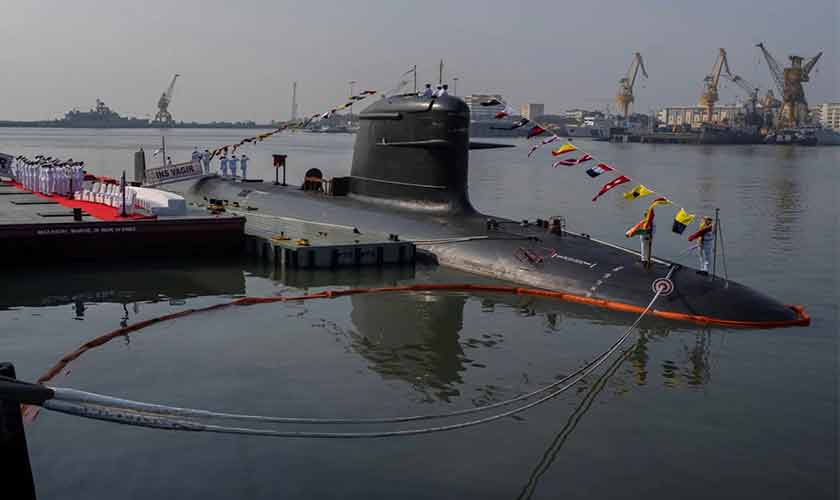
he recent Stockholm International Peace Research Institute report indicates that India has deployed 12 nuclear warheads on the sea-leg of its nuclear triad. This and additions to the conventional forces show that India is trying to create both conventional and nuclear force asymmetry against Pakistan.
Given its large military operations budget, India can deploy even more nuclear forces and move its conventional forces closer to the border with Pakistan, thereby threatening its neighbour to the West. India has already been canisterising and encapsulating its nuclear forces, making them a “ready arsenal” that can be fired in a matter of minutes. This is no longer a non-weaponised posturing. The new strategy has raised the risk of quick escalation in a standoff between the South Asian nuclear rivals. The question is: why has India been expanding and modernising its nuclear weapons and conventional forces?
First, India has long aspired to a regional hegemon status, calling the Indian Ocean “India’s Ocean” and replacing its “Look East” maritime strategy with the “Act East” policy. It seems that India will be looking for more nuclear-powered submarines, advanced maritime capabilities, overseas military bases and economic investment in the region to protect its maritime security interests and keep an eye on the crucial sea-lanes of communication (SLOCs). Once India these ingredients are in place, it will have greater maritime influence on others, undermining the security of others in the region, including some of the leading powers, such as the US, which has had military preponderance for decades.
Second, India desires to retain escalation dominance against its rivals. It has been raising and modernising its deterrent forces beyond its security needs. To retain such dominance, India has added several conventional and nuclear systems. These include MIRV-ing its missile capability; adding a number of nuclear-powered submarines supported by the increasing range of SLBMs, the BMD systems and anti-satellite systems. It is also trying to militarise its space programme and develop, TNWs and hypersonic missile capability. Importantly, it is also working to extend the ranges of its nuclear-capable ICBMs, which can now target and threaten the US, Europe and Canada.
Third, in its relations with other sovereign states in the region, India aspires to prestige rather than security, while treating other sovereign states as part of India. This thinking, embedded in the RSS ideology, is threatening other leading players in the region. With this ideological arrogance and strategic hubris, India continues to expand its conventional and nuclear forces, going beyond the perceived minimum deterrence and the doctrinal posturing of nuclear no-first-use. The Akhand Bharat ideology has so saffronised Indian civilian and military leadership that it may accept the risk of a dangerous escalation in South Asia.
Consistent increases in India’s conventional and nuclear forces and their modernisation may have the following strategic and policy implications for both India and the region.
One, with an increasing number of deployed nuclear forces, India’s NFU doctrinal posturing is no longer consistent with its nuclear policy that India earlier conceived. The ready arsenals and deployed nuclear forces tempt India to use its nuclear forces early in serious military crises, endangering the risk of nuclear escalation. This also does not align with the minimum deterrence idea. In other words, the more missiles and nuclear-powered submarines India develops, the more it will require additional warheads; the more it deploys those, the more inconsistent this becomes with the minimum deterrence policy.
Two, India’s deployment of nuclear forces in the sea-leg creates a “lose or use dilemma.” During the Cuban Missile Crisis of 1962, the Cold War rivals - the US and the Soviet Union - confronted a dangerous situation that could have led them to a nuclear Armageddon had the Soviet submarine (B-59) tipped with a nuclear torpedo not surfaced to end the standoff. Given the emerging technology, Pakistan and China will be able to locate, identify and force the Indian nuclear-powered submarines to surface and surrender.
With a saffronised mindset, India may not surface its submarine and could eventually be under strategic pressure to use its SLBMs before losing them. India, deploying SLBMs in its sea-leg in such a situation, becomes vulnerable to inadvertent escalation. To avert such a dilemma, Indian security leadership needs to think before deploying/ pre-delegating its maritime forces.
Three, the Indian deployment of nuclear forces also creates a strategic issue of “entanglement” between the conventional and nuclear delivery systems. This, in turn gives India an incentive to opt for “launch on warning,” thereby creating risk for early use of nuclear weapons. Therefore, India’s deployment of strategic forces in both peacetime and crisis situations creates an entanglement issue, tempting India to use its nuclear forces early in a serious military crisis.
Finally, the deployed nuclear forces might lead India into an unending arms race that will put India in a dangerous position. This will further push India into a risky escalation trap with both China and Pakistan, especially when the Indian civilian and military leadership consider themselves to be superior and capable of inflicting greater damage on both China and Pakistan. However, Pakistan can retaliate decisively.
Conventional wisdom suggests that India should not underestimate a credibly nuclear-armed Pakistan. The 2019 and 2025 crises have demonstrated Pakistan’s defensive resolve.
Pakistan needs to sustain full-spectrum deterrence, which falls within the ambit of credible minimum deterrence while deterring India at the operational, tactical and strategic levels. Conventional force development will be a crucial part of full-spectrum deterrence. Since India has been putting Pakistan under strategic pressure, Pakistan should retain a strategic balance without indulging in a bigger arms race.
India should be convinced that there is no way it can wage a limited war against Pakistan. The only practical option India has is institutionalised confidence-building measures and a strategic restraint regime that Pakistan has already proposed. A sustained dialogue can bring about peace and stability in South Asia.
The writer is a professor of international relations and executive director of Balochistan Think Tank Network, Quetta.