Print Story
X




Not every mourner can attend majaalis in person. That’s where online streams become invaluable
| E |
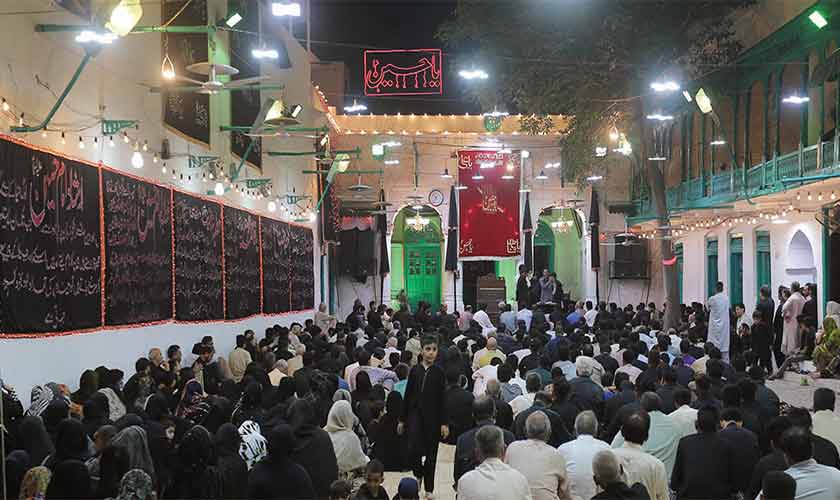
very year, hundreds across Lahore observe their solemn Muharram rituals. Each year, the city sees a surge of vehicles parked outside packed imambargahs. Majaalis are held throughout the city under the close watch of security personnel and scouts.
However, not everyone observing Muharram commemorations is able to attend these majaalis in person for a variety of reasons. In recent years, those persons have been provided the opportunity to be a part of their religious gatherings online.
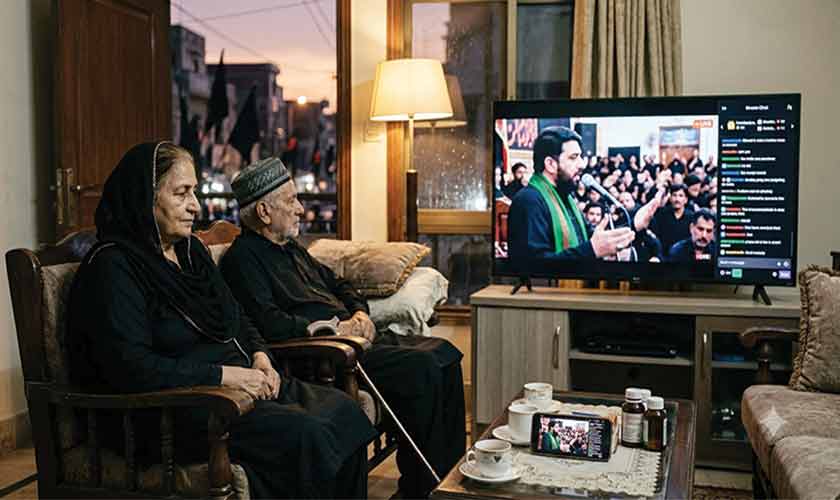
Majaalis are now live-streamed by official YouTube and Facebook pages of several imambargahs. The schedules are published on their social media handles to ensure observers have the required information regarding timings.
“We all try to make time for the majaalis during Muharram. But there are days when it’s not convenient, due to workload or traffic congestion on the roads etc,” says Raza, 24. “The live broadcasts and recordings of proceedings truly help fill the gap.
“However, nothing can replace the experience of attending [a majlis] in person,” he adds.
A lot of people from the community are able to visit imambargahs only on ashura. Still, there are those who are confined to their homes for reasons ranging from old age, illness and/ or mental health concerns. They all seem to benefit from the online streams.
Eighty-four years old Hussnain is seldom in attendance at a local imambargah due to age-related mobility issues. He says, “Until a few years ago, I would regularly visit the imambargah during Muharram. Not that I miss much; my grandchildren sit me down on their mobile phones or laptops to watch the majaalis. It feels like I am there in person.”
Fatima, 29, tells TNS, “I was diagnosed with contamination OCD a few years back. Over the years, I have received therapy and medication to manage my condition. There are days when going out is still a challenge. I manage, but places with large gatherings can exacerbate my concerns. Hypervigilance around contaminants can be debilitating. In what would appear to be the cleanest environments, a small speck of something I consider a potential contaminant can raise my anxiety multifold.”
For her, attending majaalis has become a challenge, so she relies heavily on online platforms to take part in azadari.
All-female majaalis are also live-streamed, often just the audio.
“It’s like listening to a podcast on our way to work or while managing day-to-day activities,” explains Zainab, 25. “Attending a majlis live is another experience altogether. For most of us, it is more spiritually rewarding. Nonetheless, social media platforms are filling the gap busy schedules have created for many of us. They are helping communities connect.”
“Social media platforms are filling the gap busy schedules have created for many of us. They are helping communities connect.”
Sadia, 37, seconds Zainab, “In large gatherings, it is not possible for many to raise their concerns. The fact that many ullema are reachable through social media is a bonus.
“I had a question and decided to direct my message to the official Instagram account of an alim. Did I expect an answer? Not entirely. But a couple of days later, I received the response I was looking for.”
| I |
t’s not just the local ullema and zakireen who are accessible for the general public now. As it turns out, the grand Ayatollahs have websites dedicated to their work and rulings, along with options for the public to share religious queries.
Ayatollah Ali al-Husayni al-Sistani’s is a popular site. Millions of Shia Muslims worldwide follow Ayatollah Sistani as marja’ al-taqlid (subject of emulation). Hence, a website that allows for his official religious rulings to be widely available for his followers and non-followers alike provides a deep insight into Shia Islamic jurisprudence.
“There are applications that have made information available at a click,” says Raza. “Several ziyaraat are recited on the Ashura. Back in the day, whenever we visited the shrine of Hazrat Ruqayyah Bint-i-Imam Ali (peace be upon her), my mother would pick religious books from the shrine of Bibian Pak Daman.
“Everyone in my family has downloaded the app on their phones that contains a vast collection of religio-spiritual resources,” he says.
Muharram for observers is a month of learning and remembrance of the message of the martyrs of Karbala. Observed with great reverence by the Shia Muslim community, Muharram remains equally religiously important for non-Shia communities. “In recent times, I have noticed that younger people are developing video content in the form of informative reels. Anyone can view those, and I am sure it serves to clear several popular misconceptions about the community,” says Maryam, 28.
According to her, social media content is supporting religious harmony and allowing people from all religious backgrounds to come together.
Even though imambargahs are places of congregation and everybody is welcome to attend the majaalis irrespective of their religio-sectarian backgrounds, a certain hesitation persists. But with online platforms and social media discourse providing people a live experience of majaalis while sitting in the comfort of their homes, more and more are feeling brought together in remembrance of the great sacrifice of Karbala.
“All is seen and heard now. We can verify information at the click of a button. If an alim quotes from a book or shares a reference, we can look it up,” says Sadia. “It is fascinating how the internet has changed our experience of religious rituals and learning.”
The Intsab Sahi is a staff member