Print Story
X




Farmers will continue to suffer on account of high input costs and uncertain returns until agriculture commands policy focus
| I |
n its latest annual budget, the federal government has once again placed a higher priority on fiscal consolidation than broad-based growth.
On the face of it, the budget for 2026-27 focuses on meeting the IMF targets, broadening the tax base and managing the deficit. While ensuring stability is crucial, the persistent emphasis on financial metrics has led to minimal support for agriculture, the backbone of national economy. This has sent a negative message to the farming sector, which employs 40 percent of the workforceand accounts for nearly a fourth of the GDP.
Agricultural output remains weak. This weakness will continue to drive food inflation. The resulting burden is borne primarily borne by the farmers.
The performance of the agriculture sector has been below par. According to the Economic Survey, during 2025-26 the agriculture sector recorded growth of 2.89 percent against the target of 4.5 percent. Major crops, including cotton, rice, sugarcane, maize and wheat, registered an overall growth of just 0.65 percent compared to last year.
Other crops recorded a growth of 2.43 percent despite flood-related disruptions. The growth was mainly supported by higher production of pulses, vegetables and fruits. This helped offset relatively subdued performance in other crop categories. Cotton ginning and miscellaneous registered a marginal growth of 0.07 percent mainly due to lower cotton production.
The dream of sustainable inflation control will remain unfulfilled unless grower’s cost of production is predictably low. Budget 2026-27 doubles down on fiscal consolidation and IMF targets, but offers little relief on the farm input side.
Two gaps stand out. First, lack of fertiliser and energy subsidies. With urea, diesel and electricity prices still elevated, and no major subsidy buffer, wheat and maize growers face the same cost squeeze that kept output below 2023-24 levels.
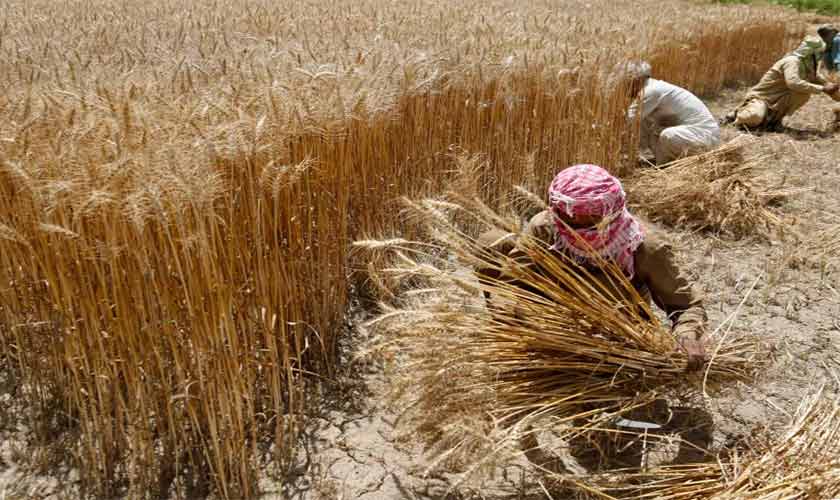
Pakistan Bureau of Statistics data shows wheat production at 29.48m tonnes, 6.8 percent below the 2023-24 peak, partly due to high input costs and less sale price. Yield is flat at 3,110 kg/ ha. Output is 2.1 million tonnes, or 6.6 percent, below the recent high as well against the yearly consumption. Uncertain procurement prices, high input cost, lower storage initiatives, explain the shortfall. Without a stable price policy, wheat yield is unlikely to return to 2023-24 levels.
The inaction on lowering the cost of inputs sends the wrong signal to growers, compounding broad agricultural distress. The farmers are already braving all-time high fertiliser prices and 30 percent energy price inflation. The balanced use of fertiliser has been lost, with 2025-26 approaching the lowest level in nearly seven years.
According to official data, urea fertiliser off-take recorded at 3.035 million tonnes while DAP registered 712,000 tonnes sale for July to March 2025-26. However, the growth is starkly uneven across nutrient. The higher use of urea has raised nitrogen-to-phosphorus ratio to 4.26 to 1, far above the agronomic recommendation of 2 to 1 or 3 to 1 for major crops. The ratio has worsened by 55 per cent since 2020-21, when it was 2.74 to 1 in the first nine months of the year. The worsening trend of imbalanced use of fertiliser may lead to low production.
With stagnation of output, the food prices continue to be on higher sides. According to the Economic Survey 2025-26, a 20-kg wheat flour bag cost Rs1,615.5 in April 2025 and Rs 2,151.7 in April 2026. That’s a 33.2 percent leap in one year, adding 1.3 points to inflation — the highest among food items.
The government is targeting 8.2 percent inflation for the upcoming fiscal year. Independent forecasts are less optimistic, placing inflation at 11-13 percent due to a record Rs 1.67 trillion petroleum levy,
The rural populations face the double whammy of low income and high inflation. According to official data, rural consumer price index (CPI) jumped to 6.1 percent from 3.3 percent last year. Until fertiliser, energy and crop protection costs are addressed, headline inflation targets will mask persistent food inflation. For 40 percent of the workforce tied to farming, the budget offers stability for balance sheets, but leaves cost-of-production risks untouched.
The government has taken no steps to shield the masses from the rising cost of food. The subsidy for wheat reserve stocks has been cut from Rs 14 billion to Rs 9.5 billion. A smaller buffer stock means less ability to manage price swings if the crop falls short of expectations. At the same time, the budget targets only modest growth for major crops for FY27. Crop growth is projected at 3.6 percent, cotton ginning at 2.5 percent and livestock at 3.9 percent.
These are not growth numbers that can transform rural incomes or stabilise food supply. For cotton, the situation is particularly concerning. Yields in the Punjab, the biggest agrarian economy of the country, have remained flat at around 310 kilograms per hectare for the past decade. Without targeted support, the crop may continue to lose area to more profitable options, depriving the textile sector of the fibre and slashing production of edible oil from the seed.
Some relief has been announced for the agriculture sector: duties removed on tractors, harvesters, pumps; Zar-Khaiz loan rates lowered; and Balochistan’s tube-well tariff has improved. Some farmers’ organizations have said the duty-free import of farm machinery will only benefit corporate farming.
Owing to the complex challenges faced by the agriculture sector, food imports have hit $7 billion, up 15 percent. Food exports have fallen 34 percent to $3.8 billion. That $3 billion+ gap will pressure the rupee. Edible oil/ ghee are likely to rise 10-15 percent. Milk price in Lahore is continuously on the high side with energy costs for chilling plants rising.
The core lesson for policymakers is simple: without lower input costs, inflation control won’t last. The federal government should have taken bold steps on the pattern of concessions to industry despite constrained by IMF conditions. For farmers, the 2026-27 budget is essentially a holding budget. It meets lender targets but won’t lift farm output or ease food inflation.
The writer is a senior The News reporter