Print Story
X




City planning should respect professional input and address stakeholder concrens
| T |
he top constitutional court lifted the ban some time ago on conversion of residential plots for commercial use. The trade body representing the builders and developers burst into jubilation. They said this verdict would boost the construction industry and bring about prosperity. Most ordinary residents of Karachi understand that the reality is otherwise. The sole beneficiary of this decision will be the builders, realtors, investors and their affiliates.
Zoning alterations have a long history of precipitating tragedy and causing enormous sufferings to ordinary people. Poor regulation of certain types of developments in sensitive locations has altered the life of many for the worse. On May 22, 2020, a flight from Lahore crashed in a residential neighbourhood at the threshold of Karachi airport destroying about 20 houses. Many precious lives were lost. Approaches to airport are sparingly developed to avoid such disasters. It is disappointing that our institutional capacity to screen building stock monitoring and identifying land use-related malpractices is negligible. Illegal conversion of land use, from low-density to high-density is on a meteoric rise. Despite some interventions by the superior judiciary, the situation has not changed.
The builder-developers use their allies in building control authorities to obtain permissions for such conversions leading to lucrative commercial gains. Addition of unplanned storeys, inappropriate certification of streets as fit for multi-storey construction, encroaching on public land for developing building projects and intense commercial development along main traffic arteries are frequent. It is not rare to see small- to medium-sized residential plots being converted into multi-storey units.
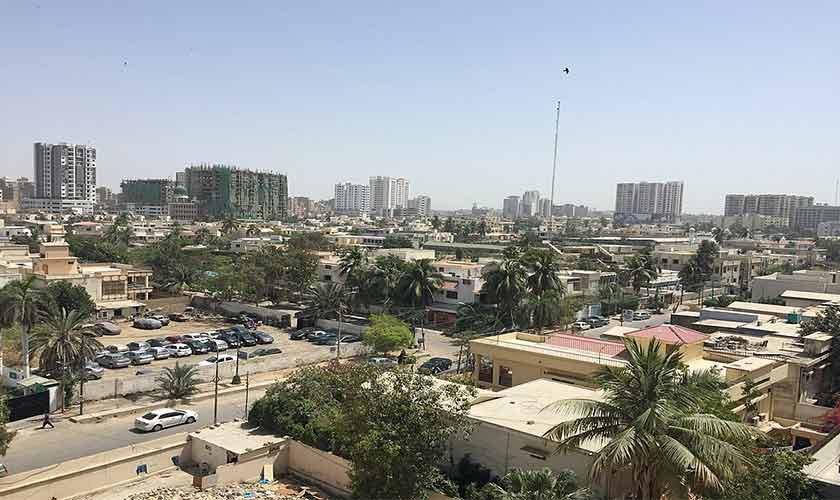
A visit to North Nazimabad, Federal B Area or Gulshan-i-Iqbal will reveal oddly designed and poorly built structures in plain view. Building regulations tag such construction as illegal. Still, the trend is rising.
In the normal course of things, a city plan is prepared by the concerned planning agency. After obtaining and addressing stakeholder feedback, it is notified for public knowledge. Its enforcement is ensured by the concerned building control authority. Currently, Karachi Development Authority is leading the preparation of Greater Karachi Region Plan 2047. Discussions are taking place on the findings of the consultants.
The squatter settlements where many multi-storey buildings are located need thorough engineering assessment for structural fitness. Many more baseline interventions are needed to ensure the safety off all their residents.
It will be appropriate to leave such technical matters to be decided by the city planners with feedback from all interest groups including the general public. Altering the development pattern of our neighbourhoods through arbitrary rulings is not a good idea. One should not forget the many urban fire disasters that played havoc with the city in recent times. Many of these buildings were found to have been in zoning violations.
The status of our building stock, especially multi-storey buildings, is highly dubious. Only a small fragment of building stock can be categorised as properly designed and carefully constructed. Planned neighbourhoods in the South, East and North-east are examples of this. However, many structures raised in the city for residential, commercial, manufacturing and other purposes have not received any design and supervision input.
Dozens of such structures have been assessed post-construction and found dangerous by various committees. Still many remain occupied. The inner city and southern squatters are expanding their footprint. Many families agree to live in the unsafe buildings to save on high cost transportation costs. Lack of accessibility for fire tenders, ambulances and other emergency vehicles is a frequent failing. When such buildings collapse, delayed rescue causes avoidable loss of lives.
Squatter settlements with multi-storey construction require thorough engineering assessment for structural fitness. Many more baseline interventions are needed to ensure the safety of their residents. Detailed built environment assessment is one option.
The buildings must be inspected and analysed for their current status: occupancy and utility; structural stability; safety provisions including fire escapes, exit ways and firefighting systems; design and retrofit exercises; potential hazards points comprising electricity boards, gas installation and harmful storages; parking lot study; and hazard assessment of micro-environment in which the building is located. Safety standards must be developed and strictly enforced.
The appraisal of under-construction buildings and building plans need to be undertaken in a similar manner. Information pertinent to hazardous activities must be obtained on the town level. With excessive outages of utility gas supply, many people are using LPG cylinders without adequate precautions.
Change of land use is a challenge that city authorities and common citizens come across on a daily basis. Irresponsibly altering the status of existing neighbourhoods by changing one type of use with the other can lead to disasters that are all too familiar. All such situations require careful re-zoning exercises.
It is hoped that Karachi’s development decisions will be taken for public good, not selfish gains of a few.
The writer is an academic and researcher based in Karachi