Print Story
X




Does this budget constitute a social protection system or a collection of fiscal instruments that leave underlying risks largely intact?
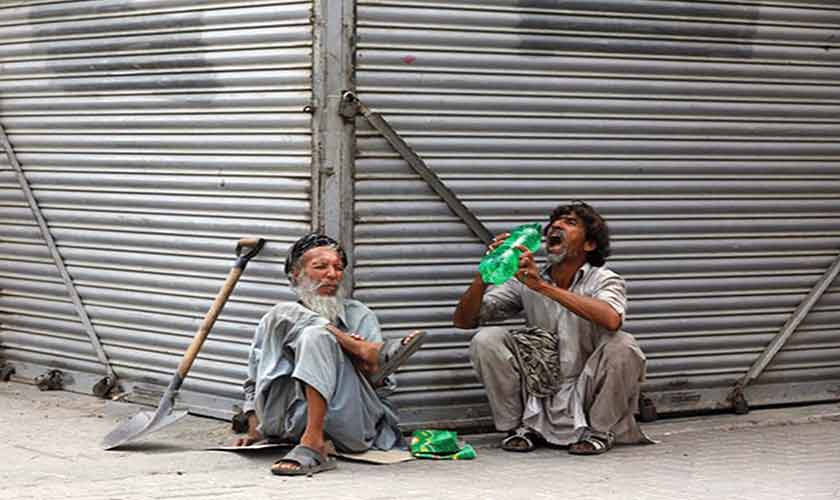
Social protection exists for a specific purpose: to manage risks that individuals cannot manage themselves. Job loss, illness, climate shocks, sudden price volatility, the erosion of savings by inflation are not failures of a personal character but structural vulnerabilities that markets produce and states undertake to cushion in return for taxation and civic compliance. The test of a social protection system is not whether it spends money. It is whether it coherently addresses risk across the full spectrum of vulnerable citizens.
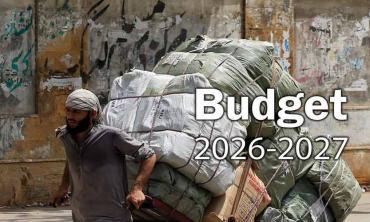
The federal budget for 2026-2027 allocates Rs 857 billion under the social protection head—just over eleven percent of what the federal government spends once debt servicing and defence commitments are set aside. By standards of lower-middle-income countries in this region, this is not a modest allocation.
A closer reading of where it goes, and where it doesn’t, raises a question the headline numbers obscure: does this budget constitute a social protection system or a collection of fiscal instruments serving different purposes while leaving the underlying risks largely intact? The numbers, as we shall see, suggest the latter.
Begin with what the budget does spend on social protection. Of the Rs 857 billion allocated under this head, Rs 838 billion—97.8 percent—flows to the Benazir Income Support Programme. The BISP, by standards of comparable economies, is a genuinely impressive targeting achievement. It reaches registered households at scale, with reasonable administrative efficiency. So what can the BISP not do?
A cash transfer puts money in a household’s hands each month. What it cannot do, by itself, is change what that household can earn next year. The budget line that was designed to do exactly that—the National Poverty Graduation Programme, conceived to give BISP beneficiaries the skills, assets and small business support needed to eventually stand without the transfer—has been allocated zero rupees this year. Last year, it was allocated a budget of Rs 230 million, a figure already too small to register as serious policy. It has now been eliminated entirely. The poverty graduation programme for extremely poor and flood-affected households has fallen from Rs 9.7 billion to Rs 0.5 billion. The National Vocational and Technical Training Commission, the principal federal institution for vocational and technical training, has also been zeroed out.
These graduation mechanisms were never funded at a scale to have mattered—this budget has stopped pretending otherwise. What remains is a programme that pays out reliably each month but builds nothing: no skills, no assets and no pathway to a different life. The state has, in effect, decided that success in social protection means keeping people supported, not making fewer people dependent.
This matters beyond the question of fiscal efficiency.
A social protection framework that offers no pathway upward is not neutral in its effects. It defines a category of citizens—the registered poor—and holds them there. The language of graduation, which appears in the programme’s own name, has been drained of content.
The budget’s treatment of risk does not, however, stop at the BISP boundary. Social protection takes different forms and one of them is the implicit commitment the state makes when it actively encourages citizens to take on irreversible financial obligations.
A cash transfer puts money in a household’s hands each month. What it cannot do is change what that household can earn next year.
For nearly a decade, the government promoted rooftop solar adoption as national policy, making the investment financially viable through a net metering framework under which households were compensated for surplus electricity fed back to the grid. In February 2026, that framework was replaced and the compensation rate reduced significantly. Now there is reported consideration of a capacity-based tax on solar installations. The household cannot uninstall its panels. It cannot recover its capital. It has absorbed a risk—at the state’s invitation—that it now cannot manage alone.
Whether or not such a tax is ultimately imposed, the signal it sends is damaging: it tells citizens that acting in good faith on state policy is a risk itself. That is precisely the condition social protection frameworks exist to prevent.
Contrast this with what the budget does protect. The power sector receives Rs 830 billion in subsidies. The inter-DISCO tariff differential alone accounts for Rs 248 billion—a universal provision that, by arithmetic, transfers proportionally more to households with higher consumption. The Export Refinance Scheme markup subsidy has risen from Rs 30 billion to Rs 88 billion in a single year. The Prime Minister’s Apna Ghar housing finance stands at Rs 71 billion. These are not inherently indefensible instruments. But they are instruments that direct fiscal resources towards the commercially active and the high-consuming, in a budget that simultaneously eliminates poverty graduation and zeros out vocational training.
Government employees—formal, organised and state-employed—receive a 7 percent increase in salaries and pensions. This, too, is a form of social protection: income security for a defined class of citizens. It is a reasonable provision. What it illustrates, in the context of everything else, is that the budget’s protective instincts are reliable when the beneficiary is visible, organised and administratively legible. The informal worker; the private-sector employee without a pension; the small vendor absorbing inflation without a salary revision—these citizens do not have a budget line.
What emerges from this reading is not a social protection system. It is a fiscal configuration with three distinct logics operating in parallel: maintenance for the registered poor; support for the commercially powerful; and security for the formally employed. These three groups are served with varying degrees of generosity by instruments calibrated to their respective political and administrative visibility.
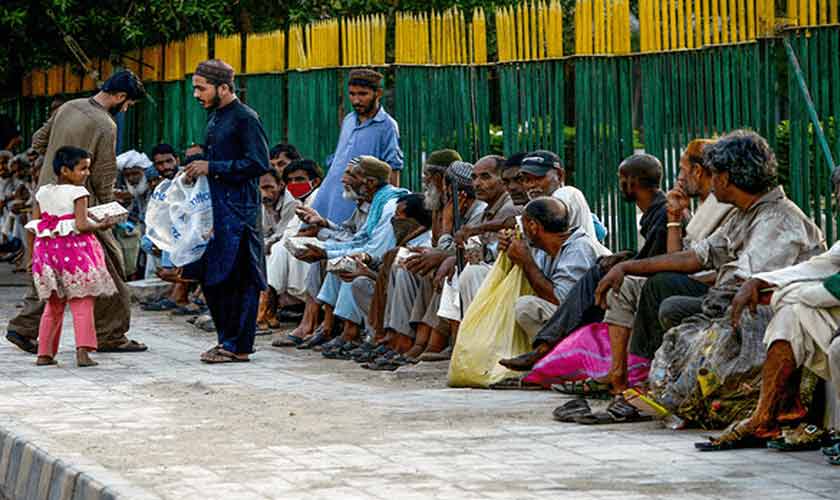
The remainder of the population—those attempting to move; to invest; to build something that the state has not yet categorised—encounter a budget that has not yet developed a framework for them. This is not an argument for more spending. It is an argument for a different kind of thinking: one that asks not only how much the state spends on social protection but what theory of the citizen underlies that spending.
A transfer that maintains poverty is not the same as a policy that addresses it. A subsidy that flows to the powerful is not the same as protection for the vulnerable. A safety net designed only for those who have already fallen is not a net, in any meaningful sense. It is a floor. Pakistan’s social protection budget is, in places, a generous floor. What it is not yet is a system.
The writer is a professor in the Department of Economics, COMSATS University Islamabad, Lahore Campus.