Print Story
X




Scepticism and concern over the federal budget overshadow cautious optimism in the agricultural sector
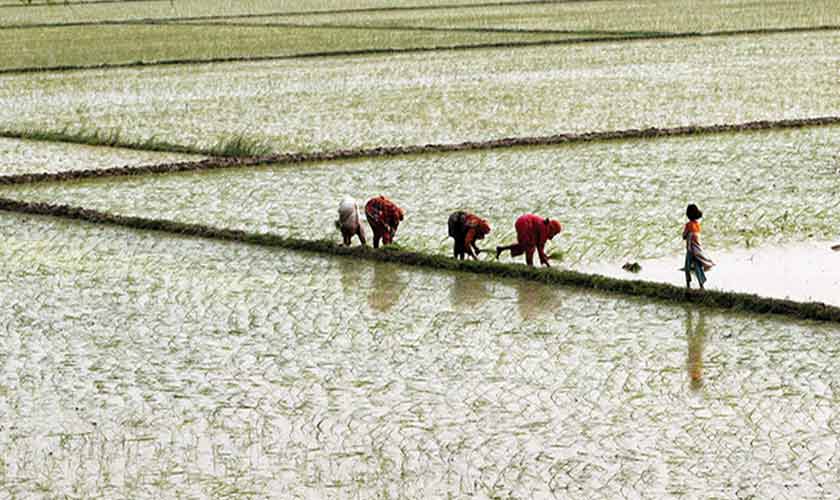
Mehmood Nawaz Shah, president of the Sindh Abadgar Board, sat patiently through the finance minister’s budget speech. In the end, he says, he was disappointed.
“He only mentioned agriculture by name, offering no actual interventions,” says Shah. His disappointment reflects a structural reality that industry leaders, exporters and farming advocates say could push food inflation higher in the months ahead.
The budget arrived at a precarious moment for the agriculture sector. Input costs have spiralled up. Commodity prices have collapsed relative to input costs. The climate change, already punishing for farmers across the Indus basin, continues to deliver uncertainty.
Shah says, urea, the price of workhorse fertiliser for millions of smallholders, has climbed from Rs 1,700 per bag a few years ago to over Rs 4,500 today. Di-ammonium phosphate (DAP) has surged from Rs 3,700 to Rs 16,000-Rs 17,000. Over the last four months alone, urea rose from Rs 4,350 to Rs 4,600. Diesel oil, which drives tube wells and farm machinery, has jumped from roughly Rs 284 to around Rs 380 per litre.
Meanwhile, what farmers actually receive for their produce is a scary story.
Wheat, officially priced at Rs 4,000 per 40 kgs by both the Federal and Sindh governments in 2025, fetched only Rs 3,200 to Rs 3,300 in practice, Shah says. Rice, Sindh’s flagship export, was priced at Rs 4,500 two years ago. Last season, growers received Rs 2,200 to Rs 2,400.
“Input costs have risen sharply while returns have shrunk,” Shah says. “Even if prices remain the same, profits fall because input costs are higher.”
The macroeconomic paradox is striking. Even as headline inflation reached 22 percent, agricultural commodities experienced deflation. Shah says he put the contradiction directly to the prime minister: how can farm sector prices fall when everything else is dearer? The question, he says, went unanswered. His reading is that the budget did not address it either.
“The situation is critical,” Shah says. “The government has announced no specific interventions to control input costs, improve efficiency, provide facilities or offer tax rebates—absolutely nothing.”
Shams-ul Islam Khan, a board member of the Rice Exporters Association of Pakistan, shares the pessimism. With food carrying substantial weight in Pakistan’s consumer price index, higher production costs for wheat, rice, sugar and vegetables will raise retail prices, he argues.
“Inflation, currently around 12 percent, may surge to 15 percent if crude oil prices remain at current levels ($80 to $83 per barrel) and the petroleum development levy stays unchanged, posing challenges for consumers and policymakers alike,” Khan warns.
The silence on cotton is particularly alarming, Khan says. Production has fallen to near five million bales—far below the historic yield. Yet there is no roadmap for recovery. Food security, he says, is not being treated as a national priority.
Khan points to a structural distortion that makes Pakistan’s rice exports increasingly uncompetitive internationally. Hoarders purchase paddy at the start of the season, accumulate stocks and drive up prices, inflating export costs. Provincial governments, he says, must enforce regulations requiring licensed rice shellers, millers and exporters to buy directly from growers and mandis, not from middlemen.
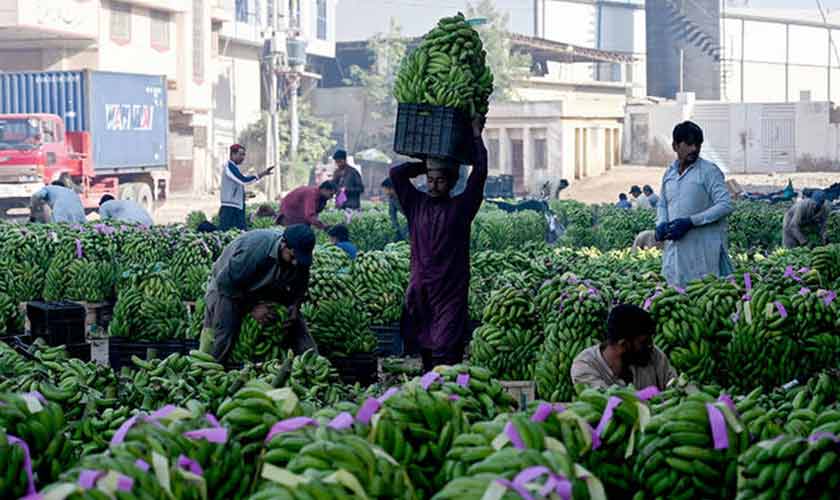
The agriculture sector, which is facing significant challenges, has been largely overlooked,” says Waheed Ahmed, the All Pakistan Fruit and Vegetable Exporters Association’s patron-in-chief, urging the government to take “immediate and practical steps.”
The existing export support mechanism, the Duty and Long Term Finance cash incentive paid at the port stage, has failed to boost rice exports despite production approaching 10 million tonnes, Khan says. He says that such incentives should instead be channelled directly to growers to reduce their input costs, allowing Pakistani rice to compete with Indian produce that benefits from input subsidies of up to 86 percent.
Not all voices are negative.
Waheed Ahmed, the All Pakistan Fruit and Vegetable Exporters Association’s patron-in-chief, acknowledges several welcome measures in the budget, including the allocation of Rs 88 billion under the Export Refinance Scheme which, he says, will enable exporters to access financing at lower costs. He also welcomes Rs 1 billion in development funding and the abolition of super tax on income between Rs 150 million and Rs 500 million.
His concerns lie elsewhere. He is disappointed that the government reduced minimum and advance tax on exports but stopped short of abolishing those. Also, he says, the budget contained no incentives for alternative energy, despite an ongoing energy crisis that keeps production costs elevated. Exports have not been included in the fixed tax regime, despite advocacy by stakeholders.
“The agriculture sector, which is facing significant challenges, has been largely overlooked,” Ahmed says, urging the government to take “immediate and practical steps” to support horticulture and the broader export sector.
One positive measure that drew more consistent praise is duty relief on grain silos and warehousing infrastructure. Khan acknowledges its potential to reduce post-harvest losses, improve inventory management and reduce seasonal price volatility.
The post-budget announcement of customs duty waivers on agricultural machinery imports also drew cautious appreciation from Shah, who describes mechanisation as a broadly positive direction even as he wondered how evenly its benefits would be distributed.
The government’s flagship scheme for the sector covers four to five percent of the total farming population, says Shah. A budget speech lasting over an hour found little time for agriculture.
“Nothing else was mentioned,” Shah says.
The writer is a senior financial correspondent at The News. He holds Alfred Friendly, Daniel Pearl and Geo Journalism fellowships. He can be reached at [email protected].