Print Story
X




Budgetary allocations in health suggest emphasis on hospitals and specialised facilities and little investment in preventive healthcare, disease surveillance and population health outcomes
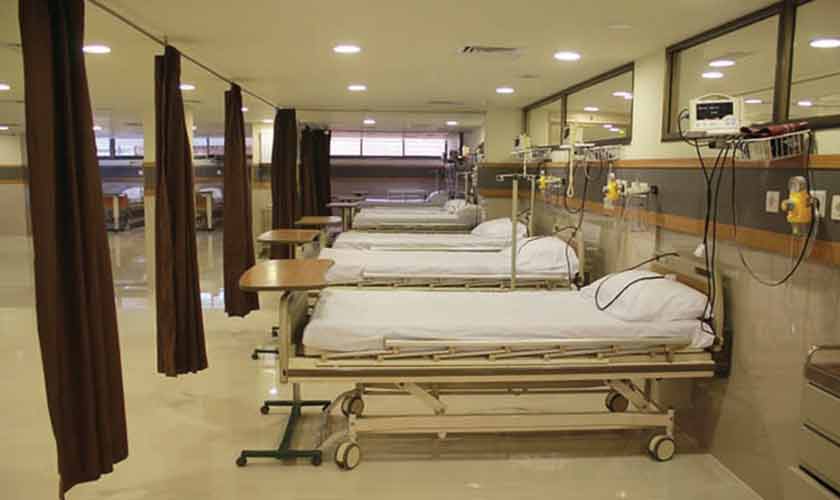
Despite unveiling a substantially larger health budget for the financial year 2026-2027, the federal government appears to have doubled down on an infrastructure-heavy approach, which public health experts warn may do little to address Pakistan’s most pressing health challenges.
The federal government’s overall health-related allocation has increased to Rs 53.3 billion for the upcoming fiscal year, a significant rise from the revised allocation of Rs 14 billion and original allocation of Rs 16.5 billion in 2025-2026. While the increase signals greater fiscal commitment to the sector, the pattern suggests a continued emphasis on hospitals, buildings and specialised treatment facilities, with comparatively little investment in preventive healthcare, nutrition, disease surveillance and population health outcomes.
Budget documents show that the Ministry of National Health Services, Regulations and Coordination has been allocated a core budget of Rs 22 billion, including Rs 20.7 billion from local resources and Rs 1.3 billion through foreign assistance. The ministry’s financial envelope stands at Rs 53.29 billion, comprising Rs 37.22 billion in current expenditure and Rs 16.06 billion in development spending under the Public Sector Development Programme.
The federal PSDP has allocated Rs 24.3 billion to the health and nutrition sector, with the NHSRC Division receiving approximately Rs 16.06 billion. Health continues to occupy a modest place in the government’s development priorities, accounting for only 2.2 percent of the total social-sector allocation of Rs 187.2 billion.
A closer look at the development portfolio reveals where much of the money is headed. The government has earmarked Rs 2 billion for the Jinnah Medical Complex in Islamabad. Additional funding has been allocated for land acquisition for the Medical City project under the National University of Medical Sciences. More than Rs 1 billion has also been set aside for the upgradation of the Federal Government Service Hospital (Polyclinic) and the Pakistan Institute of Medical Sciences.
Specialised tertiary-care facilities continue to receive significant support. The Armed Forces Institute of Cardiology and the National Institute of Heart Diseases are expected to receive between Rs 1 billion and Rs 1.5 billion while Rs 1.5 billion has been allocated for equipment procurement at the Islamabad Cancer Hospital.
The government has also maintained funding for select national programmes. The Prime Minister’s National Health Programme has been allocated Rs 3.065 billion; Rs 800 million has been earmarked for universal health coverage in the federally administered areas. Programmes targeting tuberculosis, HIV and malaria have received Rs 500 million through the Common Management Unit.
Some public health specialists have, however, questioned whether these allocations are proportionate to the needs in terms of the country’s disease burden. Pakistan continues to carry one of the world’s highest tuberculosis burdens while also facing an expanding hepatitis C epidemic estimated to affect around 10 million people. Yet, the Common Management Unit responsible for TB, HIV/ AIDS and malaria has been allocated only Rs 500 million.
Similarly, the One Health Workforce Development Programme, aimed at strengthening preparedness against emerging health threats, has been allocated Rs 99.9 million, raising concerns about the country’s capacity to respond to recurring outbreaks of polio, dengue fever, measles and Mpox. The Drug Control Section, meanwhile, has been allocated Rs 144 million despite growing concerns over medicine regulation and pharmaceutical oversight.
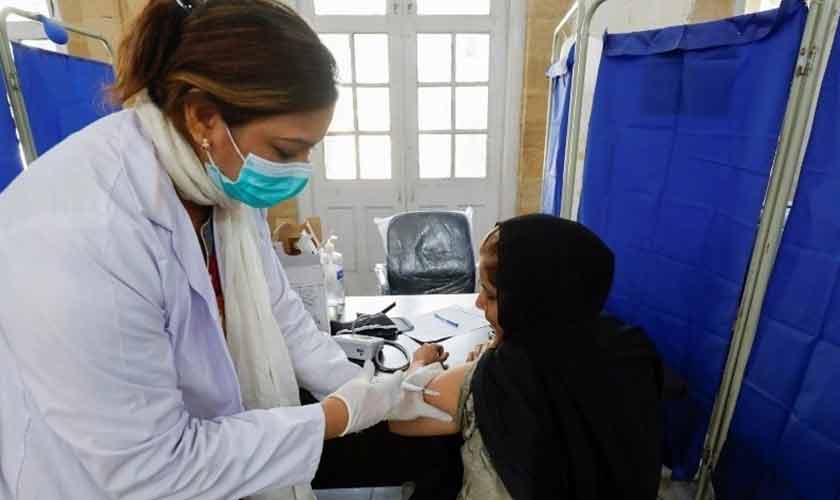
The Drug Control Section has been allocated Rs 144 million despite growing concerns over medicine regulation and pharmaceutical oversight.
Analysts note that the budget’s infrastructure-heavy orientation extends beyond the current fiscal year. Ongoing federal health schemes now carry throw-forward liabilities exceeding Rs 121 billion, effectively committing future governments to finance existing construction and infrastructure projects for years to come, leaving limited fiscal space for emerging public health priorities.
The budget also proposes several policy measures, including the removal of duties on pharmaceutical active ingredients and tax exemptions on contraceptives and sanitary products. Officials say these measures could improve affordability and expand access to reproductive health services.
However, some experts argue that fiscal incentives alone cannot compensate for the lack of direct investment in population welfare and family planning programmes.
While population stabilisation has increasingly been recognised as a central economic and development priority, demographic experts say public spending has yet to reflect that reality. Ikram-ul Ahad, manager communication at Population Council, highlights what he describes as a disconnect between demographic trends and public financing priorities.
“Pakistan continues to grow at around 2.5 percent annually, yet investment in population welfare remains a very small share of the public budget compared with other countries in the region,” he says.
Ahad says that evidence and demographic data should be used more effectively to hold policymakers accountable to national commitments. “Family planning is among the most cost-effective public investments, with clear returns for health, economic stability and human development,” he says, calling for greater attention to strengthening frontline systems, particularly the Lady Health Worker programme.
Echoing similar concerns, senior economic advisor Ammar Ali Qureshi argues that population stabilisation should be viewed as a national economic imperative rather than a health-sector issue.
“Population stabilisation is not merely a demographic concern; it is a macroeconomic necessity,” he says, adding that the country’s declining economic trajectory reflects the combined pressures of rapid population growth and broader structural economic challenges.
The Pakistan Medical Association has been even more critical in its assessment, warning that a combination of misplaced budgetary priorities and rising inflation has pushed the country into what it describes as a public health emergency.
According to the association, the budget critically underfunds the mechanisms needed to address a silent but widespread maternal and child nutrition crisis.
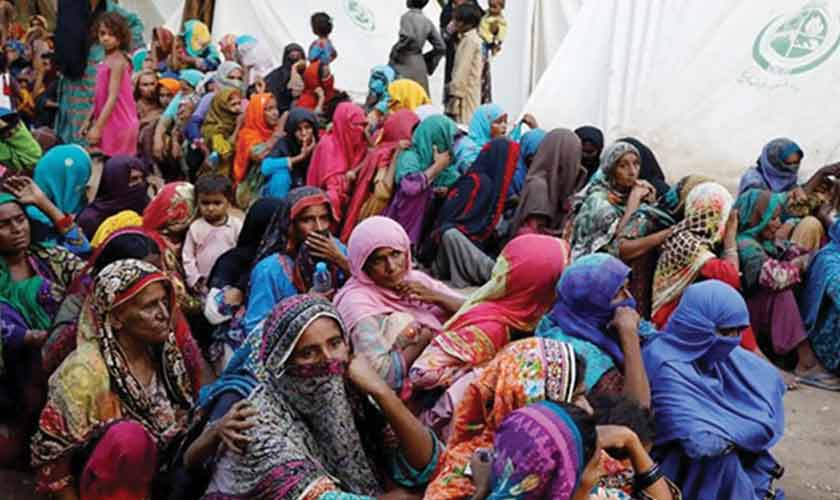
“On one hand, inflation is stripping families of the ability to afford basic milk, meat and vegetables and on the other, the federal government is spending 70 percent of its healthcare resources on brick-and-mortar operations and specialised tertiary care, virtually abandoning prevention, disease surveillance and nutrition defence,” the PMA said.
The criticism highlights a broad concern among health experts that despite the sizeable increase in overall allocations, maternal and child nutrition, primary healthcare, disease prevention, health surveillance systems, workforce retention and community-level services remain underfunded. As a result, they argue, the budget risks reinforcing a treatment-oriented model that responds to illness after it occurs rather than investing in systems that prevent disease and improve population health.
The 2026-2027 budget, therefore, presents a mixed picture. It delivers a substantial increase in health-sector spending and continues support for universal health coverage and disease-control programmes. Yet, with health accounting for only 2.2 percent of social-sector spending and a significant share of resources tied to hospitals and infrastructure, critics say the federal government has once again prioritised visible construction projects over the less visible—often more effective—investments in prevention, nutrition, family planning and community healthcare.
The writer is an investigative journalist associated with The News International, Pakistan. An EWC and GIJN fellow, he contributes to various international media outlets. His X handle: @AmerMalik3.