Print Story
X




Replacing the annual evaluation cycle with the semester system in private schools has reduced stress on students
| T |
he Khyber Pakhtunkhwa government is moving head with a series of actions aimed at improving learning outcomes, standardising assessment practices and strengthening coordination between public and private schools across the province.
The initiatives were discussed and approved in principle during the 25th meeting of the Private Schools Regulatory Authority board, chaired by Elementary and Secondary Education Secretary Muhammad Khalid Khan. The meeting reviewed a number of proposals designed to enhance learning quality, modernise assessment systems and provide support to private schools facing financial and operational challenges.
Addressing the meeting, Khalid Khan said the government remained committed to promoting quality education and creating a learning environment that supports the academic and personal development of students.
“Providing students with a modern, safe and conducive learning environment remains one of the government’s top priorities,” he said. “We are working closely with private educational institutions to introduce reforms that improve teaching standards while ensuring better learning opportunities for students.”
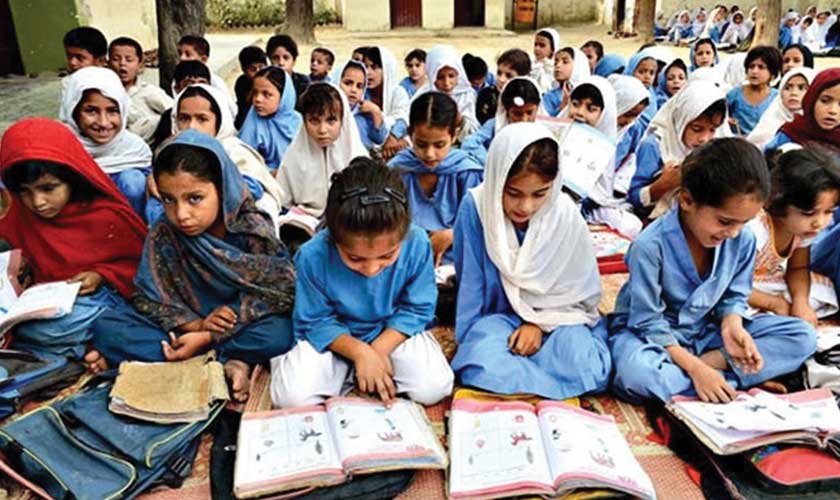
The PSRA board also welcomed the provincial government’s decision to extend the semester system to private schools following its introduction in the public sector. The reform is expected to bring greater uniformity to academic planning and align educational activities with the climate of various regions of the province.
According to Khalid Khan, separate academic calendars have been developed for Summer Zone and Winter Zone schools to ensure that teaching and learning activities take place during periods most suitable for students and teachers.
“The extension of the semester system to private schools aims to establish greater uniformity in academic planning across the province, improve continuity in learning and align educational practices between public and private sectors,” he said.
He said that a semester-based structure distributes academic activities more evenly throughout the year; reducing lengthy interruptions and helping students remain academically engaged.
“The reform is intended to create a more organised academic framework in which curriculum delivery, assessment, co-curricular activities and vacations are planned in a systematic manner, enabling schools to focus on quality learning outcomes,” he added.
The semester system can also improve academic planning by allowing schools to monitor students’s progress more regularly and identify learning gaps before they become serious obstacles to achievement.
The new academic calendar has a common vacation period from July 1 to July 31, during which both Summer Zone and Winter Zone schools will remain closed.
“This window provides an opportunity to organise inter-zonal summer camps involving students from various parts of the province,” Khalid Khan said.
Under the proposal, selected schools in Winter Zone districts may host students from Summer Zone districts in batches for educational, recreational and cultural activities. The camps could include sports competitions, debates, science and innovation projects, arts and cultural programmes, hiking expeditions, environmental awareness activities, leadership training exercises and educational tours.
The initiative is meant to promote social cohesion by bringing together students from diverse geographical, linguistic and cultural backgrounds. “The interaction is expected to promote tolerance, understanding, social cohesion and a stronger sense of provincial identity among young learners,” Khalid Khan said.
Another plan discussed during the meeting was the extension of the school-based assessment (SBA) system to private schools. The assessment framework is already operational in public-sector schools for Grades 3 to 8 and has been designed to measure student learning outcomes in English, mathematics, Urdu and general science.
The system includes a curriculum-aligned digital item bank, automated examination paper generation, standardised answer keys and marking rubrics, electronic report cards and detailed performance analytics.
“At present, there is limited standardised information regarding student learning outcomes in private schools. This makes it difficult to assess educational quality province-wide and limits evidence-based policymaking,” Khalid Khan said.
The meeting was informed that a Digital Item Bank and automated examination paper generation system would also be introduced in private schools. The initiative is expected to enhance transparency, consistency and efficiency in examinations by reducing dependence on individual paper setters and ensuring that assessments remain aligned with curriculum standards.
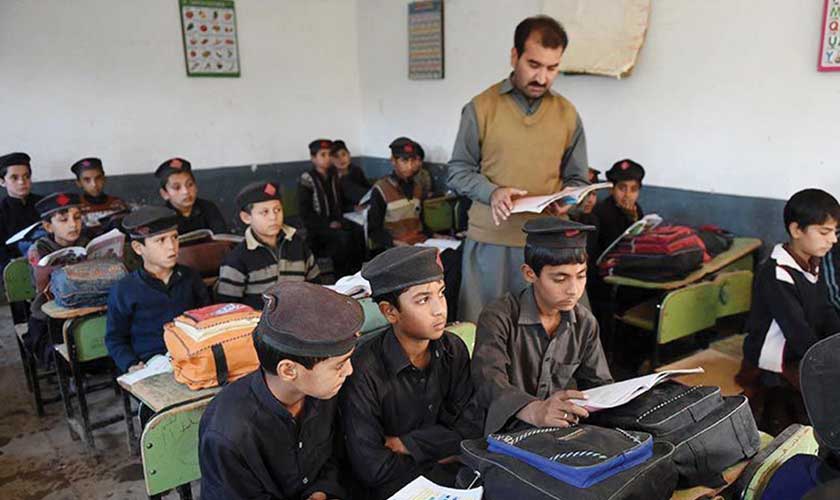
“The system contributes to transparency by generating examination papers from a large curriculum-aligned question bank, ensuring uniformity in assessment standards and providing standardised answer keys and marking rubrics,” Khan said.
Private schools are also expected to benefit from access to professionally developed assessment resources and learning analytics that can help identify student strengths and weaknesses. Teachers will thus spend less time preparing examination papers and marking schemes, allowing them to focus more on classroom instruction and student support.
Students are likely to benefit from more transparent assessments that measure actual learning outcomes rather than relying primarily on subjective evaluation methods. “Performance data will help teachers and parents identify areas requiring additional support and improvement,” the secretary said.
The availability of province-wide assessment data is expected to strengthen the regulatory role of the PSRA by providing evidence-based information about educational quality and student achievement in private schools.
Khalid Khan emphasised that both the semester system and the SBA would be implemented in consultation with private-school representatives and parents.
“The implementation process will remain consultative and inclusive, ensuring that the concerns and suggestions of private-school stakeholders are duly incorporated,” he said.
Murad Jan, a headmaster at a government primary school, said the semester system had already produced positive results in public schools by reducing the academic burden on students. Speaking to The News on Sunday, he said the division of the syllabus into two manageable segments had made learning easier for children.
“Under the annual examination system, students had to prepare the entire year’s syllabus for one examination. With the semester system, students take mid-term and final examinations, covering only half of the syllabus,” he said.
“This allows them to focus on a smaller portion of the curriculum, improves their understanding of the material and reduces the stress associated with year-end examinations.”
He suggested that separate textbooks be introduced for each semester, particularly for students from nursery to Grade 2.
“By the time the second semester begins, some of thebooks have been worn out,” he said. “Children often find it challenging to keep their textbooks in good condition for a whole year. If separate books were provided for each semester, it will make learning easier for students.”
Nabeela, a mother of four, says her children are enrolled in a private school where the administration has already introduced the semester system. “The results have been positive. My children are able to complete the entire syllabus with less stress,” she said. “The system has made learning easier and more manageable for them.”
The writer is a multimedia producer. He tweets @daudpasaney