Print Story
X




Despite years of renewed optimism, Pakistan’s film industry remains far from a sustained recovery
| T |
he release of just three films this Eid-ul Azha has once again exposed the fragile state of Pakistan’s film industry. Much more was expected after years of policy interventions, incentives and promises of revival. Yet the holiday line-up remained modest and only Zombied appears to have generated significant attention. The fate of the other two releases, Luv Di Saun and Psycho, remains uncertain. Even if all three do well at the box office, three films do not constitute an industry revival.
Historically, Eid holidays have been the most important release windows for Pakistani cinema. In pre-Partition India, films were often launched during major festivals and public holidays. Fridays gradually became the standard release day. In Pakistan, despite the enormous challenges that followed Partition, the film industry recovered remarkably quickly. The 1950s, 1960s and 1970s proved to be its golden decades, when filmmaking was a viable commercial enterprise.
One factor behind this growth was the ban on the public exhibition of Indian films in 1954, following what became known as the Jaal controversy. Protected from external competition, local production expanded and film output reached levels that made cinema an attractive business proposition. Producers, distributors and exhibitors all had sufficient incentive to invest in the industry.
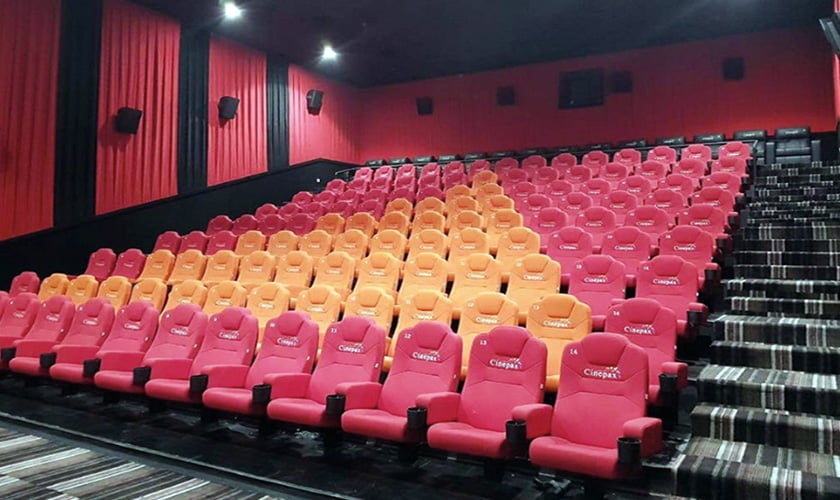
Since then, however, both the quantity and quality of local film production have declined. Numerous policy initiatives have failed to reverse the trend. The eventual return of Indian films to Pakistani screens helped revive cinema-going, encouraging audiences back into theatres after years of home viewing. The arrival of modern cine-plexes further improved the viewing experience and attracted a new generation of moviegoers.
Yet policy towards cinema has remained inconsistent. Decisions have often been shaped by political considerations rather than long-term cultural or commercial planning. At the same time, cine-plexes transformed cinema from an affordable form of mass entertainment into a relatively expensive leisure activity. The working-class audiences that once filled the lower stalls and determined the success or failure of a film have largely been priced out of the market. No comparable audience base has emerged to replace them.
The question is not whether a handful of films can succeed during a holiday season. The real challenge is whether Pakistan can rebuild the conditions necessary for a sustainable film industry.
This has serious consequences for the economics of filmmaking. Without a sufficiently large and reliable audience, cinema struggles to become a sustainable business. Private investment inevitably declines when the prospects of commercial success remain uncertain.
Film academies, film cities and various incentive schemes have also failed to deliver the transformation that was promised. In some cases, the problem has been weak implementation; in others, initiatives appear never to have moved beyond official announcements and policy documents. Good intentions alone cannot rebuild an industry.
There is another challenge as well. Some argue that the era of cinema as we have traditionally known it is coming to an end. Streaming services, digital platforms and new forms of entertainment have fundamentally altered viewing habits around the world. Established film industries may be better equipped to absorb these changes, but smaller and more vulnerable industries face a far greater threat. Pakistan’s film sector, weakened by decades of decline, is confronting technological disruption at a moment when its foundations remain uncertain.
The question, therefore, is not whether a handful of films can succeed during a holiday season. The real challenge is whether Pakistan can rebuild the conditions necessary for a sustainable film industry. Until that happens, every Eid will bring the same hope and the same disappointment.
The writer is a culture critic based in Lahore.