Print Story
X




Actor Sanam Saeed and designer Hussain Rehar made a striking debut at the Cannes Film Festival this year, bringing South Asian craftsmanship and cultural storytelling to one of the world’s most photographed stages.
| H |
eld on the French Riviera from May 12 to May 23, Cannes welcomed actors, filmmakers and fashion figures from around the globe. But while the red carpet was filled with the usual luxury gowns and classic European fashion houses, Sanam Saeed and Hussain Rehar chose a different path. Instead of simply chasing a flashy headline, they stood out by showcasing something deeply rooted in Pakistani heritage.
One of Pakistan’s most recognisable actors, Saeed first rose to prominence through theatre before becoming a household name with Zindagi Gulzar Hai. Known for balancing mainstream success with more unconventional projects across film, television and stage, Saeed arrived at Cannes with a fashion narrative focused heavily on history and craftsmanship.
For her first major red-carpet appearance, Saeed wore an elaborate ivory couture ensemble designed by Hussain Rehar, inspired by the white peacock and covered in traditional Mukesh, zardozi and mirror work. The look reportedly required more than 2,300 hours of artisanal labour by 50 craftsmen, including women artisans in Bahawalpur who hand-embroidered the metallic Mukesh detailing. The ensemble, styled with statement jewellery by Hanif Jewellers and fresh flowers woven into her hair, immediately stood out on the red carpet. Saeed later shared a lovely behind-the-scenes detail about the flowers. They were handpicked from a garden in Lahore by a young helper named Samah and then lovingly strung together by her mother.
Reflecting on her debut at Cannes, Sanam Saeed wrote in an Instagram post, “This was my third call to Cannes. I couldn’t make it previously because the dates never aligned, but this time it finally happened. I couldn’t be more proud of how we represented ourselves there. I didn’t go as an ambassador for a brand, I didn’t go as part of a film team, I went as a South Asian woman representing Pakistan, our heritage and our craft.”
The ivory outfit also carried emotional significance. In an Instagram post ahead of Cannes, Saeed described Shamim Ara as “the icon that paved the way for many of us”, reflecting on her legacy as an actor, producer and director who quietly broke barriers for women in Pakistani cinema. “She never got an invitation to Cannes, but her work made mine possible,” Saeed wrote, dedicating her appearance to the generations of women who came before and after her.
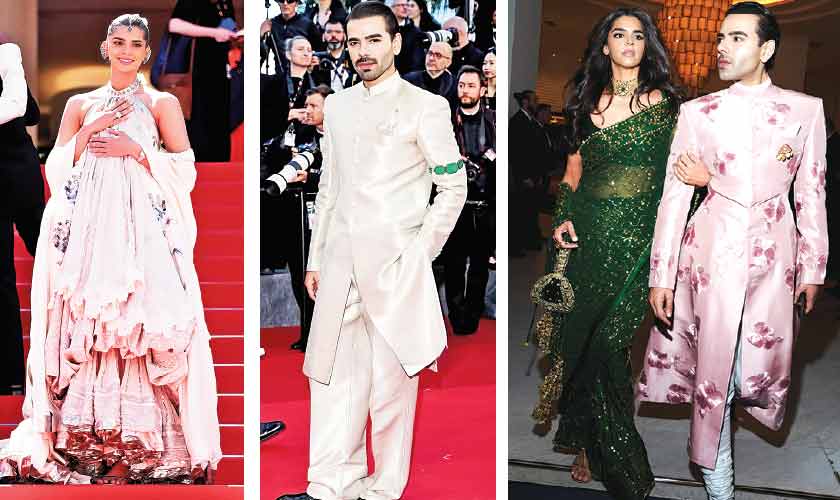
Meanwhile, Rehar made his own statement in a custom handwoven sherwani made from light-gold tissue silk. It was created in Lahore by 15 master artisans under Rehar ’s close direction, reinterpreting classic South Asian royalty for the global stage. He finished the look with an emerald green Imam Zamin amulet tied around his arm for protection and blessings.
“Cannes is more than a red carpet. It’s a global conversation of art, film and culture,” Rehar said of the experience. “The inspiration came from the people around me, from culture, architecture, old memories, music and moments. Every embroidery, every texture, every construction choice was created to feel timeless and relatable. This is not just a showcase. It’s a reflection of where we come from and where we’re headed.”
His Cannes debut also coincided with an exclusive, invite-only showcase, Lahore – A Knot in South Asia’s Loom, held at the stunning Château St Georges. The exhibition focused on “decolonising fashion’s origin story,” putting Lahore’s rich textile history and craftsmanship within the global luxury conversation.
Using Mughal-inspired silhouettes, handwoven fabrics and intricate embroidery traditions, the presentation explored how South Asian aesthetics are often absorbed into international fashion houses without proper acknowledgement. Instead of treating heritage like a relic of the past, Rehar presented it as an evolving art form.
Beyond the main red carpet, Saeed and Rehar continued to build a carefully curated fashion narrative throughout the festival.
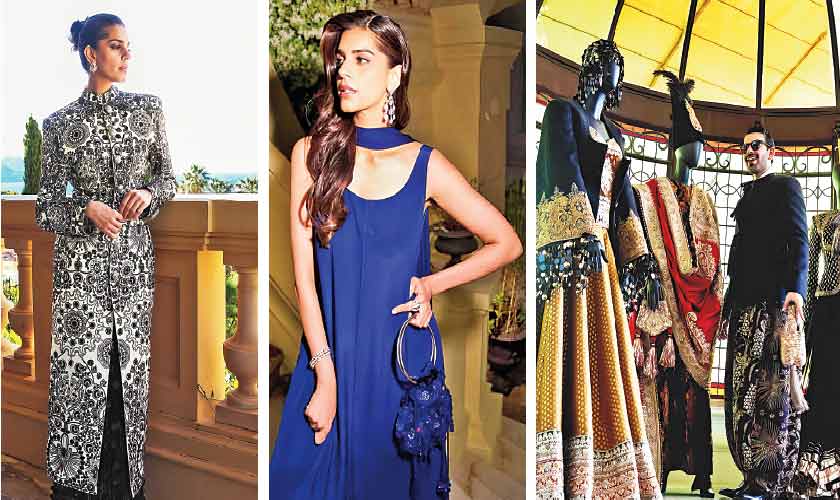
For one of her earlier looks, Saeed wore an electric blue two-piece from Rehar’s Neelam by Jeevan line, featuring a wide neckline, sleeveless silhouette and playful tassels that created a gradient effect. She paired it with a light chiffon dupatta finished with matching tassels.
Then, for an evening dinner, Saeed stepped out in a striking emerald-green draped saree by Rehar as well. The look quickly went viral online because it perfectly balanced traditional South Asian craftsmanship with the effortless elegance that international red carpets love. It featured intricate Mukesh work and metallic detailing created by 40 artisans, paired with a minimal satin blouse that allowed the craftsmanship to shine.
Rehar complemented the look in a blush pink raw silk chapkan embroidered with kacha resham floral work and paired with a traditional custom-made chooridar. It was a beautiful nod to Nawabi grandeur and heritage.
For another appearance, Saeed embraced a more structured aesthetic wearing a black-and-white sherwani-style long coat over a heavily beaded skirt, while Rehar wore a black-and-gold Eastern outfit, continuing their larger narrative of storytelling and South Asian pride alive on the world stage.
Together, these moments meant something much more than just pretty clothes. They showed that Pakistani design no longer arrives at global events looking for validation. It arrives with its own voice, history and confidence.
Elsewhere on the Cannes circuit
Cate Blanchett proved once again why she is one of the smartest dressers on any red carpet. Appearing in a sharply tailored black Louis Vuitton outfit, Blanchett relied on silhouette and presence rather than spectacle. Away from the cameras, Blanchett also spoke out about the ongoing importance of the #MeToo movement and the structural inequalities women still face within the film industry, reminding everyone that behind all the Cannes glamour, conversations about power and accountability continue to matter.
Meanwhile, French actor and filmmaker Charlotte Le Bon delivered one of the sharpest fashion moments of the festival. She wore a crisply tailored black suit layered over a white shirt, finishing the look with a chic scarf reminiscent of classic French cinema styling.
At the end of the day, fashion is the quickest way to tell a story at Cannes. Long before audiences sit down to watch the films, they see these images. And this year, alongside the global luxury brands and Hollywood regulars, two Pakistanis succeeded in telling one of the festival’s most memorable visual stories.