Print Story
X




Eid-related livestock management should be treated as a public health priority
| T |
he Eid-ul Azha sacrifice is one of Islam’s most profound religious obligations. Behind it lies a gravely underreported national governance crisis, one that involves animal disease surveillance, public health protection, environmental safety, municipal enforcement and the absence of modern livestock regulation.
Every year, an estimated 8 to 10 million animals — cows, goats, sheep and camels — are traded and slaughtered across Pakistan. This seasonal livestock economy generates hundreds of billions of rupees and mobilises an enormous network of farmers, transporters, traders, feed suppliers, veterinary staff, municipal authorities and local governments. Despite its staggering scale, Pakistan lacks a fully integrated national framework for monitoring sacrificial animals, tracing diseases, regulating slaughter, disposing of scientific waste and ensuring transparent governance of livestock markets.
The result is a dangerously unmanaged system — one that imperils public health, compromises animal welfare, degrades urban sanitation, threatens water safety and undermines economic transparency. Pakistan’s Eid-ul Azha management is not merely an administrative challenge. It is a public health emergency hiding in plain sight.
Among the most pressing concerns during the Eid season is the adequacy of animal disease surveillance and veterinary preparedness. In recent years, Pakistan has faced outbreaks and active threats from lumpy skin disease, foot-and-mouth disease, haemorrhagic septicaemia, tick-borne infections, parasitic infestations and the potentially fatal Crimean-Congo haemorrhagic fever. During the pre-Eid period, animals traverse thousands of kilometres through poorly monitored supply chains across provincial boundaries.
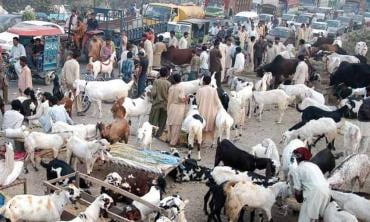
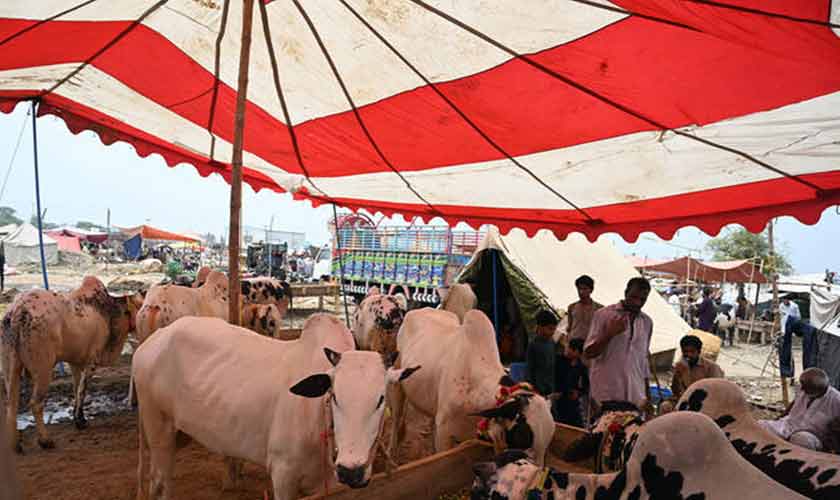
Temporary cattle markets emerge rapidly in urban and peri-urban areas with limited veterinary screening capacity, inadequate quarantine arrangements and no laboratory-backed diagnostic infrastructure. The rapid convergence of animals from diverse geographic origins in confined, crowded spaces creates conditions ideal for disease transmission and amplification. In many temporary markets, visual inspection continues to be the primary screening method, despite the clear and urgent need for vaccination verification records, laboratory-supported disease surveillance, digital animal traceability systems and emergency epidemiological response protocols.
The Punjab Livestock and Dairy Development Department occupies a uniquely critical position in Pakistan’s Eid management architecture. As the country’s largest livestock-producing province, the Punjab supplies a substantial proportion of sacrificial animals to major urban centres, including Lahore, Rawalpindi, Faisalabad, Multan, Gujranwala and Islamabad. Ahmed Aziz Tarar, the Livestock and Dairy Development Department secretary, says the department has significantly strengthened its veterinary arrangements, including round-the-clock veterinary camps, disease surveillance operations, anti-tick spray campaigns and treatment services at cattle markets and notified sale points and inter-provincial check posts.
During the previous Eid season, hundreds of veterinary officials treated thousands of animals and conducted spray operations covering more than a million livestock. This year, the department has expanded operations through enhanced field coverage, public awareness campaigns, the ADRS Farmers App, dedicated helpline services and improved veterinary facilities at 113 cattle mandis across the province. These interventions reflect sincere institutional commitment.
However, the scale of Eid-related livestock movement demands more: tightly integrated disease data systems, emergency veterinary monitoring cells, coordinated inter-district surveillance networks, real-time laboratory connectivity and digital livestock traceability mechanisms. Modern livestock governance cannot be sustained by seasonal deployments alone.
Pakistan’s premier agricultural and veterinary universities have historically made significant contributions to livestock governance. The University of Agriculture, Faisalabad, has long occupied a central position in livestock sciences, veterinary extension, epidemiology, animal nutrition and rural livestock economics. During the tenure of Dr Iqrar Ahmad Khan, the former vice chancellor, the concept of scientifically managed model cattle markets was introduced as a progressive governance initiative for the Punjab. The government initially implemented this model effectively, delivering measurable benefits through improved organisation, regulated animal movement, hygiene standards and structured veterinary oversight. Over time, however, the momentum weakened due to administrative inconsistencies and declining institutional attention — a pattern that must not be permitted to recur.
Today, the UAF, under the leadership of Dr Zulfiqar Ali, has earned growing international recognition. (It was recently ranked 61st globally in veterinary sciences.) The Faculty of Veterinary Sciences at the UAF continues to play an active public service role during Eid-ul Azha.
Dr Kashif Saleemi says that faculty experts and researchers remain available to assist livestock farmers and citizens regarding the health, disease management and care of sacrificial animals. He says that integrated precision management strategies are essential for addressing animal disease concerns during the Eid-ul Azha period.
The University of Veterinary and Animal Sciences, Lahore, similarly plays a highly significant role in veterinary diagnostics, zoonotic disease management, epidemiological research and professional training. Professor Dr Masood Rabbani, the vice chancellor, recently issued an urgent public advisory emphasising the necessity of rigorous hygiene and systematic disinfection during Eid-ul Azha, particularly at cattle markets and urged parents to keep children away from overcrowded mandis, given the compounded health and safety hazards. There is today a compelling case to revive, strengthen and scale the model cattle market concept — drawing on the combined institutional expertise of both universities — by embedding biosecurity protocols, controlled entry points, regulated animal holding zones, veterinary certification counters, hydration and welfare facilities, waste segregation systems and digital registration mechanisms into standard operational design.
Countries with advanced livestock sectors have adopted integrated animal traceability systems and science-based governance frameworks. Across parts of Europe, the Gulf, Australia and New Zealand, livestock movement routinely involves ear-tag identification, vaccination certification, regulated transport permits, digital real-time monitoring and mandatory pre-slaughter veterinary clearance. Municipal abattoirs operate under rigorous hygiene regulations, wastewater management protocols, independent environmental monitoring and third-party audit mechanisms. These are not aspirational luxuries — they are functional systems that protect public health, safeguard animal welfare and ensure economic integrity. Pakistan, despite possessing one of the world’s largest livestock populations and a sector that contributes significantly to national GDP and rural employment, continues to struggle to institutionalise even basic seasonal monitoring structures during Eid-ul Azha.
Among the most visible and damaging dimensions of Pakistan’s qurbani governance failure is the widespread practice of unregulated slaughtering in densely populated urban areas. Every Eid, residential streets, commercial markets, sidewalks, parking areas and public roads across major Pakistani cities are effectively converted into open-air slaughter points. Blood, animal waste, contaminated wastewater and organic offal routinely flow into stormwater drains and sewerage systems.
Municipal by-laws prohibit many of these practices. However, enforcement remains inconsistent, selective or absent across most localities. In cities such as Karachi, Hyderabad, Lahore, Faisalabad and Rawalpindi, millions of kilograms of animal waste is generated within three days. Although waste management authorities launch emergency cleanliness campaigns, the sheer volume of waste generation overwhelms municipal infrastructure.
Environmental scientists and public health experts have repeatedly warned that untreated blood runoff and decomposing organic waste entering drainage systems contribute to serious water contamination, soil pollution and sanitation hazards with effects extending far beyond the immediate slaughter area. In low-income urban settlements with inadequate drainage, these impacts are compounded and disproportionately affect the most vulnerable communities. Pakistan’s municipal corporations must shift from reactive post-Eid cleaning operations toward preventive, scientifically designed sanitation management. Temporary regulated slaughter zones, designated waste collection centres, mobile waste transfer stations, emergency environmental sanitation squads and real-time monitoring units must become mandatory operational components of every district’s Eid management plan.
An equally neglected dimension of this crisis concerns the economic structure of sacrificial animal markets. Every year, citizens report extreme price fluctuations, artificial inflation, trader collusion and a complete absence of transparent pricing mechanisms. Despite the immense financial scale of Pakistan’s Eid livestock economy — running into hundreds of billions of rupees annually — systematic independent analysis of mandi economics remains remarkably scarce.
There is little transparent data on intermediary profit structures, unofficial market charges, transport commissions, speculative pricing behaviour or administrative fee systems. This information asymmetry structurally harms livestock farmers, who typically receive only a limited portion of the final market value generated by their animals. Pakistan urgently requires a rigorous livestock market regulatory framework incorporating digital market systems, price transparency mechanisms, veterinary certification requirements, licensed animal transport protocols, fair-trade monitoring and financial accountability procedures.
Effective livestock governance cannot succeed without an informed citizenry. Public awareness around qurbani animal selection, health screening and safe slaughtering practices remains critically underdeveloped. Many citizens select sacrificial animals primarily on the basis of size, physical appearance or bargaining potential, paying scant attention to clinical signs of disease, stress indicators, wounds, dehydration, abnormal gait or parasitic infestation.
This is the predictable consequence of a system that has never invested in sustained public education on animal health literacy. Veterinary authorities, public universities, public health institutions and media organisations must design and deliver large-scale, culturally sensitive educational campaigns explaining how to identify clinically healthy animals, recognise signs of common disease and make informed purchasing decisions. Targeted education on safe slaughtering and post-slaughter hygiene is equally urgent. It should cover consistent use of gloves, rigorous cleaning procedures, separation of edible meat from contaminated surfaces, controlled waste disposal and systematic disinfection of slaughter areas.
The path forward is clear, technically achievable, and morally imperative. Livestock departments must strengthen disease surveillance systems, enhance veterinary preparedness protocols and develop robust inter-provincial monitoring mechanisms capable of tracking animal movement in real time. Municipal corporations and district governments must strictly enforce slaughter regulations, urban sanitation laws and environmental safety protocols before, during, and after Eid.
Universities like the UAF and the UVAS must be formally integrated into national livestock policy planning through institutionalised research, diagnostic support and technical advisory roles. Digital animal traceability systems, model cattle markets, regulated slaughter facilities, veterinary certification frameworks and scientific waste management protocols must be elevated to national policy priorities. A National Eid Livestock Governance Framework, developed through inter-ministerial coordination and backed by dedicated budgetary allocations, should be legislated, implemented and independently evaluated on an annual basis.
The Punjab government should issue comprehensive executive directives to all deputy commissioners and district administrations for the strict, uniform implementation of laws, standard operating procedures and public health guidelines governing the transportation, handling, slaughtering and safe disposal of sacrificial animals. The enforcement of disciplined, hygienic and humane slaughter practices is not a constraint on religious observance; it is a fundamental expression of the values that Eid-ul Azha embodies: discipline, compassion, responsibility and care for the wellbeing of others.
Eid-ul Azha is a sacred religious obligation, a profound symbol of sacrifice, devotion and shared humanity. Protecting public health, animal welfare, environmental integrity and civic dignity during this occasion is not merely an administrative necessity; it is a national responsibility and a moral obligation.
Pakistan has the scientific expertise, the institutional foundations and the policy instruments to govern Eid-ul Azha management effectively. What has been lacking is political will sustained beyond the Eid season, institutional coordination that outlasts the emergency and long-term policy commitment that converts annual crises into opportunities for systemic and lasting reform.
The writer is a former chairman of the Department of Entomology at University of Agriculture, Faisalabad.