Print Story
X




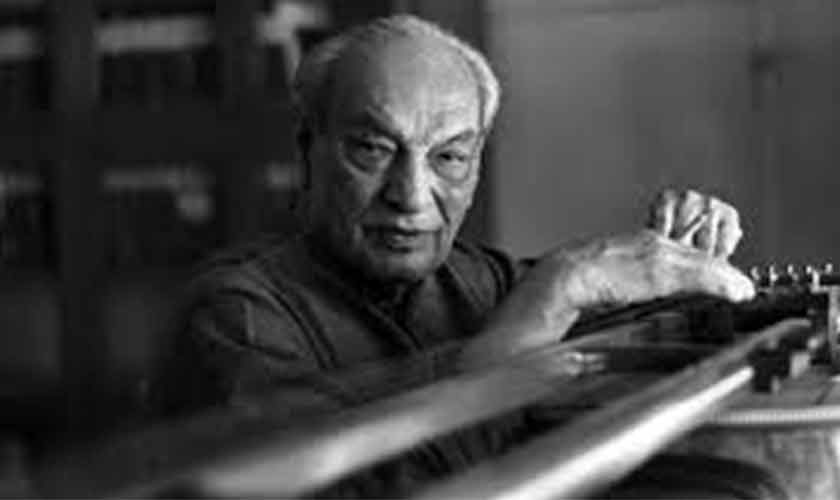
Raza Kazim was no ordinary father, citizen or mentor
| O |
n April 16, he left this world as quietly as a bird lifting from a tree. No pain, no fuss — only weakness. Then the heart stopped.
Raza Kazim was 96.
We were left not with grief alone, but with deep gratitude that Allah had settled the balance sheets of his life. The last three years had been difficult, yet he continued to love music, family and friends. He continued to cultivate the open space he had created: a space that welcomed people from everywhere in pursuit of purpose, transformation and pathways to human happiness through understanding the possibilities of the distributed human mind.
Through Evolutionary Mentology, he sought to “exert some control over the evolution of homo sapiens into the next level of being by deliberately shaping human development.” For him, this was an iterative re-wiring of the brain and not merely a scientific phenomenon, but one rooted in history, social constructs, intention and authentic questions.
His intellectual makeup drew on the historical-dialectical method as a first principle. He embraced cycles of rejection, discovery and creativity: intense, disruptive, disciplined and deeply woven into everyday life.
This was the Raza Kazim method.
It was driven by rare intellectual courage and moral independence. Most people simply could not keep pace with his relentless iterations of living.
He was, unquestionably, an extraordinary father.
As his children, we often found ourselves explaining him to the world.
Why did we call him “Raza” instead of abba, abbu, or mian jan, a clear departure from tradition?
Why was he often found under his cars like a mechanic?
Why did he have a sound system with three sets of speakers and what exactly was a tweeter?
Why was he so effortlessly charming and generous?
Why did he drive so fast?
Why had he been imprisoned?
Why did music and musical instruments occupy so much of his life?
Was he a lawyer or a musician?
Raza resisted categories. He could never be placed neatly into a predictable box.
By the time we were toddlers, he had already shaped our lives in vivid and lasting ways. Much of our early wiring came through intense stimulation, exposure and constant engagement with the world. Some of my earliest memories remain unusually sharp; among them, being taken to protests on The Mall.
Born in 1930 in Sitapur, Uttar Pradesh, into the fading yet refined culture of Awadh, Raza developed an instinct for deep scrutiny early in life. He viewed history through the long shadow of colonial encounter, seeing the Company Raj not merely as political rule, but as disruptive and extractive imperialism. To him, colonisation demanded endless compromise disguised as progress and adaptation for imperial needs rather than authentic dissent and liberation.
His historical canvas was immense.
For Raza, the search for economic, social, cultural, moral and intellectual freedom could stretch from the Big Bang to the Vedas; from Prophet Muhammad (peace be upon him) to 1857, to 1947, to 1971, to 2047 and beyond.
As children, we were dazzled by the sheer range of his interests and abilities. He was a lawyer by profession and lineage. He knew case law and courtroom craft with astonishing command, like Vaslav Nijinsky knew movement.
A lawyer standing barely five foot six could somehow become fifteen feet tall in court. He mesmerised opposing counsel, audiences and judges alike.
His purpose was never performance for its own sake. He wanted to demonstrate what disciplined intellect and serious research could achieve when applied to logical inquiry and difficult questions. His preparation was enormous. His understanding of both legal principles and legal practice was meticulous.
He often told us, “If my clients are not prepared to engage with their case with seriousness and grit, then I too am not interested in pursuing it. This is a living, two-way relationship.”
For every case he argued for a fee, there were at least two he took without one. Those cases reflected his convictions. He stood for those seeking relief - victims of blasphemy accusations, violence, human rights abuses, indignity, extortion, harassment and those pushed to the margins.
Raza spent money long before it reached his account. Somehow he made that seem natural. He was generous to the core.
He financed his pursuits until the very end, never treating them as projects but as inventions capable of transforming society.
Many who came to him for help received it. Even when helping came at extraordinary personal cost, including imprisonment during Zia-ul-Haq’s regime and brushes with life-and-death consequences. Yet, I do not remember him actively seeking funding for his causes. He simply continued.
Raza gave the society its finest aesthetics free of charge. Music, in all its forms, became his offering.
He brought together some of the greatest ustaads and practitioners in the world. Concerts, workshops, sound engineering sessions and explorations in photography became part of his lifelong effort to create spaces where people could experience emotional depth through art. For him, art was never entertainment alone. It was a discipline of learning. He wanted people not only to appreciate beauty but also to engage with it seriously and respectfully.
I remember one of our earliest major disagreements. After I completed Senior Cambridge at the Convent of Jesus and Mary in 1971, he explicitly advised me not to go to Kinnaird College, seeing it as the predictable bourgeois choice.
I enrolled anyway. Lasted there a month.
Soon after, he won a case in the UK and asked whether I wanted to pursue A Levels in England instead. I said ‘yes’ immediately. Admission was arranged at Cobham Hall School. Even there, his way of expressing care remained unmistakably Raza. Whenever I travelled from Victoria Station, he insisted on buying a platform ticket to accompany me. Sometimes he would continue all the way to Gravesend in Kent before turning back. I would protest, “Raza, what happens when you’re not in the UK? I’ll have to travel alone.” He would reply, “Let me have the pleasure of dropping you now.”
At fifteen, he insisted I should have a joint cheque book. Not because he wanted indulgence, but because he never wanted me to grow up feeling deprived, materially, emotionally or intellectually. At the same time, he reminded me never to compromise my values.
I never used the cheque book.
My own pursuits became less about possessions and more about testing limits and discovering inner strength. One piece of advice from him stayed with me permanently: “Baela, divide your life into three concurrent streams: one for inner growth, one for family and one for contribution to society. All three are essential for a meaningful life.”
That framework became one of the anchors of my life. We clashed many times. Choices were debated intensely. But every choice came with risks and costs, part of what became our shared understanding of resilience.
He taught us early that meaningful lives are rarely comfortable. Not many fathers invest so deeply in their children.
Raza’s life was the work of a polymath. From childhood onward, one could see his relentless instinct to create, question and invent.
His most celebrated creation was the Sagar Veena, an instrument developed over more than four and a half decades. Not only did he design the instrument itself, but he also invented many of the tools and processes required for its making. His imagination rarely stopped at a single discipline.
In 2002, he established Pakistan’s first Department of Musicology at the NCA, bringing together a multidisciplinary team to rethink how music could be studied and experienced.
He developed Bhullay, a sound system that evolved through multiple versions to allow audiences to hear South Asian classical music, especially its delicate microtones, with greater depth and precision. His recording work pursued something equally ambitious: capturing the artist’s performance in immersive, almost 360-degree form.
Photography, too, became part of his language of inquiry.
He experimented not only with taking photographs but with developing them into visual experiences that spoke directly to the viewer: an approach reflected in tributes by those who worked closely with him, including Mobeen Ansari.
Then there was Evolutionary Mentology, perhaps his most ambitious intellectual pursuit and the educational philosophy built around it. But ideas alone did not satisfy him. He built institutions.
Through the Sanjan Nagar Public Education Trust, he helped transform the lives of thousands of children and their families. Through the Sanjan Nagar Institute of Philosophy and Arts, he created a home for his inventions, ideas and body of work — a space now being curated for public access.
The two Sanjan Nagars, abodes of truth, were more than institutions: they were declarations; statements about what human possibility could look like.
Raza resisted fixed identities. Over a lifetime, he moved through different intellectual and political worlds, becoming at various moments, a trade unionist, a communist, a Marxist and a believer deeply engaged with Islam and its teachings. He learned Quranic verses with conviction. Yet, like flowing water, he refused permanence in thought. His commitment was not to ideology itself but to inquiry. He questioned across traditions, across faiths and across time. For him, humanity remained the highest principle.
His life travelled through many ideas yet stayed loyal to a deeper internal compass.
As children, we witnessed these phases not as contradictions but as expressions of an active mind, one unwilling to inherit beliefs passively.
He left behind explicit instructions for the continuation of his work. True to his spirit, they were rooted in freedom - disciplined, purposeful freedom.
In her tribute, his friend and renowned oncologist, Dr Azra Raza, turned to Mirza Ghalib to capture something essential about him - his lifelong devotion not to what already exists, but to what might yet become.
(I sing, set aflame by the rapture of imagination;
I am the nightingale of a garden not yet created.)
Perhaps that was the essence of Raza’s Mentology project. The “uncreated garden” was not a fantasy. It was a possibility. Beauty, truth, longing and forms of human existence not yet realised. Raza was already singing toward it. As though imagination itself were an act of creation.
Since he left us on April 16, tributes have continued to arrive from across Pakistan and around the world. Reference meetings continue to be held. The response has been overwhelming and humbling.
He transformed lives, perhaps millions of them, never in pursuit of awards, recognition, or worldly glory. He seemed largely uninterested in being celebrated. What mattered to him was the work. Like Ghalib, he may continue to be discovered over time.
He was born ahead of his time. A man of striking contradictions: fiercely disciplined yet expansive; intellectually uncompromising yet deeply generous; grounded in method yet overflowing with impossible ideas. To the very end, he remained capable of life-altering encounters.
The writer is Raza Kazim’s daughter; SIPA and SNPET director; and the CEO of Idara-i-Taleem-o-Aagahi. She can be reached at [email protected]