Print Story
X




Despite court orders to the contrary, dog culling continues across the Punjab
| “I |
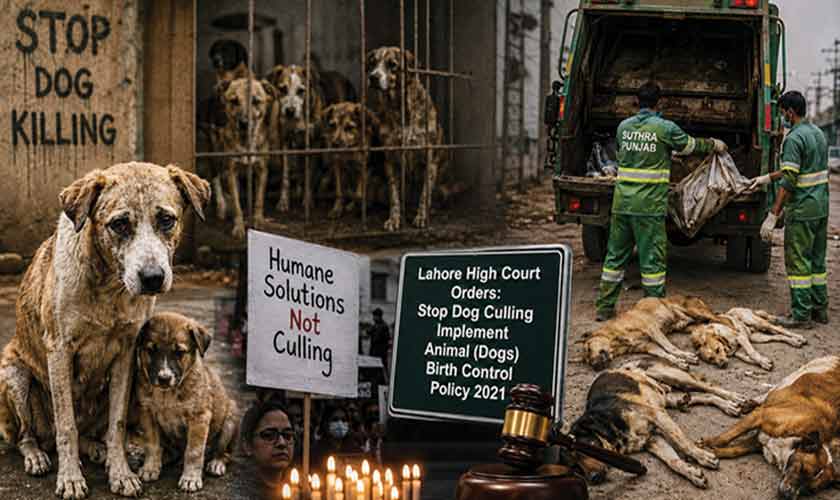
used to feed these voiceless animals while walking from my home to the mosque for prayers. Some people in the neighbourhood would object, asking why I was feeding stray dogs. A few days ago, perhaps after someone complained, municipal workers poisoned them. The next day Suthra Punjab staff collected their bodies in a garbage truck,” Muhammad Asghar, a resident of Kareem Town in Faisalabad, tells The News on Sunday.
He says this was not the first such incident in his neihbourhood, adding that authorities had carried out similar dog culling operations in the past.
“These helpless creatures harm no one. It is often some cruel people - children included - who harass them, throw stones at them and torment them in various ways,” he said.
Asghar said that he had tried to stop people from mistreating animals, but some of his neighbours spoke of stray dogs and cats as a nuisance.
Such incidents of dog culling are not limited to Faisalabad. Similar complaints have emerged on social media from various districts across the Punjab.
Last month, the Lahore High Court ordered the Punjab government to immediately halt all dog culling operations and warned officials of contempt proceedings in case of violations.
The court also directed the provincial government and local authorities to implement the Animal (Dogs) Birth Control Policy, 2021. The court observed that indiscriminate killing of stray dogs was both cruel and ineffective in controlling their population. It stressed that humane and sustainable methods be adopted instead.
The policy calls for vaccination, sterilisation, registration, shelter management and public awareness to manage stray dog populations and prevent rabies.
The court orders were issued during proceedings related to animal welfare and public safety concerns. Government officials submitted undertakings assuring compliance with the policy framework.
The High Court also instructed relevant departments and municipal bodies to establish sterilisation and vaccination programmes in coordination with veterinary experts and animal welfare organisations.
However, Ayeza Nadeem, chairperson of the Pakistan Animal Rights Advocacy Group, says that dog culling is still continuing in Lahore and other cities.
“A few days ago, we intercepted two vehicles filled with stray dogs and puppies being taken away by municipal staff. Social media is flooded with videos showing officials from Suthra Punjab and other government departments involved in dog culling,” she said.
She said some lawyers and animal rights activists had once again approached the High Court seeking contempt proceedings against the departments involved.
“In court, the government officials denied that dog culling was taking place… even though everything is happening in plain sight,” she remarked.
She said another major concern was the unverified dog bite statistics, often cited to justify dog culling campaigns.
“In the report submitted before the court, authorities claimed that more than 500,000 dog bite cases were reported in the Punjab. This figure is completely baseless,” she said.
She said, when challenged, the officials failed to substantiate these figures. She said that her organisation intended to contest the data separately in court to counter the negative public perception surrounding stray dogs.
She also alleged that financial interests were one of the reasons dog culling had not stopped.
“In every district, local government departments receive millions of rupees from the government to purchase poison and bullets to kill dogs. Only a small percentage of that amount is actually spent on the operation; the rest is allegedly embezzled,” she said.
During the hearing of the dog culling case in the High Court, an official report submitted before the court said that 38,586 dog bite cases were reported across the Punjab during the first three months of this year, 3,676 cases from Faisalabad.
TNS sought to verify this information through applications filed under the Right to Information Act with the Local Government Department, Health Department and Livestock Department. However, there was no response within the stipulated time. Appeals filed before the Punjab Information Commission have been pending for the past month.
Contacted for verification, local officials of the Municipal Corporation, Local Government Department, Health Department and Rescue 1122 in Faisalabad were unable to confirm these figures. The administrations of Allied Hospital I and Allied Hospital II and the three general hospitals expressed ignorance regarding the large number of dog bites.
A review of newspaper reports published between January and March 2026 supported far fewer incidents in Faisalabad during that period.
Some government hospital workers in Faisalabad, speaking on condition of anonymity, claimed that a significant portion of anti-rabies vaccines supplied to public hospitals was embezzled. It was suggested that the record was falsified to conceal the theft.
According to Tahira Rasul, chairperson of the non-profit Tahira Animal Welfare Foundation that has been working since November 2021 to make Faisalabad Pakistan’s first rabies-free city, dog culling has never sustainably controlled stray dog populations.
“This method may temporarily reduce the number of stray dogs, but eventually the population increases again, often at a faster rate. Moreover, dogs killed through poisoning can still cause spread of rabies,” she said.
She said that the globally recognised solution to this issue was TNVR (trap-neuter-vaccinate-release).
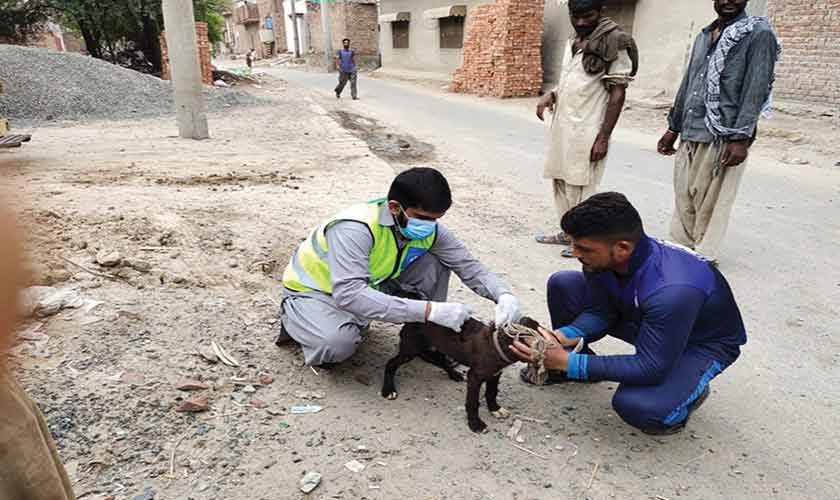
“Over the past five years, we have carried out TNVR procedures on more than 7,768 dogs and administered anti-rabies vaccines to over 9,662 stray dogs. We also rescue and treat abandoned animals that are sick or injured in accidents. Unfortunately, some people obstruct these efforts,” she said.
Rasul said her organisation had repeatedly offered cooperation to the authorities to help stop dog culling and reduce stray dog populations through TNVR.
“The Punjab government approved the Animal Birth Control Policy in 2021. It recommends TNVR instead of dog culling to manage stray dog populations. Yet, in practice, dog killings continue. Every day we receive calls from various areas reporting dogs that have either been poisoned or are at risk of being killed,” she said.
She urged Chief Minister Maryam Nawaz Sharif to act against what she described as an “inhumane and un-Islamic” practice and to support efforts aimed at making Punjab Pakistan’s first rabies-free province through TNVR programmes.
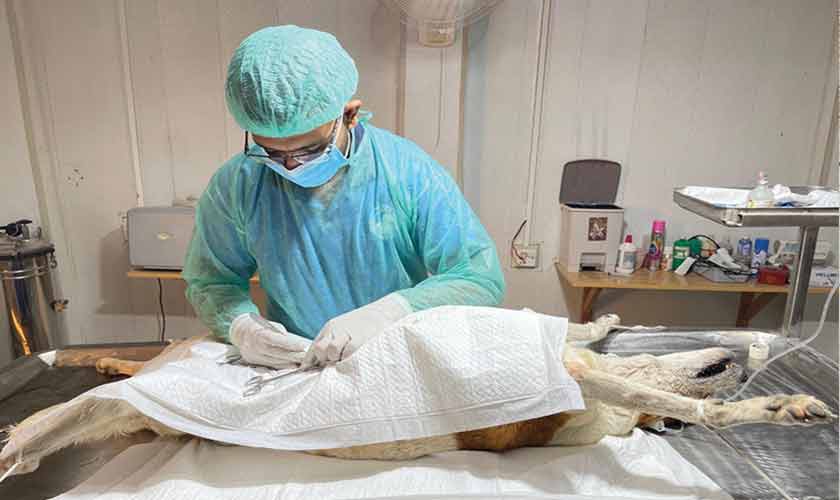
“In Faisalabad, we recently established a facility called the Second Chance Animal Hospital for TNVR operations, where facilities for spaying and neutering dogs are available. However, due to limited resources and human resource, we are unable to rescue and process large numbers of dogs. The government will have to step in and support these efforts,” she said.
She said that if the government covered the operational costs of welfare organisations carrying out TNVR programmes, conditions could improve significantly.
Tahira Rasul also stressed the need for large-scale public awareness campaigns to change societal attitudes toward stray dogs.
“Every day we receive dozens of reports involving stray dogs, cats and working animals, especially donkeys, being beaten and left on the streets to die. This is inviting divine wrath upon the society. Religious scholars should raise their voices on this issue,” she said.
“Will we continue killing voiceless animals, or will we adopt a humane and sustainable solution that has proven successful across the world?”
The Lahore High Court’s direction has created an opportunity for the Punjab to shift from reactive violence toward long-term policy implementation based on vaccination, sterilisation, and public awareness.
The choice of the provincial authorities will ultimately determine not only the future of stray animal welfare, but also Pakistan’s commitment to humane governance and evidence-based policymaking.
The writer has been associated with journalism for the past decade. He tweets @naeemahmad876